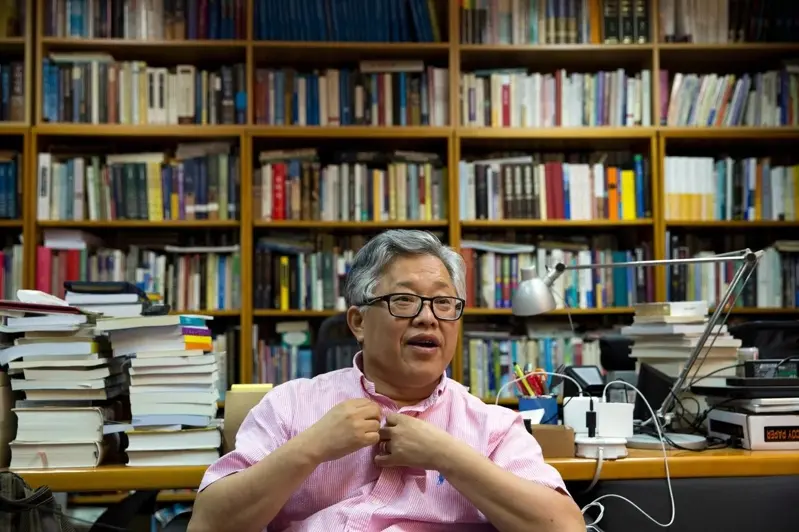

Ezra Jin Mingri, founder and pastor of Zion Church in China, who was arrested in China in October 2025 and released on the 250th anniversary of the founding of the United States, recalled in an interview with The New York Times : “24 hours ago, I was in a terrible prison environment, not knowing what the future held, and expecting to be sentenced to about 15 years in prison. Suddenly, I was free.” He said he was overwhelmed with emotion to be able to reunite with his family.
Due to increasing pressure on Zion Church, Jin Mingri’s family moved to the United States in 2018, but he remained in China with the church. In October 2025, Jin Mingri was arrested at his home in Beihai, Guangxi, while having dinner and was charged with “illegally using information networks”.
The New York Times reported on the 17th that Kim Min-il gave an interview at his home near Washington, D.C. on the 16th , detailing how President Trump’s unexpected release and arrival in the United States followed his face-to-face negotiations with Chinese leader Xi Jinping. This was Kim Min-il’s first media interview since his release. Eight other members of Kim Min-il’s church remain in prison.
The report indicated that Chinese police officers took Jin Mingri, who had been detained for 266 days, out of his cell, put him in a van, and then transferred him to a train. Jin Mingri was escorted by more than 20 police officers, some of whom were filming him with cameramen.
Kim Myung-il asked if he would be transferred to a secret prison. A police officer smiled and told him to think positively.
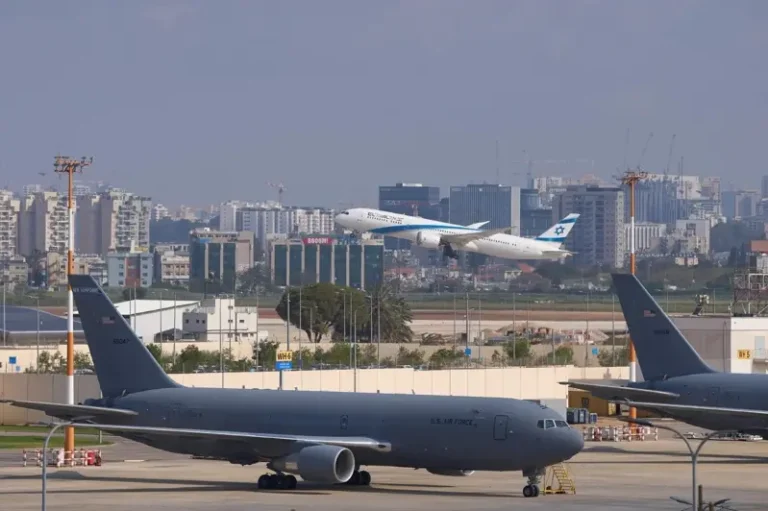
A few hours later, Kim Min-il was put on a plane. As the plane took off, the man sitting next to him introduced himself as a U.S. government official.
The New York Times analysis suggests that Kim Myung-il’s sudden release from prison on July 3, following Trump’s personal contact and coordination with Xi Jinping, represents a rare concession from Beijing. This reflects that under Xi Jinping’s authoritarian regime, the fate of prisoners subjected to similar detentions or trials, such as Kim Myung-il and Jimmy Lai, founder of Hong Kong’s Next Media Group, largely depends not on the courts, but on the highest levels of government.
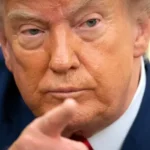
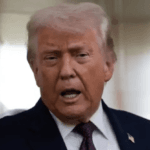
During his visit to Beijing in May, Trump raised the case of Kim Myung-il with Xi Jinping, but in the weeks that followed, it remained unclear whether Xi had agreed to release Kim.
When Kim Myung-il arrived in Los Angeles by plane, his wife and children, whom he hadn’t seen for nearly ten years, were already waiting for him there.
Kim Min-il, 57, said he was not forced to sign any statements, nor were Chinese officials warned against contacting friends or fellow attendees in the future. He said, “This is probably because everyone knows it was a decision personally made by President Xi; otherwise, it would have been impossible.”
Kim Myung-il and his wife are Chinese citizens, while their child is an American citizen. He said he didn’t know if there was any deal between the US and China regarding his release.
As Trump departed China aboard Air Force One after concluding his visit, he told the accompanying media that Xi Jinping had indicated he would seriously consider releasing Kim Min-il.