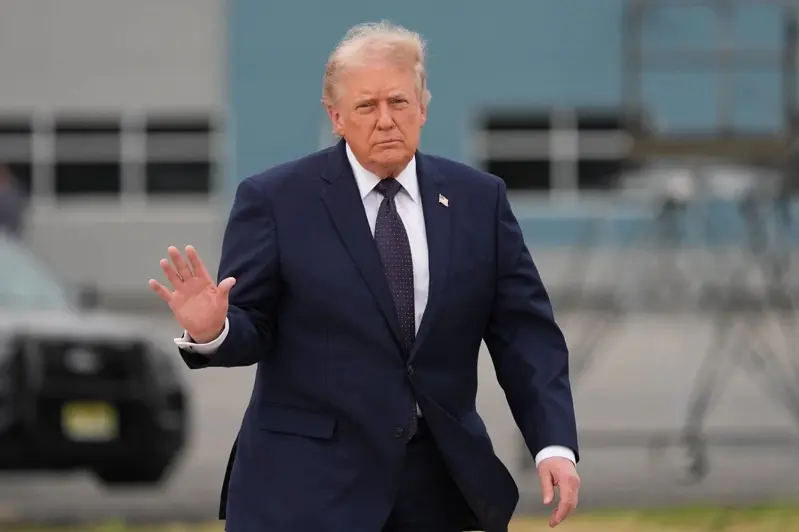

The U.S. Supreme Court ruled on March 30 on birthright citizenship, overturning the Trump administration’s executive order and upholding the principles of the 14th Amendment to the U.S. Constitution, which allows virtually anyone born on U.S. soil to obtain citizenship. President Trump commented on the outcome, calling it terrible for the United States and supporting Congress in passing legislation to end the “unfair” birthright citizenship system.
After taking office last year, Trump immediately signed an executive order to end unconditional birthright citizenship, denying that children of undocumented immigrants and transit visitors automatically acquire citizenship upon birth in the United States, which is tantamount to challenging the 14th Amendment to the U.S. Constitution.
Article 1 of the 14th Amendment to the Constitution states that all persons born or naturalized in the United States and subject to its jurisdiction are citizens of the United States , establishing the principle of birthright citizenship.
Trump’s executive order was originally scheduled to take effect on February 20 last year, but was blocked by a lower court. The Trump administration appealed to the U.S. Court of Appeals for the First Circuit, while requesting the Supreme Court to bypass the First Circuit and review the case directly. The Supreme Court accepted the case at the end of last year and held oral arguments on April 1 this year.
Trump also attended the hearing in person, becoming the first sitting president in U.S. history to attend the Supreme Court hearing oral arguments.
John Sauer, the Solicitor General representing the Trump administration, argued that only children whose parents have domicile status in the United States are eligible to become U.S. citizens. However, the opposing side argued that the 1898 case of “United States v. Wong Kim Ark” removed the domicile requirement.
On March 30, the Supreme Court ruled 5-4 that Trump’s executive order was unconstitutional and 6-3 that it violated federal law.
Chief Justice John Roberts, along with three other liberal justices and conservative Justice Amy Coney Barrett, ruled that Trump’s executive order violated the 14th Amendment. Roberts stated that civil rights representatives have the right to participate in the American political community, and the drafters of the 14th Amendment extended this commitment to everyone on this land. “We honored that commitment today.”
In response, Trump commented on the ruling on the social media platform Truth Social on the 30th, saying that it was terrible for the United States, but that Congress could easily “make it up” by amending the law.
Trump stated that there is no need for lengthy and slow constitutional amendments and called on Congress to begin working today to end the expensive and unfair birthright citizenship system in the United States; Trump also said he would give his full support.
Republican members of the House of Representatives introduced the “Birthright Citizenship Act of 2025” last year, which sets standards for birthright citizenship, stipulating that for a person born in the United States, at least one of their parents must be a U.S. citizen, lawful permanent resident, or similar status to qualify for citizenship.