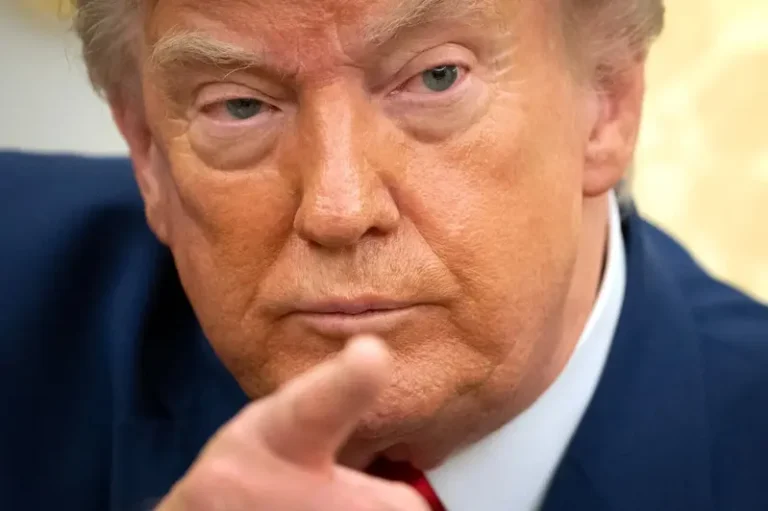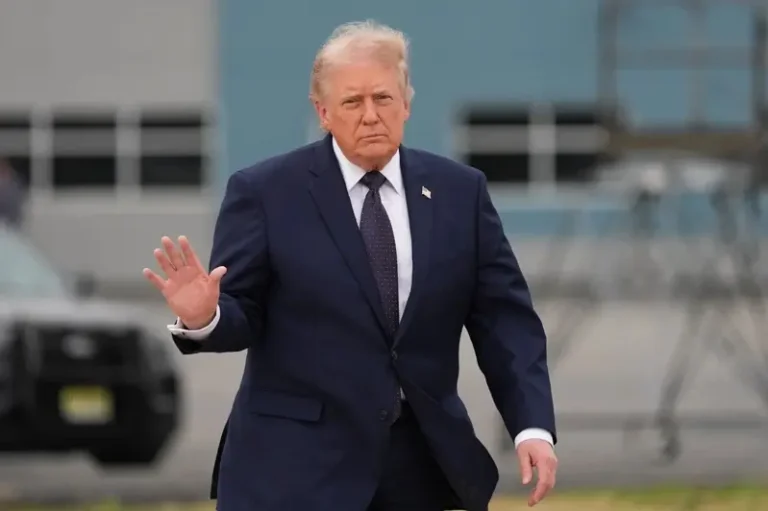
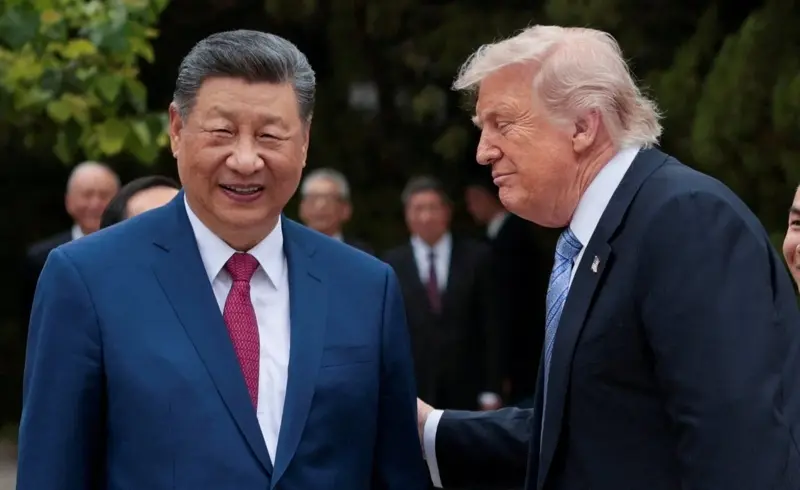

During his visit to China in May, President Trump raised a glass at a state dinner, calling Chinese President Xi Jinping “my friend” and saying the stage was set for Xi’s return visit to Washington at the end of September . However, in his prime-time speech on the evening of the 16th, he shifted his tone, accusing China of carrying out “the largest election data breach in history.” Experts believe, however, that these remarks are unlikely to affect the Trump-Xi relationship that he is trying to cultivate.
The New York Times reported that Trump released declassified documents in a speech on the 16th, claiming they showed China interfered in the US election. However, the documents did not reveal any new or compelling information about Beijing’s interference, and US intelligence assessments also indicated no evidence that China took action to influence the 2020 election results. Therefore, the question now is not whether Trump’s accusations have any substantial basis, but whether these remarks will disrupt the relationship he has been trying to build with Xi Jinping.
Experts believe the answer is likely no. Trump’s speech suggests that even when it involves another global superpower, he may quickly set aside diplomatic objectives to gain a short-term advantage in domestic affairs. Trump is desperately pushing for an election oversight bill to pass Congress. He also portrayed China as a threat during his 2016 presidential campaign and used the same tactic in 2020 when the pandemic eroded his re-election chances.
Faced with Trump’s accusations, the Chinese government seems unfazed. State media rarely reported his remarks, and Foreign Ministry spokesperson Lin Jian gave only a standard response when asked about the matter. His statement, “Stop slandering and framing China for electoral purposes,” indicates that China believes Trump’s accusations are aimed at domestic politics in the United States and are not a sign of a policy shift.
Ryan Hass, a China expert at the Brookings Institution, noted, “Judging from China’s low-level and scripted response, I’m convinced the Chinese side understands that Trump’s remarks were almost entirely focused on U.S. domestic politics. Unless Trump takes actions far beyond what he said last night, I don’t think his speech will have a long-term impact on bilateral relations.”
When asked, a White House official only stated that Xi Jinping’s planned visit to Washington in September is still progressing; CNN added that the official did not respond to whether Trump would punish China for what he called a historic massive data breach. Secretary of State Rubio is expected to discuss the main topics of the summit when he travels to Manila, the Philippine capital, next week, and plans to meet with Chinese Foreign Minister Wang Yi on the sidelines of the annual ASEAN summit.
During a pre-World Cup final event in New York on the 17th, Trump mentioned the idea of a US-China co-hosting event, but made no further mention of China’s involvement in the selection process. FIFA has already awarded the 2030 World Cup hosting rights to a joint organizing committee of six countries, including Spain, Portugal, and Morocco. Saudi Arabia has been selected as the host country for the 2034 World Cup. If the US and China were to co-host, it would have to wait until 2038.
The New York Times points out that Trump rarely talks about human rights or democracy, and his current priority is to push for a series of meetings with Xi Jinping this year; he has also been keen on holding high-profile diplomatic events with world leaders. To ensure the meetings proceed smoothly, Trump decided to suspend final approval of a $14 billion arms sale to Taiwan, even though Congress had already supported it.
Sun Yun, a scholar at the Stimson Center in Washington, D.C., stated that regardless of the statements made by the U.S. president, Chinese officials do not believe there has been any fundamental change in bilateral relations. They still believe that the U.S. and China are engaged in a long-term competition, with the U.S., the 20th-century superpower, gradually declining and China taking its place.