
By Saurabh Katiyar | Tehran
Tehran and Oman reportedly discuss controversial “service fee” system for ships in key oil route
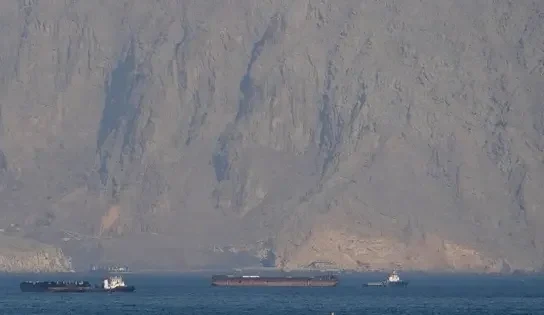
Iran and Oman are reportedly discussing a controversial new payment system for ships traveling through the Strait of Hormuz, raising fresh concerns about global energy security and growing tensions with the United States.
Iran is carefully avoiding the word “toll” while instead promoting what officials describe as a “service fee” for vessels passing through the critical waterway.
The move comes despite warnings from former US President Donald Trump against any attempt to charge ships using the strait.
The Strait of Hormuz remains one of the world’s most important shipping routes. A large percentage of global oil exports passes through the narrow channel connecting the Persian Gulf to international waters.
The report cited two sources familiar with the discussions who said Iran and Oman are exploring ways to establish a permanent fee structure connected to maritime services.
Iranian officials reportedly believe framing the payments as “service fees” instead of direct passage tolls could help avoid legal challenges under international law.
Iran and Oman Discuss Regional Support
Sources told the newspaper that Oman initially resisted cooperation with Iran on the proposal. However, negotiations reportedly advanced after Oman recognized possible economic benefits.
Iranian officials claim Oman may now use its regional influence to promote the idea to Bahrain, Kuwait, Qatar, Saudi Arabia, the United Arab Emirates and even the United States.
The Gulf of Oman sits directly beside the Strait of Hormuz. Ships entering the strait from eastern waters must first travel through the Gulf of Oman.
Iran recently increased its control efforts in the region.
On the 20th, Iran’s newly created Persian Gulf Straits Authority announced that it officially established management boundaries around the Strait of Hormuz and would require vessels to obtain authorization before passage.
The announcement immediately increased international concern over freedom of navigation in the region.
You can also read our coverage on Xi Jinping Warns Against New Middle East War During Putin Meeting
International Law Experts Raise Concerns
Legal experts say Iran could face serious international opposition if it attempts to impose direct tolls on ships using the strait.
James Kraska, a professor of international maritime law at the US Naval War College and visiting professor at Harvard Law School, said international law strongly protects free navigation through major international waterways.
The 1982 United Nations Convention on the Law of the Sea guarantees ships the right to move freely through international straits without interference.
Although Iran is not formally part of the treaty, experts say the principles still reflect customary international law followed worldwide.
Kraska warned that simply renaming tolls as “service fees” may not solve the legal problem.
“If Iran wants to charge fees, it must prove the payments match actual services provided,” he said.
Otherwise, Kraska argued, the system could resemble forced payments rather than legitimate maritime services.
Analysts say any attempt by Iran to charge ships could increase tensions with Western governments and energy markets already worried about instability in the Middle East.
The Strait of Hormuz handles a major share of the world’s oil and gas shipments, making any disruption highly sensitive for global economies.
For now, officials have not confirmed whether the discussions between Iran and Oman will produce a final agreement.
However, the talks suggest negotiations between Iran and the United States may still face major obstacles despite recent diplomatic efforts.