
By Saurabh Katiyar | London
Energy agency fears massive summer supply shock if Strait of Hormuz remains blocked
The world could face a major oil supply emergency within weeks.
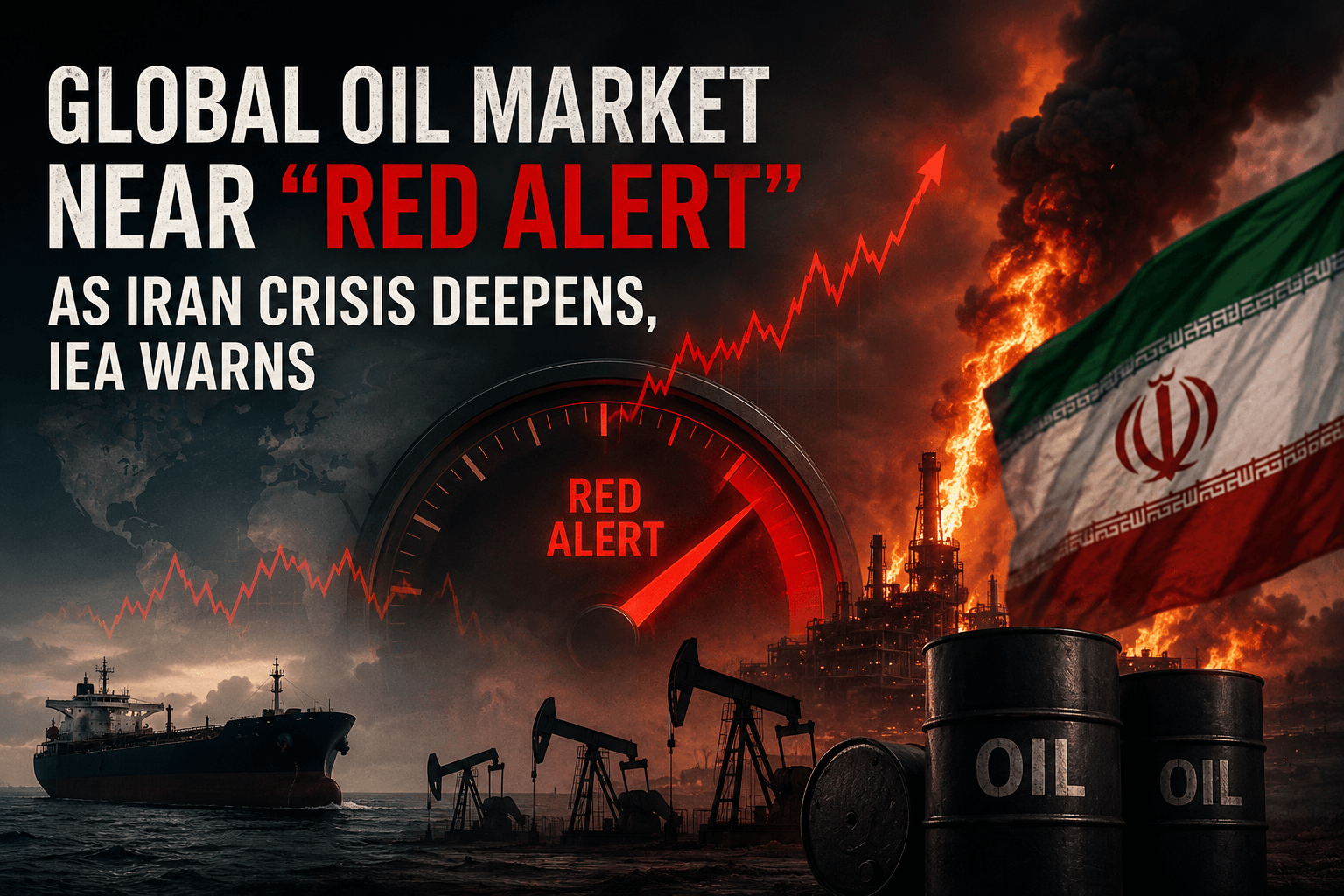
That warning came from International Energy Agency (IEA) Executive Director Fatih Birol, who said the global oil market may soon enter a dangerous “red alert zone” as fuel demand surges during the summer.
Speaking at Chatham House in London, Birol warned that July and August could become critical months if disruptions in the Middle East continue.
“If the situation does not improve, we may enter the red zone in July or August,” Birol said.
The warning follows growing instability linked to the conflict involving Iran and increasing disruption around the Strait of Hormuz.
According to Reuters, attacks on energy infrastructure and restrictions near the Strait have already disrupted more than 14 million barrels of oil supply per day.
That figure represents one of the largest oil supply shocks in modern history.
Strait of Hormuz Crisis Raises Global Panic
The Strait of Hormuz remains one of the world’s most important shipping routes for oil exports.
Any disruption in the narrow waterway quickly affects global energy prices and fuel markets.
Birol stressed that reopening the Strait fully is the only real solution to the current crisis.
“The most important and only solution is to fully and unconditionally open the Strait of Hormuz,” he said.
Before the conflict escalated, oil markets already faced rising demand during the summer travel season.
Now, the situation has become far more serious.
The IEA said it already released 400 million barrels from strategic oil reserves to stabilize markets. Member countries are currently supplying between 2.5 million and 3 million barrels of oil per day.
However, analysts warn those emergency reserves may run low by early August — exactly when the IEA expects the highest pressure on markets.
Oil Prices Surge as Inventories Fall
Brent crude oil prices remain extremely high despite falling slightly from recent peaks.
Prices currently trade near $108 per barrel. During the height of the Iran conflict, Brent crude briefly climbed to $126 per barrel.
Before the crisis, oil prices stayed closer to $70.
Birol warned that commercial oil inventories continue shrinking despite emergency reserve releases.
He also said recovery of oil production in the Middle East could take a long time.
You can also read our coverage on Iran’s Strait of Hormuz Fee Plan Sparks Global Alarm Despite Trump Warning
Iraq Faces Serious Economic Pressure
Birol expressed particular concern about Iraq.
He said falling oil revenues badly damaged the country’s finances. Iraq also reportedly lacks enough storage capacity, forcing officials to shut down some oil fields.
Restarting oil production after shutdowns can be technically difficult and time-consuming.
Meanwhile, Birol said countries like Saudi Arabia and the United Arab Emirates may recover more quickly because of stronger infrastructure and advanced technology.
The IEA also confirmed it stands ready to release additional strategic reserves if conditions worsen.
Energy experts now warn that continued instability in the Middle East could create fresh inflation pressure worldwide by driving up transportation and fuel costs.
Governments and financial markets are closely watching the situation as fears grow over possible shortages during the peak summer demand season.