
AI summary
Summary of article:
Outsiders have raised questions about whether Huida chips could indirectly flow to China through Southeast Asian cloud companies like MegaSpeed, highlighting the great difficulty in enforcing US export controls and customer reviews.
Huida (Nvidia) In the era of artificial intelligence (AI), there is always a problem: the United States has been trying to prevent Huida chips from flowing to China for many years, but these chips are falling into the hands of Beijing.
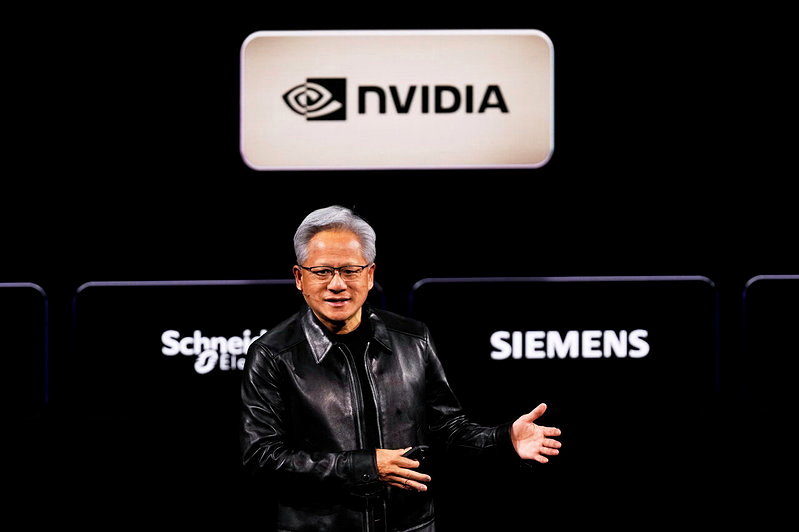
The New York Times recently reported that Huida’s CEO was hiding under suspected Chinese spiesJen-Hsun Huang Around the world, research and decisions have sent sensitive information to Beijing, causing concern on all sides. MarketWatch reported that there have been several reports over the past few months alleging that Singapore cloud computing company MegaSpeed violated US export control rules by allegedly acquiring Huida’s most powerful chips and re-exporting them to China. Alice Huang, a senior Chinese executive at MegaSpeed, was also suspected by US intelligence agencies of being a Chinese intelligence agent and conspiring to get close to Huida CEO Huang Renxun, so she was placed under surveillance.
Lizzie Li, a China economic researcher at the Asia Society Policy Institute, also said there is currently no evidence that Huang knowingly gave sensitive information to China. Li Qi said that meetings between CEOs and important clients are routine business activities, which is why such intelligence operations are difficult to prevent.
Li Qi pointed out that from a broader perspective, this incident highlights the problems faced by US chip export controls, because China does not need to obtain Huida’s physical chips to use them: Chinese companies can use Southeast Asian data centers to obtain Huida’s computing power through legitimate trade arrangements. Li Qi said that because of these business relationships and the increasingly complex nature of the chip supply chain, law enforcement is far more difficult than controlling chips crossing the Chinese border.
Cheng-Chi Chang, a research scholar at New York University’s US-Asia Law Institute, said Huida’s biggest risk lies at the policy level. It is reported that Megaspeed has continued to purchase Huida products through intermediaries sometimes this year. These purchasing behaviors are likely to raise questions about how HUDA screens customers. “Huida needs to convince the US government that its customer review process is trustworthy. On the one hand, this concerns Huida’s business with Southeast Asian data centers, and on the other hand, it concerns any future sales that Huida may make to China.”
In an interview on the 29th of last month, Huang Renxun said that the company had confirmed that Megaspeed did not send Huida AI chips to China because it would violate US trade sanctions. He said that Huang Le no longer works at Megaspeed.
In response to ABC’s inquiry on October 31, a HUDA spokesperson issued a statement saying that MegaSpeed ”is no different from cloud customers in many other areas.” The talks between senior officials of the two parties were neither unusual nor unexpected. “Our regional cloud customers have access to general business information, not HUDA’s sensitive commercial secrets, and will not receive any information related to national security. Allegations that MegaSpeed allegedly transferred chips last year have been thoroughly investigated and found to be untrue.”
Summary FAQ
-
The report focuses on the fact that the United States restricts the flow of HUDA chips to China, but there may still be loopholes, especially whether the chips are re-exported through companies like MegaSpeed, indicating that export controls and customer reviews may not be strict enough.
-
MegaSpeed was accused of possibly violating US export controls by acquiring Hyuda’s high-performance chips and then transferring them to China; One of its senior officials, Huang Le, was also suspected of being involved in intelligence activities, thus raising more suspicions.
-
Experts point out that Chinese companies may not need the physical chips and still obtain computing power legally through data centers in Southeast Asia, making it more difficult to monitor supply chains and business relationships. Huida also needs to prove that customer reviews are trustworthy.