
AI summary
Summary of article:
Following the end of daylight saving time in New York, the evening commute overlaps with the dark hours. The city government has simultaneously strengthened traffic enforcement, improved lighting, and health reminders to reduce the risk of pedestrian accidents and work-leisure disorders.
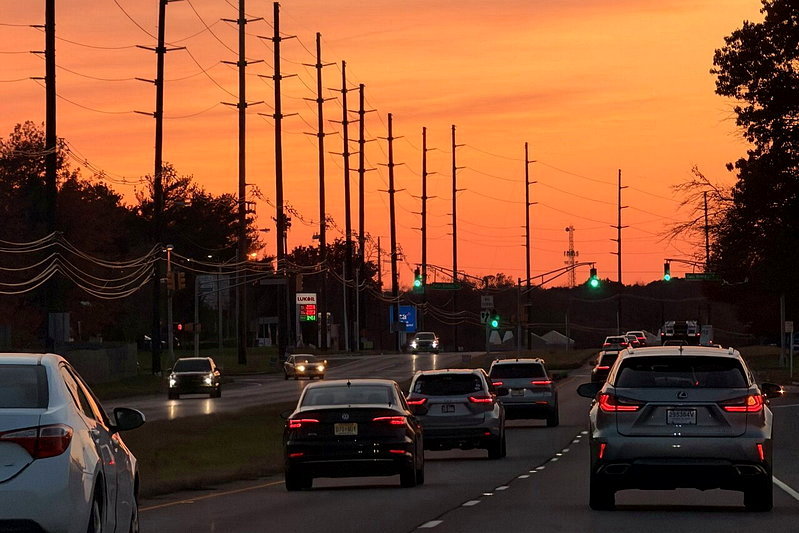
Daylight saving time in New York will end at 2 a.m. on November 1 (Sunday), and clocks will be turned back one hour to return to standard time, commonly known as “Winter Savings Time”. Since the sun sets an hour earlier, people after school and getting off work often face traffic after dark. The Municipal Transportation Bureau and the Municipal Police Department have recently launched the annual “Dusk and Darkness” traffic safety campaign to strengthen law enforcement in the evening and at night with a focus on the safety of pedestrians, cyclists, the elderly and children.
The Transportation Bureau pointed out that daylight gradually decreases in autumn. After the clock is adjusted, the period of acute reduction in visibility overlaps with the evening traffic peak, making autumn evenings the time of year with the highest risk of fatal pedestrian crashes.
The city police department has stepped up law enforcement since mid-October, with a focus on cracking down on speeding, running red lights, not giving way to pedestrians, and distracted driving on highways and normal roads. Traffic enforcement officers will also step up efforts to crack down on vehicles blocking double parking, pedestrian crossings and occupying cycle lanes and bus lanes. The city reminds drivers to obey the 25 mph speed limit on normal roads and to obey lower speed limit signs, especially when turning.
Safety promotion will be carried out through road activities in five major districts this year, and taxi drivers will also receive night driving reminders. The city government also plans to build a networked street light system that can automatically detect faults to speed up repairs, and improve lighting in high-risk locations such as elevated railways and highways to cooperate with law enforcement and road renovation to reduce accidents.
Winter-time changes also include intervals in work and rest that the human body may not be able to adapt to immediately. Some people wake up early, feel sleepy during the day, lose concentration, or have mood swings. People can maintain a regular schedule and be exposed to natural light during the day. People who are sensitive to time changes can gradually adjust their sleep and wake times every 15 to 30 minutes to avoid falling asleep all at once.
Persistent bad mood is also noticeable after autumn. The National Institute of Mental Health (NIMH) states that seasonal affective disorder is a type of depression that recurs with the seasons, often appearing in late autumn or early winter. It may also be accompanied by lethargy, increased appetite, and social isolation and is related to changes in sunlight. If symptoms such as depression or loss of interest last more than two weeks and affect your life, you should seek help from a medical professional.
Summary FAQ
-
New York will set its clocks from 1 a.m. to 2 a.m. on November 1 and return to standard time. As the sun sets earlier, crowds of people leaving after school and after work will often encounter traffic after dark, and the risk to pedestrians will increase significantly.
-
The Municipal Transportation Bureau and the Municipal Police Department launched the “Dusk and Dark” operation to combat speeding, running red lights, not yielding way to pedestrians, distracted driving and illegal parking, and improving the lighting of street lights and high-risk road sections.
-
People can maintain regular sleep and be exposed to more natural light during the day. People who are sensitive to jet lag can adjust their schedule 15 to 30 minutes earlier or later at a time; If their low mood lasts more than 2 weeks and affects their life, they should seek help as soon as possible.