
AI summary
Summary of article:
Politico polls reported that a major victory for the Democratic Party in the midterm elections would strengthen the negotiating power of progressives within the party and influence the line battle ahead of the 2028 general election.
The latest investigation by the Politico news website found that,midterm elections ‘The scale of victory will impress progressives’democratic party Has domestic electricity increased; The greater the margin of victory, the more likely Democrats are to believe that they have been empowered by voters and will field more progressive candidates in the future.
Progressives and moderates have been sparring throughout the campaign over who should get credit for the Democratic Party’s victory in this year’s midterm elections, according to an analysis by the Politico news website. If the results of the vote do not bring the expected victory, the Democratic Party and voters who support the Democratic Party will be confused about the next development direction.
An online survey of 2,083 adults across the United States was completed in a joint survey conducted by POLITICO and strategic consulting firm PF Global between October 24 and 27. The overall sampling error was less than plus or minus 2 percentage points. The survey results show that this midterm election has a big impact on the next phase of the Democratic Party line battle, and it is also related to whether progressives can make new gains within the party before the 2028 presidential election.
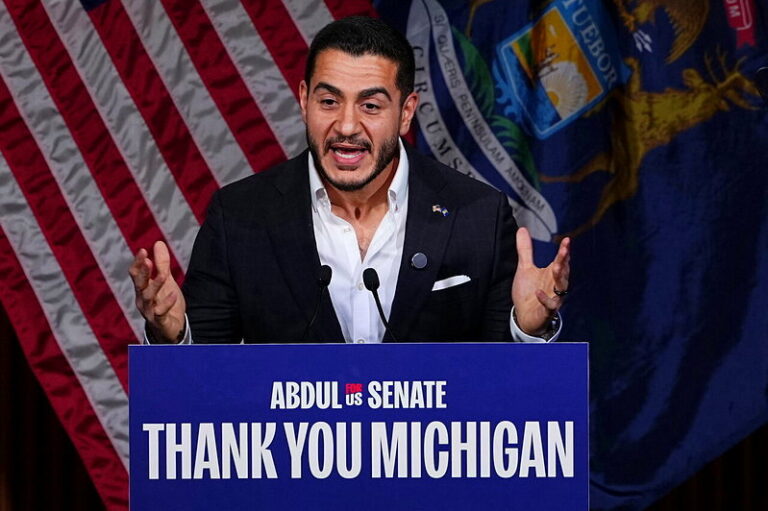
Party insiders are paying close attention to several elections that have given rise to factional battles: Abdul El-Sayed is running for Michigan U.S. Senate on behalf of the Democratic Party, Troy Jackson is running for Maine U.S. Senate, Randy Villegas is running for California U.S. House of Representatives, and Colorado U.S. Representative Manny Rutinel is challenging.
More than a dozen Democratic pollsters and election strategy experts said in interviews that progressives and moderates are using the “blue wave” of Democratic victories to prove that their line has been vindicated.
Combined polls suggest that if the Democratic Party performs less well than expected in the midterm elections, it could mean a different future course. Opinions among Democratic respondents are evenly divided. About 37% of respondents believe the next election will feature more progressive candidates, 35% of respondents say the Democratic Party should feature more liberal candidates in the next election, and another 28% of respondents said they do not know.
If the Democratic Party wins the expected large victory in the election, 68% of progressive Democratic respondents said it means more progressive candidates should be introduced in the future, and 35% of Liberal respondents said it means more progressive candidates should be introduced in future elections.
The report notes that progressives eagerly hope that the results of the vote will support their argument, that is, progressive candidates may indeed stand in a fiercely competitive election, and the Democratic Party should also lean more to the left. For years, progressives have been despised by the party establishment, which believes only moderate candidates can reach Trump voters.
Summary FAQ
-
The report states that the margin of victory of the Democratic Party in the midterm elections will decide whether the party will lean more towards the left or maintain a liberal stance. If they win big, progressives are more likely to expand their influence and strive for a greater share in subsequent nominations.
-
The joint survey shows that if the Democratic Party performs below expectations, the opinions of the Democrats surveyed are close to average, with 37% advocating more progressive candidates, 35% advocating more moderates, and 28% saying they do not know, indicating no consensus within the party.
-
Progressives hope to prove through electoral victory that leftist candidates can win in tightly contested constituencies, thus refuting the establishment’s claim that “only moderates can win” and securing more inter-party bargaining chips before 2028.