
North Korea strictly forbids its citizens from listening to South Korean music and watching South Korean programs, but K-pop has managed to circumvent the ban through television signals, MP3 players, and microSD memory cards. Several North Korean defectors told the BBC that K-pop has shown them a different way of life, and that their idols are no longer limited to Supreme Leader Kim Jong Un.
Lee Yeon-su (pseudonym), a North Korean defector, traveled from Seoul to Busan by train in June to attend a BTS concert for the third time in three months. She said, “It’s so wonderful to be able to like and support someone according to my own wishes. This is unimaginable in North Korea.”
Yeon-soo grew up in a military family and was taught from a young age that South Korea was the enemy. She recalled that in North Korea, people had to be elected to participate in events; otherwise, they had to stay at home and draw the curtains. Now, she can decide for herself who she cheers for.
When Yeon-soo defected from North Korea in 2011, BTS had not yet debuted, and K-pop had not yet become a global phenomenon. Today, North Koreans can be imprisoned or face even more serious consequences simply for listening to K-pop or watching South Korean programs.
Oh Han-na, a 25-year-old North Korean defector, said that the North Korean regime can only tolerate one star, one idol, and that is Kim Jong-un, but the people have found other idols such as BTS and BLACKPINK. “BTS” has even been incorporated into everyday slang and has become a term used by North Koreans to joke in private.
Kang Gyu-ri, who defected from North Korea in 2023, used to live in Gyeongseong County on the coast. Local families could sometimes receive television signals from the other side of the sea via antenna to watch K-pop idol competition programs. She said, “They are Koreans just like us, but they look very different.”
She stated that North Korean songs are mostly related to revolution or politics, and state-run radio must always be on in the home. In contrast, K-pop not only has different content, but its music archives are also easier to circulate than dramas.
Access to South Korean content remains risky. During her teenage years, Oh Han-na carried two SD memory cards: one containing South Korean music, and the other a blank card to hand over if arrested. Once a student is arrested, all schools in the city hold “public denunciation meetings” to announce which videos the student has watched and that they will be sent to a juvenile detention center.
Even so, she continued to listen and watch. She said, “Once you’ve seen that world, it’s hard to go back.”
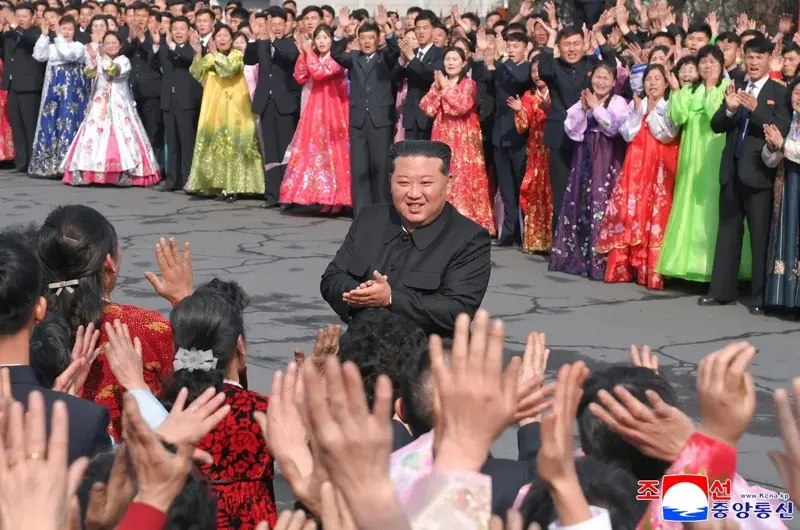
North Korea has long used fear, surveillance, and propaganda to isolate its people from the outside world. As the influence of the “Korean Wave” has expanded, Kim Jong-un has intensified his crackdown. Reports indicate that in 2022, three teenagers were publicly executed for disseminating South Korean content.
A 2023 survey found that 98% of North Korean defectors watched South Korean dramas or movies while in North Korea, and about 80% said that this increased their curiosity about South Korea and also influenced their way of speaking and dressing.
Kang Gyuri said she didn’t leave North Korea because of hardship, but because after being exposed to South Korean music and television programs, she could no longer ignore the stark contrast between life in the North and South. “This is our breathing hole, a window to the outside world. People risk their lives for it because they gain hope from it, allowing them to survive another day.”