
AI summary
Summary of article:
Shi Wei, a Chinese homeowner in Southern California, had her ADU application delayed by the city government for more than three years. He claimed that the loss exceeded 1 million yuan. The appeals court recently changed the decision and the claim can continue. However, whether they will be compensated still needs to be reviewed.
Do you want to build an accessory dwelling unit (ADU) on your land, but if the application is delayed, you’ll have to pay additional construction fees and interest? SouthCalifornia OneSugar The homeowner reported that the city government increased the number of approvals, causing him to wait more than three years to obtain a permit, resulting in a loss of more than 1 million yuan. His case was dismissed by the court. The appeal has now been overturned and the court ruled that the claim can continue.
However, this decision does not mean that the landlord has received one million yuan in compensation. What the court is currently dealing with is whether “he has a legal basis to claim compensation from the city.” Liabilities for delays and actual damages are still pending subsequent trials.
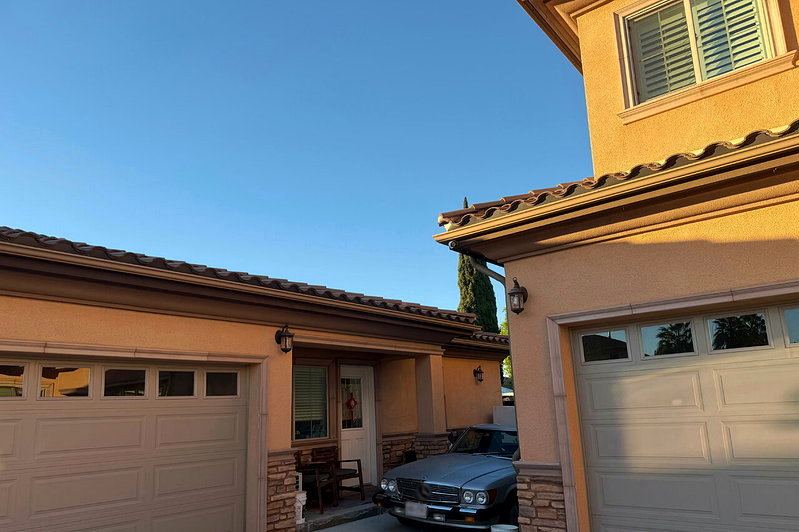
According to the ruling, the case occurred in Palos Verdes Estates in Los Angeles County. The owner, Wei Xi, applied to build an ADU in 2020 and originally planned to build this cabin complete with the main house. He explained that the city government requires several additional approval processes and the application will not be approved until 2023.
He said in the complaint that the city needed to apply for a conditional use permit, undergo additional plan review and receive approval from the Palos Verdes Homes Association’s Art Jury. He also said that a city planning commissioner personally lobbied neighbors to oppose the project.
Shi Wei believes that his ADU should go through simplified procedures according to the law, and that the city government should not set up these additional checkpoints. As the project progressed, the cost also increased. They claimed that the delay led to an increase in construction charges, interest and design professional fees, and also prevented them from using the property as scheduled. In addition, the property value had decreased, and the loss was estimated at more than 1 million yuan, so they sued the city in October 2024.
The city government’s defense is that the state government’s promotion of ADUs is to increase housing supply and ease the housing crisis, not to protect the investment of individual homeowners, and there is no explicit provision for delay compensation in the relevant approval rules. The court of first instance accepted this reason and ruled in favor of the city.
California’s second appeals court overturned the original ruling on October 23. The court held that state law requires local governments to process qualified ADU applications in a timely manner, and that the direct beneficiaries are homeowners. The system aims to save homeowners from additional approvals and burdensome local regulations. Homeowners’ protections cannot be denied just because the law requires the housing shortage to be addressed as well.
Shi Wei claimed that the city government failed to process the application in a timely manner and in accordance with the law, causing him financial loss. The Court of Appeal found that the cause of action he had raised was sufficient for the case to continue and that it could not be struck down by the court at this stage.
According to the San Francisco Chronicle, Shiwei works in real estate and has built ADUs. The decision also gives other ADU homeowners who have experienced illegal approval delays a legal basis to recover damages from local governments. Swee’s attorney Jeffrey Lewis said local governments can no longer create barriers to new housing applications. Christopher Elmendorf, a law professor at UC Davis, believes its impact could extend to other residential developments, which are required by law to go through a streamlined approval process.
City attorneys did not immediately respond to The Chronicle’s request for comment. The city can still seek review from the California Supreme Court, and it has not yet been determined whether or how much Sway will be compensated.
Summary FAQ
-
The case occurred in the village of Palos Ford in Los Angeles County. Homeowner Xi Wei applied to build an ADU in 2020, but had to go through additional processes. They did not get approval until 2023. Costs and interest continued to increase due to delays in the project.
-
He advocated that ADUs should be subject to simplified approval according to law, but the city added conditional use permits, additional planning reviews and aesthetic committee approvals, resulting in a total loss of construction fees, design fees, interest and property value exceeding 1 million yuan.
-
No. The court only found that his cause of action was sufficient to continue the lawsuit, stating that he had a legal basis to recover damages from the city. As far as delay liability, actual damages and the final amount of compensation are concerned, it will still have to wait for subsequent court decisions.