
AI summary
Summary of article:
A 37-year-old Genentech data scientist in San Francisco died of an overdose of a counterfeit product containing MGM-15, and officials warned that such kratom derivatives are powerful and dangerous.
san francisco Last month, the first accidental overdose death from the new synthetic opioid MGM-15 was reported in San Francisco on the 28th, the Chronicle reported. The identity of the deceased was revealed on the 28th. He was 37-year-old Robert Schuldt. He worked as a data scientist at Genentech, a famous biotech company. His family told investigators that he had recently received a doctorate degree and had successfullylose weight And with a positive outlook towards the future, only to die suddenly just when it seemed that life was entering a new phase.
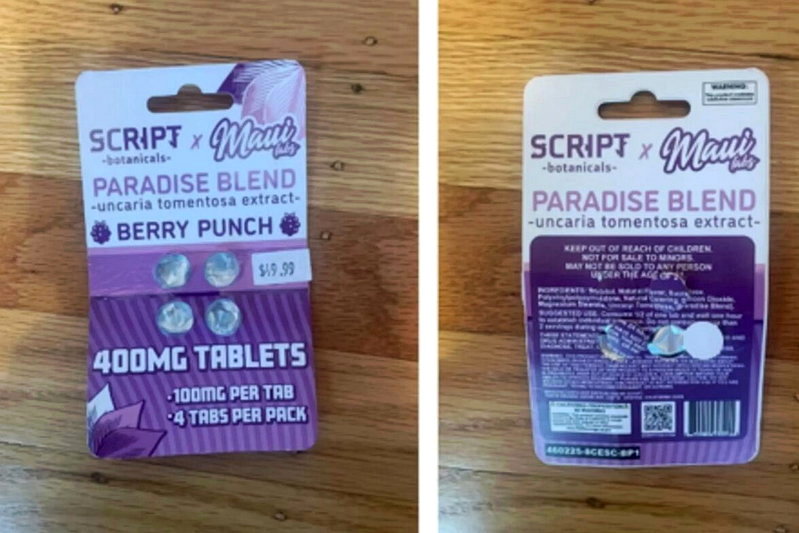
Forensic reports showed that MGM-15 was found in Schulte’s blood, and investigators also found empty packages labeled “Cat Claw Botanical Extract” among his belongings. Health officials noted that the product’s packaging contained neither MGM nor kratom-derived ingredients.
According to the forensic report, around 5 a.m. on September 22, Schulte’s unusually loud snoring woke up his fiancee. After this the fiance went to the living room sofa and continued sleeping. When he woke up about two and a half hours later, he found Schulte unresponsive in the bedroom of his Alamo Square apartment and immediately called 911.
The rescue operator on the line instructed him to take Schulte to the floor and perform chest compressions. Despite first aid, Schulte died at 7:55 in the morning.
Schulte had complained of dizziness the day before, but was otherwise in good health, his fiancee told investigators. He said that Schulte had occasionally used drugs recreationally in the past, but did not specify the type, and he was not aware of any recent alcohol or drug use by Schulte.
Investigators learned that Schulte had recently purchased a product sold under the name “Cat Claw Plant Extract” and that kratom alkaloids were found in the packaging. Kratom is a psychoactive plant and MGM-15 is a synthetic drug derived from it.
Hillary Kunins, director of behavioral health services at the San Francisco Department of Public Health, said at a press conference that the packaging of the product used by the deceased made no mention of it containing MGM, nor was it labeled as a kratom-derived product.
Kunings said MGM-15 is 50 times more potent than morphine and has also caused overdose deaths in Utah, Mississippi and Washington state. Such synthetic derivatives can cause respiratory obstruction, and strength can vary widely between products.
The Municipal Public Health Bureau issued a health alert on the 21st, stating that it had recently seized hundreds of products suspected to contain kratom from two tobacco shops. Public health director Daniel Tsai stressed at a press conference: “The sale of these products is illegal and are not approved for human consumption.”
Despite Governor Newsom’s pledge to take strict action, high potency products are still available at smoke shops and gas stations.
Kratom itself is not a federally controlled substance, but the FDA says it cannot be legally added to food or marketed as a dietary supplement. According to original reports, the federal Drug Enforcement Administration in August classified MGM-15 and other dangerous kratom derivatives as Class I controlled substances, restricting their manufacture, sale and use. California has not yet passed any laws explicitly banning kratom. Currently, food and beverages containing kratom are considered adulterated products based on food safety regulations and are banned from being sold for human consumption.
Katie Hill, an epidemiologist at the Yale School of Public Health, said there is currently very limited research on the effects of MGM-15. “The federal government is pushing to decriminalize this drug, but most people don’t even know what it is.”
University of Florida College of Pharmacy researcher Oliver Grundman reviewed the report and said cat’s claw is traditionally an herbal product used to reduce inflammation and relieve pain. Schulte probably did not know that the product she purchased contained synthetic compounds that “should never be in a product.” However, it has not been confirmed whether Schulte was aware of the actual contents of the product.
Health officials urge residents to avoid using unregulated supplements and kratom derivatives and to call 911 immediately if a suspected overdose occurs. Officials believe the opioid overdose rescue drug naloxone (trade name Narcan) could reverse the effects of MGM-15.
According to Schulte’s LinkedIn profile, he works as a health economics and outcomes research scientist at Genentech. In the past, she studied home health care at the University of Arkansas for Medical Sciences and served as a volunteer teacher of English as a Second Language and computer science. Spokespeople for Genentech and his family declined to comment.