
Public protests, political pressure and rising fears challenge rapid AI expansion
By Saurabh Katiyar | Washington
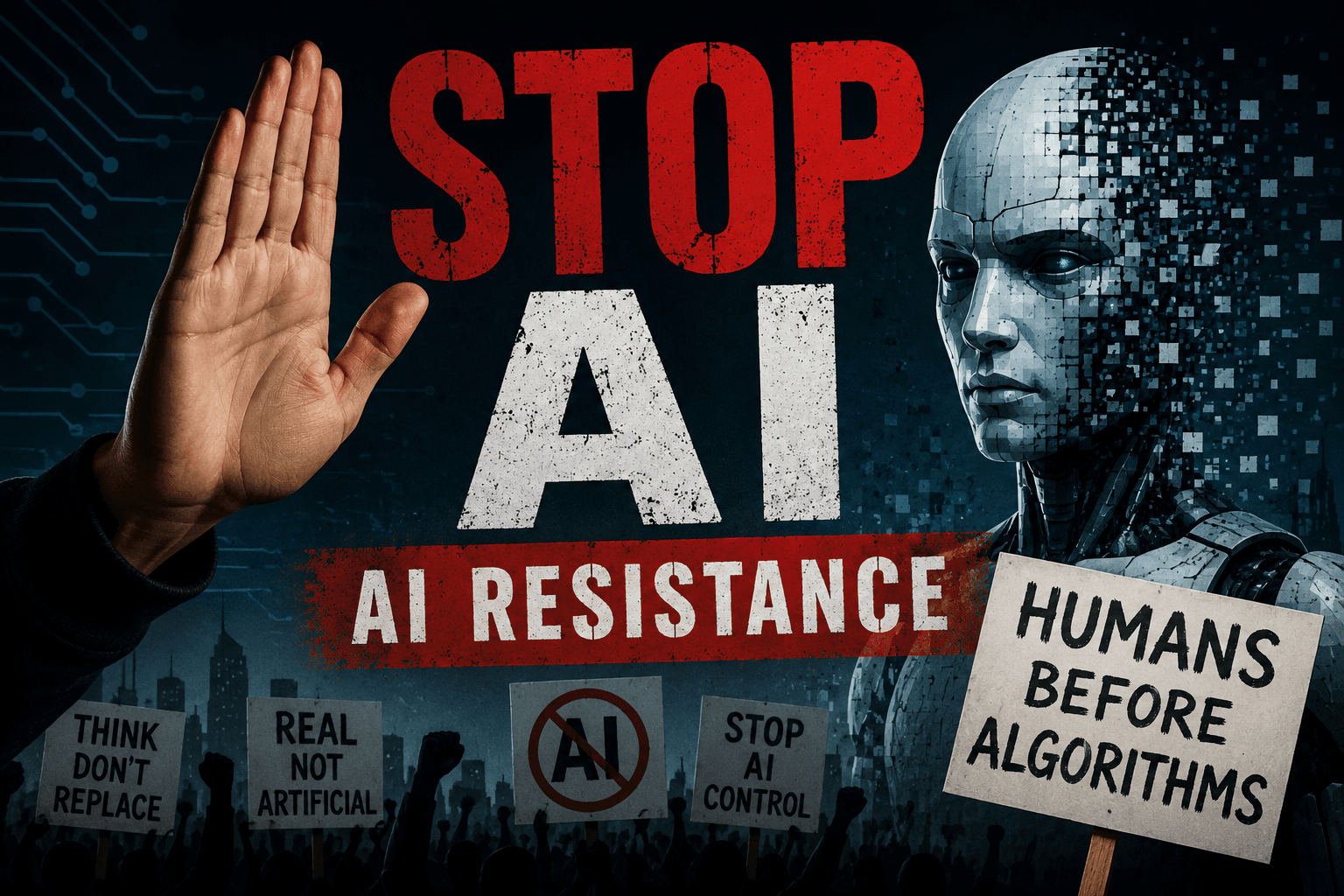
AI Resistance is growing across the United States as public concerns over data centers, job losses and social impact continue to rise. The debate around AI expansion has intensified in recent months, with protests, political backlash and community opposition affecting major technology projects across the country.
According to an analysis published by ,
The Wall Street Journal
the rapidly expanding AI industry is now facing a growing crisis linked to public distrust and resistance. Events ranging from tech executives being booed during public speeches to the cancellation of large data center projects show increasing frustration with the pace of AI development.
Recent reports indicate that public opposition is already affecting infrastructure investments. Data Center Watch, an organization that tracks development projects, stated that more than 20 data center projects were cancelled during the first quarter of this year because of local resistance. Last year, 48 projects faced delays or were blocked entirely, representing investments worth nearly NT$156 billion.
Communities across several states have raised concerns about rising electricity costs, environmental impact and increased pressure on local infrastructure caused by massive data centers used for AI computing.
AI Expansion Faces Public Backlash
Former Google CEO Eric Schmidt recently experienced public criticism while delivering a commencement speech at the University of Arizona. Schmidt spoke about the future of artificial intelligence and described the technology as a transformation that would be “larger, faster and more far-reaching” than previous technological revolutions. His comments were met with boos from sections of the audience.
Public opinion surveys in the United States continue to show strong concerns about artificial intelligence. Many workers fear AI could replace millions of jobs across industries, while parents and educators worry about its effects on education and children’s mental health.
Political pressure surrounding AI has also increased. President Donald Trump previously acknowledged that the AI industry needs “public relations assistance” to improve public perception of data center projects and technological expansion.
Several AI companies, including OpenAI and Anthropic, are reportedly investing hundreds of millions of dollars into midterm election campaigns and lobbying efforts to counter growing anti-AI sentiment.
You can also read our coverage on artificial-intelligence-growth
Protests and Political Reactions Increase
Opposition to AI projects has led to political consequences in multiple American communities. In Festus, Missouri, the city council approved a $6 billion data center project. However, just one week later, four council members who supported the development were recalled and removed from office.
In Indianapolis, Democratic city councilor Ron Gibson voted in favor of a data center project before reportedly finding a threatening note reading “NO DATA CENTERS” placed under his doormat days later.
Federal investigators are also examining security threats linked to AI companies. According to a federal indictment, a 20-year-old Texas man is accused of throwing a petrol bomb at the home of OpenAI co-founder Sam Altman in April. Authorities said the suspect also allegedly threatened OpenAI headquarters.
From Maine to Arizona, dozens of local communities are actively opposing new data center construction projects. Residents argue that the facilities consume massive amounts of electricity and water while providing limited direct benefits to local populations.
AI infrastructure analyst Dylan Patel, CEO of consulting firm SemiAnalysis, said public dislike of AI could create even larger protests in the near future.
“People hate AI,” Patel said during a recent podcast interview. “AI is less popular than Immigration and Customs Enforcement and more disliked than politicians.”
Despite the resistance, technology companies continue investing billions of dollars into artificial intelligence systems and computing infrastructure. Industry leaders argue that AI will drive future innovation and economic growth, while critics warn that rapid expansion without regulation could create serious social and economic consequences.