
Enrique, who claims to be a high-ranking coordinator for the Sinaloa Cartel in Mexico , revealed to the BBC how precursors to the deadly drug fentanyl were shipped from factories in China to Mexico. This supply chain was orchestrated by a man known as “Brother Wang.” “Brother Wang,” whose real name is Zhang Zhidong, is a graduate of Peking University and has been extradited to the United States.
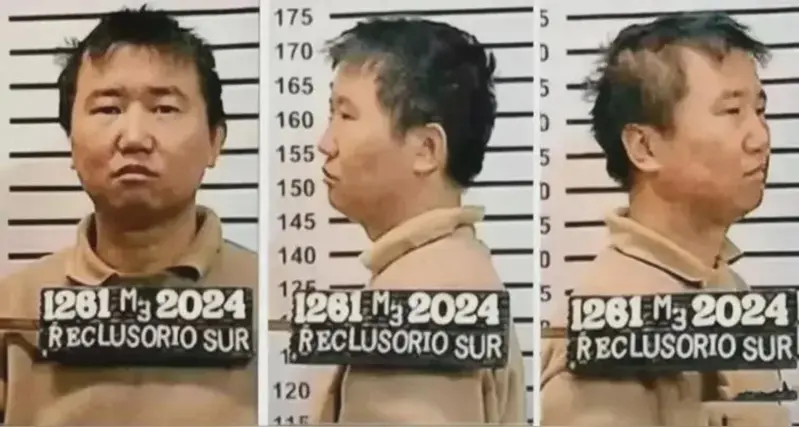
According to a BBC report, citing U.S. Department of Justice data, “Brother Wang,” known as the “Fentanyl King,” is a 39-year-old Chinese man whose real name is Zhang Zhidong. He was arrested in Mexico in 2024 and went into hiding until he was recaptured last year and extradited to New York to await trial.
When Zhang Zhidong appeared in court in New York last year, then-U.S. Deputy Attorney General Todd Blanche described him as “one of the world’s most dangerous drug traffickers,” accusing him of “running a global criminal enterprise that smuggled large quantities of cocaine, fentanyl, and methamphetamine to the United States.”
Zhang Zhidong denies the charges and is awaiting trial. His lawyer declined to comment to the BBC, citing the ongoing trial.
However, the interviews with members and former colleagues of the Mexican drug cartel Sinaloa by the BBC have given the outside world a glimpse into how top graduates from China’s top universities gradually became key figures between Chinese chemical manufacturers and Mexican drug labs.
Zhang Zhidong graduated from the Spanish Department of Peking University in 2010. A year later, he went to Mexico to work for a Chinese-funded company engaged in iron ore mining, and quickly rose to a senior position.
Alex (pseudonym), who attended the same university as Zhang Zhidong and later worked at the same mining company, said that Zhang Zhidong was “good at negotiating with people, very resourceful, and adaptable to various environments.” Especially when doing business in Mexico, it was inevitable to deal with underground forces such as drug cartels, but he always had a way of building relationships with “influential people in the local area, whether official or unofficial.”
The mining company went bankrupt in 2013, and Alex returned to China, but Zhang Zhidong chose to stay in Mexico.
Enrique, a member of the drug cartel, said that Zhang Zhidong later became involved in the drug business and that his relationship with a female relative of a drug lord allowed him to infiltrate the inner circle of the cartel.
Another member of the drug cartel responsible for running errands, Luis (pseudonym), said that in 2019, he was asked by his boss to act as a lookout for a meeting, at which time Zhang Zhidong “came to promote his product,” namely the chemical raw materials needed to manufacture fentanyl. In his view, Zhang Zhidong was the one who brought fentanyl into the group and started this business line.
Enlig explained the process of ordering chemical raw materials from Zhang Zhidong. Zhang Zhidong would use his connections in China to obtain the raw materials, which would then be transported to Mexico by air or sea, and then distributed to the drug-making personnel in the underground laboratory in Sinaloa.
According to an investigation by Mexican security agencies, Zhang Zhidong’s illegal businesses spanned the Americas, Europe, China, and Japan.
Mexican authorities say Zhang Zhidong is suspected of smuggling and distributing more than 1,000 kilograms (about 2,204 pounds) of cocaine, 1,800 kilograms (about 3,968 pounds) of fentanyl and 600 kilograms (about 1,322 pounds) of methamphetamine, and accuses him of handling more than $150 million in illicit drug profits annually.
Last year, the U.S. Department of Justice issued a press release detailing the indictment against Zhang Zhidong. In addition to accusing him of drug trafficking, the indictment also accused him of recruiting people to open bank accounts in the names of more than 100 shell companies, collecting cash across the United States, and then “depositing the cash into the shell companies’ bank accounts and wire-transferring the funds to other beneficiary accounts in order to launder money outside the United States.”
According to the Central News Agency, members of a drug cartel in Culiacan admitted that after Zhang Zhidong’s arrest, drug precursors became “extremely difficult to obtain,” forcing the cartel to “start from scratch and find a new path.” Enlig revealed that they are currently looking for a new candidate, also a Chinese national.