
AI summary
Summary of article:
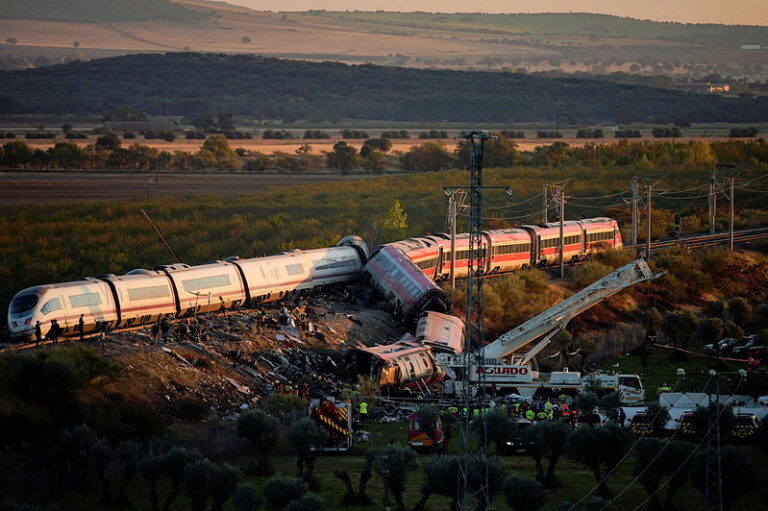
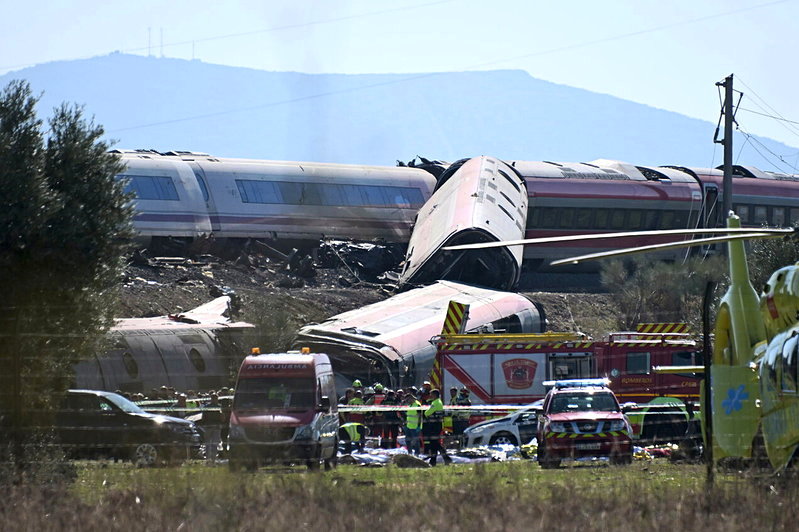
At least 68 people died in a high-speed train collision in Spain. The media revealed a recording showing that the front car had stalled and could not be restarted, but the dispatch center still instructed the rear car to drive normally. It is suspected that an operational error led to the tragedy.
spainhigh speed rail At least 68 people died in this collision. The media revealed that before the incident, the train in front had informed that the train had stopped and could not be restarted. The dispatch center still instructed the trailing train to proceed normally without issuing a timely warning or requesting to slow down.
Spanish Transport Minister Oscar Puente previously reported that the dispatch center had instructed Spanish National Railways (Renfe) AVE trains to resume normal operations, but that trains should remain suspended, or at least take speed limit measures, depending on the situation at the time.
Spanish media “EL PAÍS” reported that the three key recordings include two calls between a private company IRYO train driver and a dispatcher, and a call between a trailing AVE train driver and the same dispatcher. These recordings confirmed major operational errors prior to the accident.
●AVE receives instruction to resume driving and confirms driving requirements
In the verbatim version published by The Nation, the most important paragraph is the call between the dispatch center and the AVE train; Records state the person and time of the call were 8:36 a.m.
The dispatcher instructed the driver to first disconnect and reconnect the continuous train control system (LZB), and then resume driving. The dispatcher further informed that the train should run in normal driving mode under Side Signal Blocking System (BSL).
The train driver then asked if this meant continuing as normal, and the dispatcher replied in the affirmative.
The significance of this call is that the communication record clearly shows that the driver not only received instructions to resume driving, but also confirmed what type of travel the train should travel and received a clear answer from the dispatcher.
The AVE train was located approximately 25 kilometers behind the IRYO train. Officials believed that this instruction violated safety regulations applicable to the situation. According to the rules, the train must run blind or at a speed limit of 40 kilometers per hour.
●IRYO train received instructions but could not restart
The other two calls provided clues about further train conditions.
According to reports, the IRYO train driver also received instructions to resume normal operations. Seven minutes later, the driver contacted the dispatch center again and said that the train could not be restarted and was still stalled.
This is important to restore the event. The dispatch center’s permission to continue the train does not mean that the train has restarted, nor does it prove that the track section originally occupied by the train has been cleared.
The second call between IRYO Trains and the dispatch center clearly explained the discrepancy between the above instructions and the actual position of the train. According to the timeline published in the report, only 5 minutes were left for the collision to occur.
Tragedy occurred due to suspected human error