
AI summary
Summary of article:
Xu Yongtai believes that the negative news exposed by Huang Renxun in the media may involve political and market conflicts; It also reminds Taiwan that TSMC and related companies need to be more cautious under pressure from the United States and China.
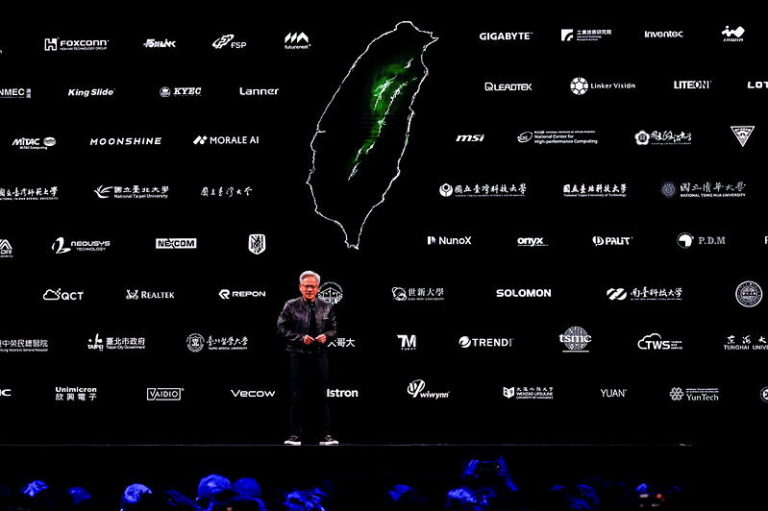
for recent timesHuida ceoJen-Hsun Huang Zou Yongtai, Ph.D. Professor of Economic History and Philosophy at Oxford University believes that the US media has exposed negative personal news about Huang Renxun in batches, which is worthy of in-depth observation from the perspective of politics, industrial competition, and capital markets. It cannot be denied that there is suspicion of political pressure and insider stock manipulation behind this. And Huang Renxun’s experience can becomeTSMC Lessons from the past for Taiwanese and Chinese companies in the United States.
Su Yongtai said that Cantor Fitzgerald Semiconductor analyst CJ Muse was a guest on the “Squawk on the Street” program to discuss the resignation of Huang Renxun. He said the United States can use political power to treat Huida today, and it can also treat Taiwanese or Chinese-funded companies like TSMC in the United States in the same way in the future. Even if Huang Renxun leaves Huida’s leadership position, his technical knowledge, industrial connections and operational capabilities will still be of high value. If the United States presses Huang Jen-hsun too much, it may push him to other countries.
Huang Renxun has frequently visited China in recent years. Huida has major business interests in the Chinese market. Huang Renxun has always advocated that the United States should not strangle the Chinese market. Xu Yongtai believes that the United States should not push Huang Renxun too far, otherwise it cannot be ruled out that he will start another company in Taiwan or Southeast Asia in the future and become Huida’s new competitor, which will have a direct impact on Huida’s share price.
Regarding the recent batch of negative news about Huang Renxun reported by the US media, Xu Yongtai believes that one should not only look at the surface of the news, but also look at the timing and rhythm of news display, and whether it involves political wrestling, industrial interests, and capital market operations. Regarding Huida’s stock trend, he believes that the stock is in deep water and has too many changes, so it is not appropriate to express personal opinion. However, Huida has a healthy financial report and market capitalization fundamentals to support it. The specific performance of a stock should be judged based on its financial reports and actual profitability of earnings per share (EPS), and cannot be influenced by media news alone.
He reminded that the Jen-Hsun Huang incident is also a warning for Taiwan. Taiwan’s biggest advantage at present is TSMC’s wafer manufacturing technology, but this advantage is not permanent. At present, there is still no competitor that can truly replace TSMC completely. The United States actively invites TSMC to set up factories in the United States because of its future technology and production capacity. TSMC must carefully handle the Chinese mainland market and related supply chain issues to avoid the US export control red line. After all, the current level of trust in China by the United States is extremely low. The Chinese market is huge and the global trade network is very complex. Any transaction involving China could become an entry point for pressure from the United States.
Xu Yongtai emphasized that the bargaining chip that Taiwan can now really control is its semiconductor wafer manufacturing capacity. The Jen-Hsun Huang incident reminded Taiwan that the national interests of the United States and corporate interests are not necessarily compatible. Taiwan must cherish its current technological advantages and cannot regard TSMC’s leading position today as a permanent guarantee.
Summary FAQ
-
He believes that we should not just look at superficial news, but also pay attention to the timing and rhythm of exposure, as this may contain traces of political pressure, industrial competition, and even capital market operations, which deserve deeper scrutiny.
-
Xu Yongtai cited analysts’ opinions and pointed out that if the United States can use political force to deal with Huida, it can also treat Taiwanese or Chinese-funded companies in the United States in the same way in the future, and TSMC can therefore serve as a lesson for others.
-
He reminded Taiwan to cherish its wafer manufacturing technology advantage, as it is not a permanent guarantee; TSMC should avoid touching the US export control red line when dealing with the Chinese market and supply chain, so as not to become an entry point for pressure.