
AI summary
Summary of article:
The People’s Liberation Army reported that the Armed Police and Air Force implemented savings in military construction by recycling parts and reusing briefcases, and improved training efficiency through cost control and cycle management.
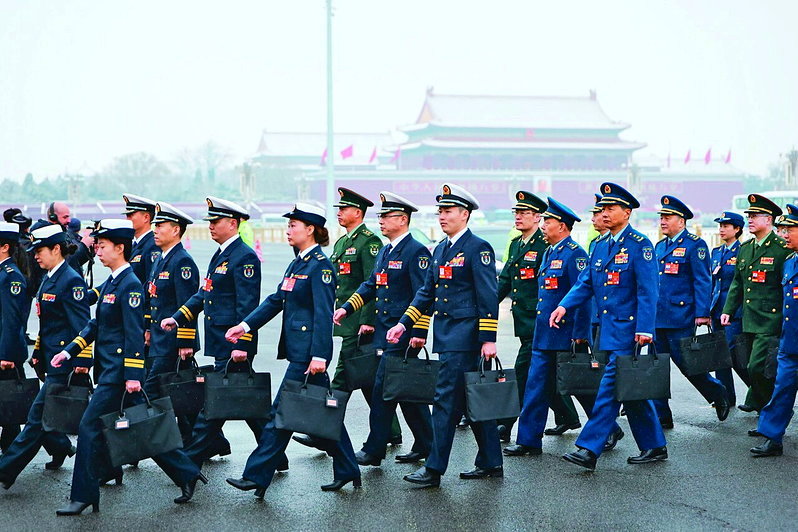
Communist Party of China Emphasis on diligence and thrift in building army, armed policeHenan The maintenance studio of a certain detachment of the corps sorts and stores non-damaging parts of damaged equipment for self-development and improvement of training equipment, “turning trash into treasure”. During the professional training of a certain unit of the Air Force, old briefcases with marks of use were distributed to the participating officers and soldiers.
《People’s Liberation Army The Daily reported on the 26th that in the maintenance studio of a detachment of the Henan Armed Police Corps, after each equipment maintenance and equipment overhaul, officers and soldiers will classify and store the non-damaged parts of the damaged equipment for self-development and improvement of training equipment, “turning waste into treasures.” Each team also jointly carried out a “part sharing” activity, where waste parts of the same type were exchanged, and scrap that could not be reused were recycled and disposed of in a unified manner.
One soldier said, “We independently designed mobile target drones and extended magazines, and saved a lot of procurement funds by recycling old parts.” The soldier also said, “We can improve training equipment to meet actual combat requirements without applying for additional equipment funds. The training effect is improved, and support costs are reduced.”
The newspaper also released an article on the 24th stating that a certain unit of the Air Force implemented the requirements of diligence and thrift and “new briefcases will not be issued during this training camp.” It said participating officers and soldiers received old briefcases and would have to return them after the training was over and reuse them next time. According to reports, during the professional cadre training of a certain Air Force unit, the participating officers and soldiers were given old briefcases with signs of use. Some trainees said that “for a time, they thought the staff had released them by mistake.”
Zhang Nan, assistant of the above-mentioned ministry agency, said that in the past, new briefcases were issued for every training session or large meeting, but the usage rate was not high. Officers and soldiers who frequently attended training sessions and meetings would often amass a stack of briefcases. To enforce the requirements of diligence and economy, leaders of this department have established a management model of “integrated purchasing, centralized storage, distribution before the meeting, recovery after the meeting, cleaning and disinfection and recycling” of briefcases. After the training session, they are returned evenly and recorded in the ledger, and discarding in private is strictly prohibited.
This year, the Army is emphasizing “building an army through hard work and thrift.” In March, Xi Jinping, General Secretary of the CPC Central Committee and Chairman of the Central Military Commission, called for advancing the reform of military budget management, strengthening full-chain control and performance evaluation, and “spending every penny wisely.” In June, the General Office of the Central Military Commission issued measures to make the entire army adhere to the idea of ”staying tight”, focus on cost control and full-process control, and effectively improve the quality and efficiency of military construction.
Summary FAQ
-
After equipment maintenance and equipment overhaul, the detachment will classify and store non-damaged parts on damaged equipment, and then use them to develop and improve their own training equipment. Through “parts sharing”, inoperative parts can be exchanged to reduce purchasing costs.
-
According to the report, the ministry used to issue new briefcases but the utilization rate was not high, resulting in useless waste. Therefore, the department switched to a model of integrated procurement, centralized storage, distribution before meetings, collection after meetings, cleaning, disinfection and recycling to improve efficiency.
-
These cases show that the army continues to promote the ideas of “building the army diligently and thriftfully” and “living a tight life”, insists on using every penny wisely, and improves the quality and efficiency of military construction through full-chain management and control, performance evaluation and cost control.