
AI summary
Summary of article:
A 70-year-old man in Kaohsiung suffered from phototoxic retinopathy after being hit by a laser while using binoculars to look at people on stage at an election event. His vision dropped from 1.0 to 0.5, but improved to 0.8 after treatment.
A 70-year-old man in Kaohsiung, Taiwan was keen to shout “frozen garlic” (elected) at a campaign party. He used binoculars to clearly see the candidates and big political stars on the stage. Unexpectedly, the stage laser beam crossed, and the next moment he experienced burning, stinging, distorted vision, afterimages, and severe photophobia in his eyes. He was diagnosed with “phototoxic retinopathy” and lost 50% of his vision. Ophthalmologists warn that the light-gathering effect of binoculars may increase the risk of retinal damage.
Hong Kiting, a professor of ophthalmology who treated the man, said that as the recent election campaign intensified, he went to several night rally parties, where flags were waving, sirens were blaring, colorful lights were on the stage and the smoke effect was extreme one after another. He was in a high mood and shouted “frozen garlic” at the candidates and speakers.
To see the candidates on stage more clearly, he specially brought a telescope to the venue. While he was mesmerized by the scene, suddenly a laser light was shot into his eyes, causing symptoms such as burning, stinging and red eyes. Originally clear scenes began to become blurry and distorted.
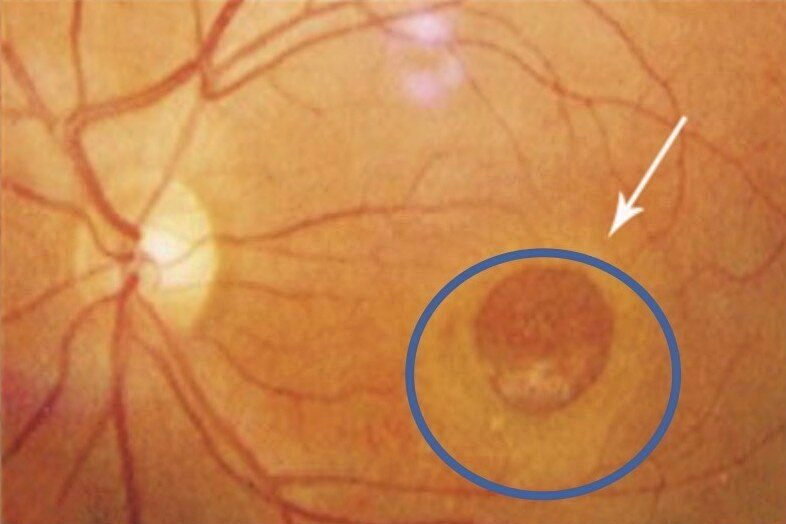
At first, I thought it was just a short-term result. However, symptoms did not improve, vision deteriorated significantly, and the afterimage did not disappear. That’s when I realized something was wrong. Examination found that vision in the left eye had halved from 1.0 to 0.5, there were macular holes and thickening of some retinal tissue. It was diagnosed as phototoxic retinopathy caused by laser light.
Why would there be such serious consequences, if only scanning by laser light? Hong Kiting pointed out that binoculars have light gathering effect, which allows the retina to withstand higher energy, and the degree of damage is more serious than seeing directly with the naked eye. In the past, telescopes were used therapeutically to view the sunset over Xindian Creek, which caused damage to the retina.
Hong Kiting said that after high-energy light enters the eye, it causes photochemical toxicity and thermal effects, destroys photoreceptor cells and retinal pigment epithelial cells, induces oxidative stress, generates free radicals, and attacks the surrounding normal cells, causing inflammation and symptoms of macular edema or hole. In severe cases, permanent vision loss may occur.
After evaluation by the medical team, oral administration of zinc, copper, selenium and other trace elements, as well as non-steroidal anti-inflammatory eye drops and other medications, as well as intraocular drug injections were used. After about one and a half months of treatment, the macular edema gradually subsided and visual acuity improved from 0.5 to 0.8, bringing relief to the man.
Hong Kiting reminded that in election ceremonies, concerts and large-scale events, it is common for bright rays of light to create visual shock in large scenes. People should avoid looking directly at the laser light source, let alone viewing it through optical instruments such as telescopes and binoculars. Organizers must also ensure that the stages comply with safety regulations to prevent the laser beam from moving toward the audience.
If you experience blurred vision, a dark shadow in the center of your field of vision, distorted images, or persistent vision after exposure to bright light, you should seek medical help as soon as possible. Do not ignore it as a mere flash of light. It’s true that you might be excited to shout “frozen garlic” during an election campaign, but don’t lose sight of it.
Summary FAQ
-
In order to clearly see the people on stage during the night’s festivities, he brought his own binoculars to watch, but became affected by the stage’s laser lights, which caused burning, stinging, distorted and residual images in his eyes, and he was eventually diagnosed with phototoxic retinopathy.
-
Because the telescope has the effect of gathering light, it will focus the light energy onto the retina, allowing the eyes to withstand higher energy. The damage caused is often more severe than seeing directly with the naked eye, and can even cause permanent vision damage.
-
If blurred vision, central black shadow, image distortion or persistent afterimages occur, you should seek medical examination as soon as possible. Don’t mistake this for a brief flash. Also avoid looking directly at the laser light source and using optical equipment.