
AI summary
Summary of article:
California’s Bill 40, a wealth tax proposal, advocates a one-time 5% levy on the super-rich to fill the gap in Medicaid. However, disputes between all parties focus on the exodus of the rich, loss of tax base and risks to legitimacy.
this yearmidterm elections OfReferendum A total of about 100 proposals in 37 states have been submitted directly to voters for a vote, ranging from the tax system, bond issuances to electoral reform. There are no candidates who can evaluate referendum proposals on their own behalf, and the provisions are often difficult to write. This is the part of the ballot that requires the most homework beforehand.
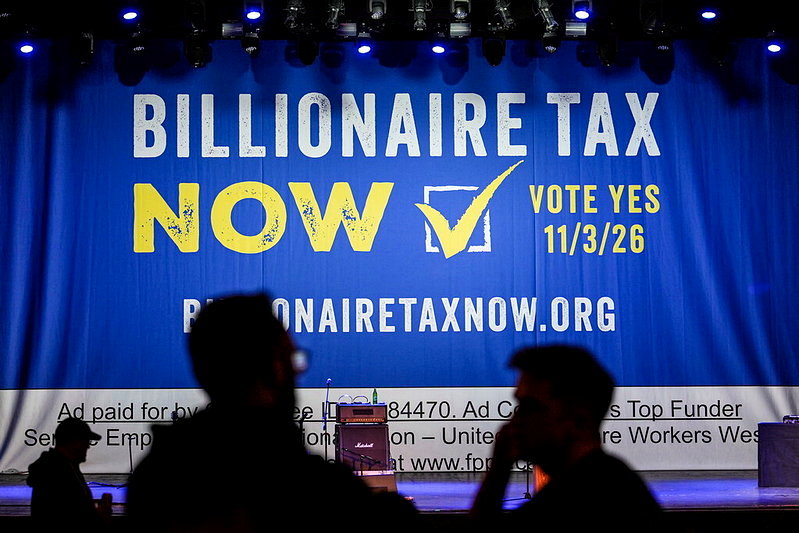
California Voters will vote on Proposition 40: The Billionaires Tax Act, which would impose a one-time 5% tax on any California resident with a net worth of more than $1 billion. This is an unprecedented tax bill in the United States. Proponents claim it could raise 100 billion yuan to bridge the funding gap of California’s Medicaid program (Medi-Cal). However, this proposal is highly controversial. Whether it’s “robbing the rich to give to the poor” or “killing the goose that lays eggs” will be a test of the intelligence of California voters.
The proposal is titled “A lump sum money tax for state-funded health care programs”, as it appears on the ballot. Because the One Big Beautiful Bill Act supported by the Trump administration would drastically cut federal Medicaid funding, threatening spending on the California Medicaid program (Medi-Cal), which covers about a third of California residents.
Therefore, the Service Employees International Union-United Healthcare Workers West launched Bill 40, a wealthy property tax proposal that aims to raise a large amount of money to establish a fund to fill the funding gap of the California Medicaid program (Medi-Cal).
The union claims that the wealth tax will be imposed on 200 to 250 billionaires (with a total wealth of about 2 trillion yuan) and could generate 100 billion yuan in tax revenue, 90% of which would be used for medical care and 10% for education and food aid.
Advocates further pointed out that the wealth of California billionaires has increased by 144% in three years, from 843 billion yuan in 2022 to more than 2 trillion yuan by the end of 2025. The inflation-adjusted wealth of billionaires has increased 30-fold since 1982, while the average inflation-adjusted income of California residents has nearly doubled. Proponents argue that the difference arises from lower taxes and because billionaires benefit from California’s business environment, they should use some of their wealth to support the Social Security system. Corporate income taxes are allocated based on sales in the state, not where the owners live, so these taxes will remain in California whether the billionaire leaves the state or not.
However, analysis by Hoover’s Proposal Lab at Stanford University revealed that the main issue with the proposal is not whether billionaires can afford it, but whether California residents can benefit from it. This tax would raise only about $40 billion over five years, but nearly one-third of taxable wealth had already moved out of California before the tax took effect.
In the short term, the tax may increase revenues, but in the long term, one needs to consider the exodus of billionaires (an estimated net loss of up to 25 billion yuan) and the tax losses caused by the businesses and startups they founded. Additionally, the timing of the tax does not coincide with the timing of federal funding cuts, and the tax faces significant constitutional and administrative challenges.
The Hoover Institution also reported that from the date the proposal was submitted to January 1, 2026, at least six billionaires have publicly announced they will leave California, including the two richest people on the list—Google co-founders Sergey Brin and Larry Page. The departure of these wealthy individuals alone would reduce California’s tax base by approximately $536 billion, approximately 30% of the proposed tax base; And many others may have gone without declaring publicly.