
AI summary
Summary of article:
An adult day care center in Flushing, New York was accused of using cash rebates to attract members and even requiring them to keep it confidential. Under tight monitoring, competition among operators has become uncontrolled, which has also reduced the number of elderly people who actually need services.
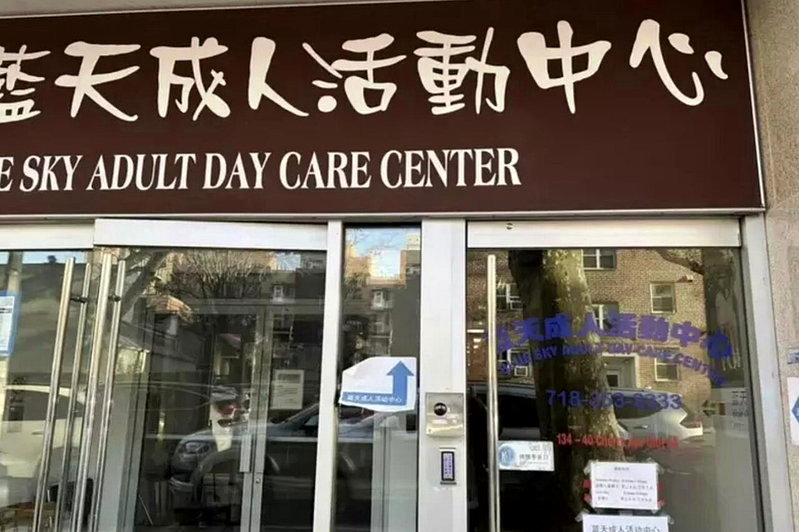
from New Yorkflushing After leaving an adult daycare center, Mr Huang (pseudonym) found not settlement details, but a stack of banknotes – 14,450 yuan, all in cash.
“He told me, don’t tell anyone. It won’t do you any good.” Mr Huang remembered what the day center staff told him at the time, and he is still horrified today.
This guy lives in flushingSugar The old man told our correspondent that he had lived in a local adult day care center for about a year. During this period, he not only saw the old man receiving cash regularly, but also suspected that his signature and service records were fraudulently used. Earlier this year, when he proposed to withdraw due to restlessness, the center actually handed him more than 10,000 yuan in cash at one time. Six months later, Mr Huang said in an interview that “not a penny of the money has been touched yet”. If law enforcement officials require it, he will hand it over in full.
As New York’s adult day care industry is increasingly scrutinized by federal and New York State law enforcement agencies due to potential white card fraud, the “kickback” lawlessness that has intensified over the past decade has gradually come to light: from some day centers giving gifts to clients to directly using cash kickbacks. Competition for members has developed to such an extent that some elderly people have started using “prices” to choose centres. As a result, operators who do not pay out quickly lose their members. And under the tightening of the regulatory and payment environment in the past two years, the elderly who actually rely on day care at the other end have begun to face the dilemma of service cuts.
Mr. Huang immigrated to the United States nearly 50 years ago. After retirement, he attended an adult day center in Flushing last February. He soon discovered that some elderly people would receive cash on a regular basis. The center sometimes did not say “distribute money” directly, but used code words such as “distribute candy” to inform them. “As soon as they heard it, everyone understood it and passed by.” He saw with his own eyes that the old people were called into the room one by one and they came out with envelopes in their hands. Some people even stepped aside to count the money.
He said some elderly people did not stay at the center long enough to participate in activities. Some people left after registering in the morning, and some rarely stayed to eat the free lunch or participate in activities, but they were always present when the money was distributed. Mr. Huang also said that he later noticed that the signatures on the service records were not written by him, and he suspected that the center had left attendance records that were inconsistent with the facts, even though the center had not actually provided services.
These things made Mr. Huang uncomfortable, so at the end of January this year he decided to step down. When he went to the center the next day, he was asked to leave. There was an argument. He said he was pushed by staff, so he called 911. After the police arrived, he tried to report his suspicion of welfare fraud to the center, and then went to the city police 109th Precinct to clarify the situation.
A few days later, center staff called his wife and expressed their desire to reach a “compromise” with her. Mr. Huang and his wife were invited to go there. A concerned person said that he had participated in the centre’s activities for almost a year, so the money “will have to be accounted for”. What he was ultimately handed was NT$14,450 in cash. Mr. Huang showed a photo of the cash, “The money is right here and has not been spent. If you ask me to hand it over at any time, I will hand it over.”
He said that when the cash was handed over, people at the center warned “don’t tell anyone”, otherwise “it won’t be good for you.” Mr Huang then called the police and informed the local representative. He no longer goes to the center, but he still worries that public reporting could lead to retaliation. The local civil representative said that because Mr. Huang was unwilling to take further action, the case was closed.
Many people who have been working in the Chinese community for more than ten years said that “day centers giving away money” is not a new thing. About 15 years ago, there were only a few adult day care centers in New York, and operators mostly attracted the elderly with professional services, activities and meals. “The earlier ones were opened by more professional people.” The change began more than ten years ago – “First it was small gifts, then money started being paid directly, and then the amounts got bigger and bigger.”
Many operators consider the period from 2018 to 2019 a turning point: before this, there were still only a few day centers that made direct cash payments. As competition increases, more and more day centers do this.
A former businessman said that cash and gift cards have gradually become the most direct tools to retain members, because no matter how rich the service activities are, they cannot compete with high discount benefits. This kind of competition eventually created a vicious circle: “Many operators did not want to make money from the beginning, but if they don’t pay, there will be no people, and if there are no people, they will go bankrupt.” Some operators even said that there were day centers in the industry that had become unsustainable due to greater discounting.