
AI focus
Summary of article:
- Main point one:Trilateral summits symbolize direct transactions between major powers and undermine multilateral mechanisms and alliances.
- Point 2:Putin could use the same framework to avoid isolation and advance his anti-Western regime demands.
- Key point three:Xi Jinping may strengthen his global security role, but he would be reluctant to damage relations with Europe.
The American magazine “National Review” published an analysis by Tziporah Fried, visiting senior researcher at the think tank “Hudson Institute” on the 26th, pointing out that Russia’s proposal to hold talks between the United States and Russia at the Shenzhen APEC summit in November is deeper than superficial issues and reflects that international relations are undergoing deep changes, with major powers increasingly replacing existing international institutions, alliances, and multilateral cooperation structures with direct transactions. Leaning towards.
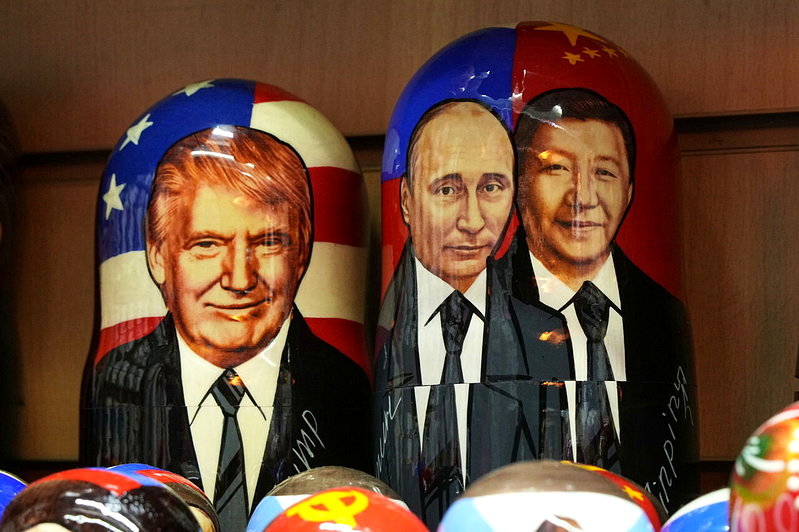
Kremlin aide Oshakov said on the 25th that Russian PresidentPutin President of the United Statestrump President of ChinaXi Jinping Organization and preparations for the trilateral talks to be held at the APEC Shenzhen summit have begun, and China is “very serious” about holding the talks.
Fried analyzed that for Trump, the trilateral summit is consistent with his diplomatic style of preferring direct negotiations between major powers rather than relying on multilateral institutions and traditional alliances. If the heads of state of the United States, China and Russia can be brought together, it would strengthen his image as a master of dealmaking. Washington could also improve US-Russia relations, reduce Moscow’s dependence on Beijing, and seek common interests in areas such as energy and counter-terrorism. However, European securities could also become a bargaining chip in major electricity transactions. However, if the trust of allies is sacrificed in the pursuit of short-term diplomatic success, it could undermine this most important strategic advantage of the United States.
In comparison, Putin may get a more significant benefit. The Trump administration recently agreed to import Russian diesel and suspend key sanctions against Russia, reducing economic pressure on Moscow without obtaining Russia-related concessions. Fried analyzed that if Putin could be in the same frame as Trump and Xi Jinping, it would help Russia get rid of international isolation after the invasion of Ukraine and further the goal of replacing the Western-dominated international system with a sphere of influence of major powers. If the United States and Russia negotiate Ukraine’s future without its participation, it would be tantamount to turning Russia’s military aggression into a bargaining issue between the United States and Russia.
For Xi Jinping, hosting the summit in China will strengthen Beijing’s indispensable position in global security governance. However, Fried pointed out that Beijing may be reluctant to support a deal legalizing the division of Ukraine for fear of damaging its relations with the EU, and would not be happy to see the United States and Russia improving relations at the expense of China’s interests. Moreover, the heads of state of the three countries appear to be on equal footing, but they hide the difference of Russia’s increasing dependence on China in economic, industrial and technological aspects.
Fried pointed out that this summit was reminiscent of the Yalta Conference in 1945, which allowed larger countries to decide their own destiny without the full participation of smaller countries. If the Shenzhen summit determines the future of Ukraine or negotiates security arrangements affecting Europe and Taiwan without the participation of the countries concerned, it will inevitably give rise to similar criticism.
However, at the time, the Soviet Union occupied much of Eastern Europe, and the West was almost unable to reverse the military reality. Today, Ukraine continues to resist, Europe is strengthening its defense capabilities, and global economic interdependence limits the division of exclusive spheres of influence by major powers. Therefore, the current situation is not so much “New Yalta” as “transactional multipolarity”, in which major powers exchange interests through bilateral or trilateral negotiations, but are still constrained by military, political and economic realities.
Fred warned that the real danger is not necessarily a repeat of the Yalta Conference, but that it will gradually become the norm for major powers to negotiate on other countries’ security and sovereignty issues without the consent of the country concerned.
When Trump responded to the possibility of a summit a few days ago, he hoped the focus of the meeting would be on nuclear arms control rather than the situation in Ukraine.
Fried pointed out that the trilateral summit could distract the outside world from Washington’s preparations to make concessions to Moscow and become diplomatic cover, although nuclear arms control is actually a serious strategic issue.
The new strategic arms reduction treaty between the United States and Russia expired in February this year. The two countries possess approximately 86% of the world’s nuclear weapons. China continues to expand its nuclear arsenal, gradually shifting the nuclear weapons competition from the United States and Russia to the top three. However, the scale of China’s nuclear weapons is much smaller than that of the United States and Russia, and there is no incentive to accept quantitative restrictions. Reaching a trilateral nuclear disarmament agreement is extremely difficult. Even if a summit of heads of state is held, it will be difficult to replace long-term negotiation and verification mechanisms; If the United States fails to fully consult its European allies, it is more likely to undermine European confidence in Washington’s security commitments.