
AI summary
Summary of article:
A post by a Turkish netizen discussing the identity of a Uighur woman in Xinjiang has sparked an online debate between China and Turkey. The dispute spans history, territory and academic narratives and may also impact people-to-people exchanges between the two countries.
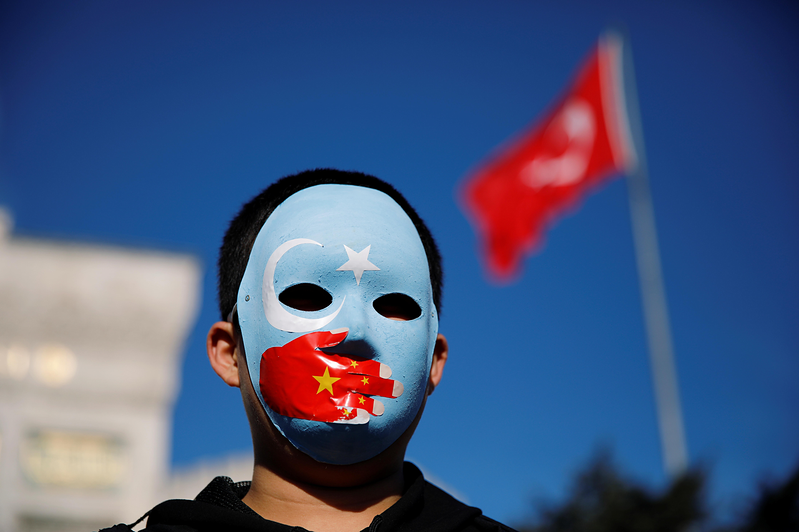
Oneturkiye related to netizensXinjiang Uyghur A post about the identity of ethnic minority women recently sparked an online confrontation between Chinese and Turkish netizens, with the debate spanning from identity to history and territorial ownership. Earlier this month, a Turkish netizen posted about his encounter with a Uyghur woman from Xinjiang, saying the woman did not look Chinese, but when asked if she considered herself a Turk, she replied: “No, I’m Chinese.” Turkish netizens called on him to “return to his roots”.
As of Friday afternoon, the post had been viewed more than 2 million times. Later the account was suspected to be deleted, but the related controversy continued to increase. The two sides voiced their opinions on issues ranging from Xinjiang issues to social order and daily life, and even publicly abused each other.
According to Hong Kong’s South China Morning Post, Xinjiang is home to about 12 million Turkic-speaking residents, the majority of whom believe in Islam. More than a thousand Uyghur people are estimated to live in Turkiye, making it the largest Uyghur settlement outside Central Asia.
Xinjiang has also become one of the most sensitive issues in China-Türkiye relations as Ankara seeks to expand its influence over the Uyghurs and other Turkic-speaking groups. The relevant statements in Turkiye’s new textbooks have further intensified the debate. “Central Asia” in the textbook has been renamed “Turkistan”, which refers to parts of Xinjiang, Gansu and Qinghai in China.
The WeChat public account “Little Compass” later published three articles to refute. One of them is titled “Turkistan?” Pure imagination! “The article states that Xinjiang, Gansu, Qinghai and other northwestern regions have been an integral part of China’s territory since ancient times. The ethnic groups in Xinjiang are important members of the Chinese nation family and have no historical connection with the imaginary “Turkistan”.
The article believes that linguistic ties should not be equated with territorial ownership and historical heritage, and states that “Turkistan” has never been a unified country or sovereign entity, but rather a general term for areas inhabited by Turkic nomadic tribes. The article also criticized the revision of textbooks as part of Ankara’s ambition to rewrite Eurasian history and export pan-Turkism.
The article said: “The new edition of Turkish textbooks forcibly incorporates China’s northwestern regions into the false region of Turkestan. This is a gross distortion of China’s historical sovereignty and a deliberate separation of the history of the integration of Asian and European civilizations. Its essence is to export geopolitical ambitions and create regional confrontation through education.”
China–Türkiye relations have improved in recent years. Turkey, plagued by hyperinflation, is seeking to strengthen economic, trade and investment ties with China, and Beijing has repeatedly called on the two sides to strengthen political mutual trust and support each other on issues of core interests.
Sources in Beijing said the relevant debate has been going on for more than a week and could impact people-to-people exchanges between the two sides. Basically, Turkey granted visa-free entry to Chinese people this year, which increased the desire of many people to travel to Turkey. However, this dispute, coupled with Türkiye’s severe inflation, may reduce this need for increased exchange rates.
Summary FAQ
-
It started when a Turkish national shared his experience of meeting a Uyghur woman from Xinjiang, questioning her identity and calling on her to “return to her roots.” This triggered a large number of reactions and controversies from netizens in both countries.
-
Because the two sides not only discussed ethnicity and language, but also the ownership of Xinjiang, the concept of Turkistan and the historical narrative, and further discussed sensitive issues such as Chinese sovereignty, pan-Turkism and geopolitics.
-
The main controversy lies in the fact that the textbook renamed “Central Asia” as “Turkistan” and extended its scope to China’s Xinjiang and parts of the Gansu and Qinghai regions. Criticizing it in the Chinese article, it has been described as distorting history and challenging China’s territorial sovereignty.