
AI summary
Summary of article:
At the 2026 WTT Montpellier Championships, no one has reached the top four in the national table tennis men’s singles. Combined with the senior competition record throughout the year, it can be seen that the men’s team faces challenges in terms of key points, the absence of key players and echelon support.
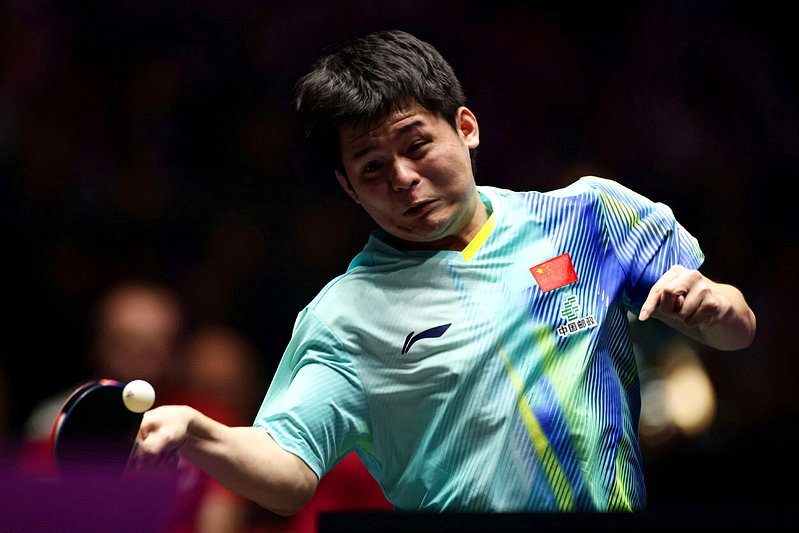
2026 world table tennis careermajor League (WTT) Montpellier Championship ended on the 1st,south korea Player Zhang Yuzhen won the WTT Championship men’s singles championship for the first time. This is also the first WTT Championship-level singles title in the history of the South Korean table tennis team. Unfortunately, in this tournament, five Chinese male table tennis players participated, three of them stopped after reaching the quarterfinals, and none reached the semi-finals. This is in stark contrast to the women’s team making it to the top four. People can’t help but ask: What happened to the national table tennis men’s team?
It needs to be clarified that the Montpellier Championships is only a WTT sub-station event, which is not enough to determine that the national table tennis men’s team has lost its project advantage. But putting this into the context of the 2026 WTT event, we can still get a glimpse of the key point potential of the International Association of Foreign Exchange players.
Judging from the results of this year’s WTT high-level events, Wang Chuqin only won the national table tennis men’s singles championship at the Singapore Grand Slam. The champions of the remaining events are all players from foreign federations: Doha Championship, players from the Chinese Taipei team.lin yunru winning the championship; In the Chongqing Championship, LeBrun Jr. of the French team won the championship; At the US Grand Slam, Japanese team Matsushima Terukora won the championship; At the Yokohama Championship, the Japanese team Tomokazu Harimoto won; At the Swedish Grand Slam, LeBrun Jr. won the championship; At the China Grand Slam, Matsushima Terukong won the championship; At the Macau Championship, Sweden’s Mörregaard won the championship; Apart from this tournament, the national table tennis men’s singles missed the championships in eight high-level events, with many failing to make the quarter-finals and semi-finals.
If we look at this event, the national table tennis men’s team did not fail to perform brilliantly. In the quarterfinals, the team played three valuable games.
Liang Jingkun faced French player Simon Gautz and fell behind 0:2 at the beginning. Off-court coach Wang Hao adjusted his strategy in time. Liang Jingkun won three consecutive games to achieve “two to chase three”. Especially at the critical point of trailing 3:7 in the fourth game and reaching a 10-all tie at the end of the game, Liang Jingkun withstood the pressure and won. Zhou Qihao faced LeBron Jr., who was ranked second in the world and had home court advantage. After losing a game earlier, they relied on short balls to limit their opponent’s direct fast breaks, and eventually completed a comeback of 3:1. Lin Shidong controlled the tempo of the game with his mature backhand system and defeated South Korean player Ahn Jae-hyun 3:0.
The three players advanced to the quarterfinals relying on solid on-the-spot tactical adjustments: Liang Jingkun’s perseverance in adverse conditions, Zhou Qihao’s super tactical execution, Lin Shidong’s excellent visual control, and the coach’s accurate and efficient on-the-spot scheduling. They are all valuable assets to the team in the transition between old and new, and should be fully recognized.
However, starting from the quarterfinals, the game took a turn and the gap between national table tennis players and the top players from foreign associations was exposed, which was mainly reflected in their ability to handle important points.
With game odds of 11:1 and 11:3, Lin Shidong and Moreguard fought fiercely for seven games. They once led 4:1 in the deciding game, but failed to hold the lead and ultimately lost; Zhou Qihao and Francesca fought hard for seven games, held the match point at 10:9 in the deciding game, and finally lost three consecutive points and were unfortunately eliminated; Liang Jingkun played against Zhang Yuzhen and lost several games by a narrow margin. In the three quarter-finals, the overall strength of the national table tennis players was not far behind. The drawback was that it was difficult to convert the lead into final victory.
Looking at Zhang Yuzhen’s championship journey, he fully demonstrated his ability to handle key points. Against Lin Yunyu, he fell behind 7:10 in the deciding game and chased 5 consecutive points to achieve a comeback; Against Hugo Calderano, both games ended at 14:12, and after saving a match point in the deciding game, he defeated his opponent at 14:12; Trailing 1:3 to Francesca, she made a decisive move after a 9 draw in the fifth game and won important points. After 8 draws in the decisive game, they dared to attack sideways and change routes, and finally won the championship.
Runner-up Francesca also has this ability. She played seven games with Møregaard in the semi-finals and handled key points at the end of the game calmly and efficiently. Nowadays, top foreign players have turned “active fighting for key points and flexible rhythm changes” into regular tactics. In contrast, in national table tennis, at critical moments such as match point and game point, the shots are conservative.
This incident is not unique to this tournament. Since this year, Le Brun Jr., Tomokazu Harimoto, Teru Matsushima, Møregard, Hugo, Zhang Yuzhen, Francesca and others have been able to reach the deep rounds in various events and even stand on the highest podiums. The top four men’s singles titles on this site are from South Korea, Brazil, Sweden and Germany, and all two semi-finals lasted seven games.
It can be said that men’s table tennis has now formed a multi-polar pattern, and the strength gap between the world’s top players is continuously decreasing; In seven-game competitions, mentality and key points often become the winning factors.
From within the team, the national table tennis men’s team is in a period of transition between the old and the new after the Paris Olympic cycle. Wang Chuqin was injured and missed several matches; Lin Shidong also played despite injuries; Young players such as Jiang Peng, Wen Ruibo and Chen Yuanyu have potential, but lack experience in competitions. At present, among the top ten men’s singles players in the world, there are only two national table tennis players, Wang Chuqin and Lin Shidong. Once the key players are absent, the shortcomings of the echelon’s lack of capacity will be exposed.