
AI summary
Summary of article:
At the 2026 World Internet Conference Wuzhen Summit, Li Qiang emphasized cooperation between AI and network governance, proposed four initiatives, and called for preventing technological loss of control, narrowing the digital divide, and resisting the digital Iron Curtain.
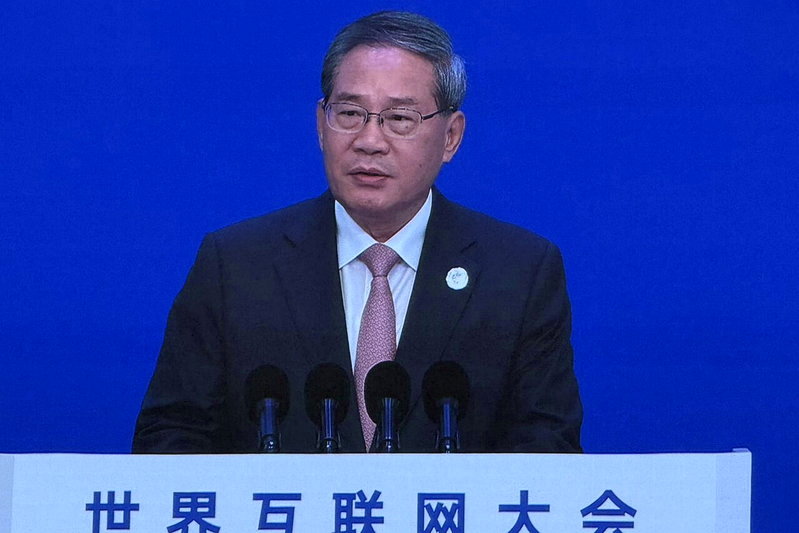
The 2026 World Internet Conference Wuzhen Summit will start in China on the 3rdstate Council Prime MinisterLi Qiang He participated and delivered a keynote address, calling on the international community to strengthen cooperation in technological innovation, digital security and global governance, and to work together to build a community with a shared future in cyberspace. He emphasized that the more technological innovation accelerates, the more protection lines should be built to prevent loss of control and misuse of technology, and resist the construction of a “digital iron curtain”. He also proposed four initiatives: technological empowerment, reliability and controllability, inclusive balance and open dialogue.
The theme of this year’s summit is “Open source, openness, co-creation and sharing – working together to build a community with a shared future in cyberspace”, focusing on artificial intelligence (AI) open source models, embodied intelligence and the digital economy. In addition to Li Qiang, Chinese officials attended the opening ceremony on the 3rd, including Zheng Shanjie, director of the China Development and Reform Commission, Li Shulei, director of the Propaganda Department of the Central Committee of the Communist Party of China, and Wu Xi, deputy director of the Taiwan Affairs Office of the State Council. In addition, Tsai Chongxin, Chairman of the Board of Directors of Alibaba Group, also delivered a short speech at the meeting.
Li Qiang said that the World Internet Conference has been held for 13 consecutive years. Looking back more than 10 years ago, 4G had just been launched, cloud computing had not yet received widespread attention, and AI had not yet left the lab. Now the Internet has moved from the Internet of Everything to the Intelligent Internet, which is deeply affecting people’s lives and all walks of life. Technology is developing at a rapid pace, but how to better benefit mankind from the Internet has always been an important issue.
Li Qiang pointed out that the Internet is currently undergoing intelligent transformation and systemic change. Technologies such as AI, cloud computing and blockchain are accelerating integration, shortening research and development cycles, promoting customization and flexible production development, and breaking the time and space limitations of traditional business. With the intervention of large-scale models and AI agents, the Internet is developing towards intelligent connection and human-machine collaboration, and is beginning to have the capabilities of autonomous learning, decision-making, execution, and evolution.
Talking about the challenges posed by technological development, Li Qiang emphasized that Internet development should be focused on people, and the ultimate goal should be to promote the all-round development of people. People cannot become vassals of technology, let alone allow technology to increase the differentiation of human development. He raised four issues worthy of attention, including the relationship between humans and machines, algorithm ethics, digital-real integration security, and digital divide.
In terms of the relationship between humans and machines, Li Qiang believes that AI should be a tool to expand human capabilities and free up manpower. It should not completely replace humans, but should always maintain a prominent position. In terms of algorithmic ethics, he believes that if algorithms blindly pursue efficiency, ordinary workers may become trapped in the system; When big data infringes rights and interests, the principle of fairness and integrity may be weakened; When algorithmic bias spreads disagreement, social opposition may intensify; When information cocoons tighten cognition, diverse knowledge and cultural exchanges may be blocked.
In terms of digital-real integration security, Li Qiang pointed out that risks such as cyber attacks, data theft, model hallucination, data poisoning, and deep counterfeiting of false information may affect social stability and trust. As far as digital gap is concerned, there are still more than 2 billion people in the world who are not connected to the internet. The development gap between countries in aspects such as large AI models, high-quality data sets, high-performance computing power and high-speed communication networks may further aggravate the global development imbalance between North and South and social polarization between rich and poor.
In response to the above issues, Li Qiang proposed four directions for cooperation, including pursuing technological empowerment, encouraging open source and openness, strengthening joint research, and supporting the large-scale application of new technologies and new products; Adhere to credibility and controllability, strengthen digital security cooperation, prevent loss of control and misuse of technology, and resist the generalization of national security concepts and the construction of a “digital iron curtain”; Following a balance of benefits for all, supporting countries in the Global South to build digital infrastructure and develop digital skills talents; And adhere to open dialogue, practice multilateralism, and promote global Internet governance in a more fair and reasonable direction.
Summary FAQ
-
He called on the international community to strengthen cooperation in technological innovation, digital security and global governance, and to foster a community with a shared future in cyberspace. He also stressed that AI development should be people-centric to prevent loss of control and misuse of the technology.
-
He proposed four directions: technological empowerment, reliability and controllability, universal benefit and balance, and open dialogue. They advocated open source and openness, strengthened joint research, strengthened digital security cooperation, and supported the construction of digital infrastructure in the global South.
-
Li Qiang reminded the need to pay attention to issues such as human-computer relationship, algorithm ethics, digital-real integration security and digital gap, and pointed out that cyber attacks, data theft, model confusion, deep fakes and big data manipulation can affect trust and fairness.