
AI summary
Summary of article:
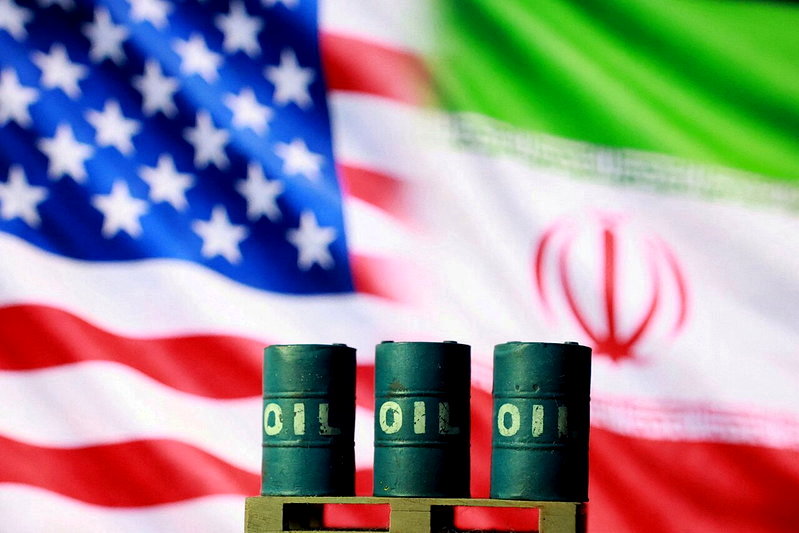
The market is shifting from binary expectations of a U.S.-Iran war to a third possibility: the two sides maintain a stalemate, and oil prices hover around $100 for a long time without supply cuts.
Oil market faces binary oppositionmei yi War outlook: Washington and Tehran must reach an agreement, otherwise the war could continue or worsen after the US midterm elections. But global energy industry executives are beginning to prepare for a third possibility: that the current impasse becomes the “new normal.”oil price It has been hovering around US$100 per barrel for a long time.
Bloomberg News columnist Blass reported that US President Trump andiran Senior officials have expressed hope that the deadlock will be broken. But apart from such diplomatic rhetoric, Tehran and Washington may secretly decide that maintaining the status quo is better for both sides. He said senior leaders of the global energy industry have said privately that they have begun preparations for such an outcome.
So far, neither side wants to concede defeat, but they also understand how costly it would be to start a new round of back-and-forth bombing.
For Iran, this means deepening economic damage, including the destruction of critical infrastructure, putting the regime at risk of social unrest. Under the US Navy blockade, Iranian oil exports will remain blocked, and this situation may continue until Trump leaves the White House in early 2029.
For the United States, if Tehran retaliates and attacks energy facilities in the Middle East, oil prices could rise further. To the world, the Strait of Hormuz will remain “neither completely closed nor completely open” in its current state.
Because of the high costs, it seems unlikely the impasse will continue, Brass said, but it is more likely than it appears.
Both Washington and Tehran have their own agendas and can maintain the standoff
As far as the White House is concerned, as long as the oil supply is secure, so be it. US West Texas Intermediate crude (WTI) is up more than 10% this month, but rising oil prices have obscured the fact that Middle Eastern crude is being shipped to the market in large quantities. Data from commodity intelligence company Vortexa show that during the first half of October, oil shipments from the Middle East (except Iran) reached about 16.5 million barrels per day, close to pre-war levels; Recent (but incomplete) data suggests that the upward trend in oil supplies is expected to continue. US Energy Secretary Wright said this month that oil supplies had returned to 80% of pre-war levels.
If oil prices remain around US$100 per barrel, Washington may be able to wait and see, tolerate higher oil prices temporarily and let Iran gradually collapse under the blockade of oil exports. The less Trump frames the next phase of the war in binary terms – seal a deal or bomb – the more likely it is that crude oil prices will remain stable, or even fall below triple-digit levels.
Iran’s calculations are completely different. The disruption in oil exports has put Iran’s economy under unprecedented economic pressure. The national currency, the rial, has fallen by about 25% against the US dollar over the past two months, making imports more expensive and increasing inflation. However, the Islamic Republic has survived many financial difficulties in the past, and now faces an existential crisis where the extent of suffering is even greater. Moreover, the golden veins of the Iranian Revolutionary Guards have not been broken, and they continue to make profits through smuggling of oil tankers.
The conclusion is that, despite official rhetoric, the United States and Iran have every reason to continue the current standoff. Of course, one side may be forced to change the status quo once the economic costs become too high, perhaps because the United States fails to prevent further increases in oil prices, or perhaps because Iran’s economy collapses. But the standoff is still likely to continue until that point is reached.
Summary FAQ
-
Barring peace talks or an escalation of war, the report notes that a more likely scenario is that the United States and Iran will maintain the current standoff, so that the conflict will no longer escalate, and therefore the oil market will enter a new normal.
-
What the United States is most concerned about is that the oil supply should not go out of control. As long as Middle Eastern crude oil continues to flow into the market, Washington may be able to tolerate higher oil prices and wait for Iran to gradually bear the costs of the export disruption and economic pressure.
-
Although Iran has suffered severe exchange rate collapse, inflation and export restrictions, it has survived economic difficulties many times in the past, and the Revolutionary Guard can still make profits from smuggling oil tankers, so there is reason to maintain the standoff for the time being.