
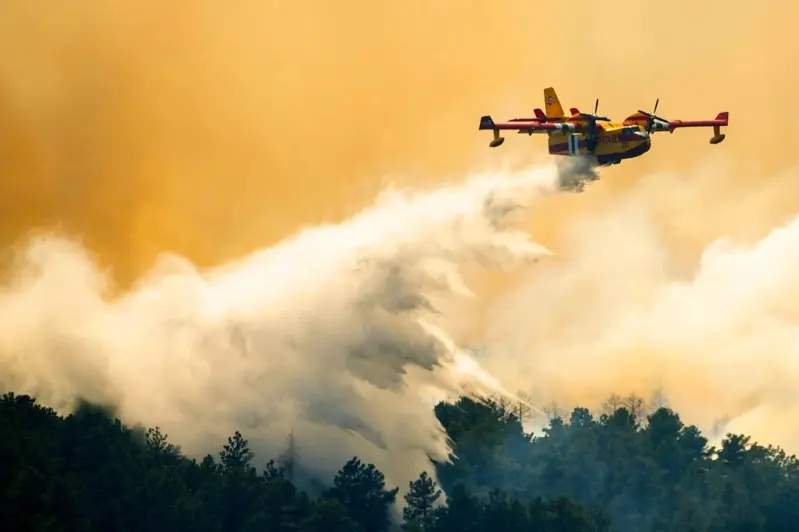

Months of dry weather, coupled with record-low winter snowfall in some areas, have resulted in approximately 40 large, uncontrolled wildfires burning across the western United States. The Aspen Acres wildfire, southwest of Denver, has been battered by unpredictable strong winds, spreading across two counties in Colorado and forcing thousands of residents to evacuate and destroying more than 160 buildings as of March 3.
The Associated Press reports that firefighters are drawing water from the Pueblo Reservoir to extinguish the Aspen Park wildfire. As of the afternoon of March 3, the fire had spread to approximately 115 square miles and was at zero containment.
According to the Pueblo County Sheriff’s Office, the unincorporated community of Colorado City, with approximately 2,200 residents, has been ordered to evacuate entirely. Towns such as Beulah, Rye, and San Isabel have also received evacuation orders.
Approximately 50 National Guard soldiers were deployed to Pueblo and Custer counties on the 3rd to assist at road checkpoints. The National Guard will also assist state park rangers by bringing in more boats to ensure vessels stay away from water-drawing areas.
On the western side of the Rocky Mountains, firefighters have contained approximately 65% of the Snyder wildfire, which lies on the Colorado- Utah border. Last weekend, three members of the helicopter firefighting team tragically perished in the flames, and two others were injured.
As of July 3rd, the Cottonwood wildfire in southwestern Utah had expanded to approximately 147 square miles, making it the largest wildfire in the United States and destroying more than 150 buildings. The Babylon wildfire in the southeastern corner had reached 133 square miles, making it the second largest in the country. While its remote location resulted in less damage to buildings, it is also spreading to several natural scenic areas. Utah Governor Spencer Cox has announced a complete ban on personal Independence Day fireworks.