
AI summary
Summary of article:
Apple has been accused of developing a robotic arm version of HomeView to enhance the home interactive experience through turnable screens, but time to market, Siri maturity and application support are still the keys to success.
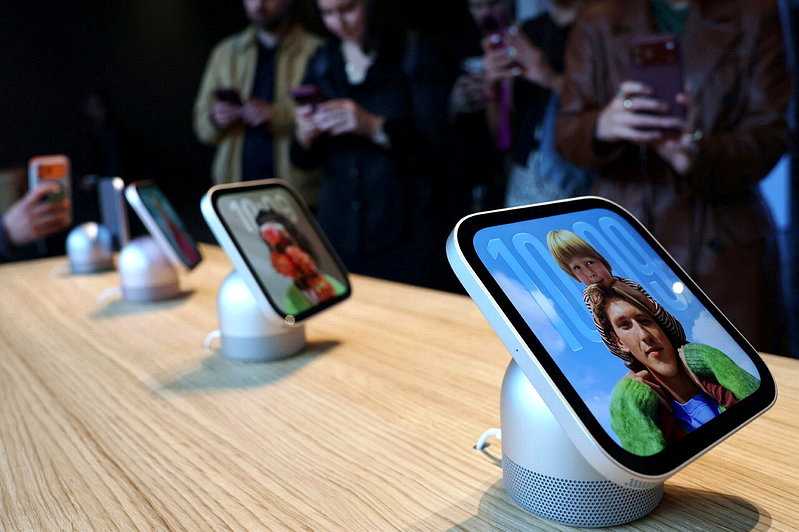
Apple(Apple ) recently released the smart home device HomeView, and a higher-end version is already under development. Bloomberg reporter Mark Gurman revealed that the new model will be equipped with a 9-inch screen and a robotic arm that can rotate 360 degrees. It will automatically turn to the speaker after identifying the speaker. It is planned to be launched in 2027 or 2028, making the device more like a home companion that can interact with family members.
Gurman explained in the latest issue of the “Power On” e-newsletter that the robotic arm version code-named J595 is not a replacement for the existing HomeView, but a higher-end model. The official name has not been determined yet. Max, Ultra, or 360 may be added after HomeView, or it may be given a new name.
Currently, HomeView is equipped with a 7-inch screen, which can recognize different family members and provide personalized responses. However, the screen cannot rotate on its own, and users will still have to walk up to the device or adjust the direction manually. Gorman points out that Apple’s own ads reflect this discomfort: A family takes turns using HomeView, some checking their calendars, others sending messages, and still others asking for help.Sir, I One has to manually turn the screen towards themselves to check the information.
Hopefully the robotic arm version will improve this inconvenience. For example, when the user is walking around the kitchen and making a FaceTime call, the screen can rotate accordingly; When family members gather around the countertop, the screen can automatically move toward the person speaking, reducing the need for manual adjustment.
This idea has been in the works for several years. AppleInsider reported that after the Apple Car project ends, in 2024, it is reported that the company will shift some of its robot research and development to home use. Reports in August of the same year mentioned a product with the similar code name J595 that combines an iPad-like screen and a robotic arm. It was expected to launch in 2026 or 2027 and cost around US$1,000. This was the plan at the time, not the latest pricing.
Apple’s machine learning research team also demonstrated the concept of an interactive robot desk lamp in February 2025, whose appearance is reminiscent of Pixar’s signature character Luxo Jr. This desk lamp uses an action system called ELEGNT to interact with people through expressive movements.
However, the challenge of HomeView isn’t just whether the screen can rotate. Gorman explained that the product was originally expected to be launched by the end of 2024 at the earliest, but because the new version of Siri was not ready, it was delayed until last week. The hardware is equipped with A18 processor and 8GB memory. Some finished products are boxed and stored for almost a year waiting for the software to be ready.
The $299 HomeView has built-in speakers, which Gohman believes makes it more attractive for most smart home applications than the entry-level iPad, which starts at $450. However, the wall-mounted version does not come with a power supply, and magnetic accessories must be purchased separately, making installation inconvenient.
The lack of apps is another limitation. HomeView cannot install third-party software directly, but uses a method similar to CarPlay to broadcast supported audio and video content from the iPhone. Currently, mainstream audio and video applications only support Apple TV, and there are no intentions of joining Netflix, YouTube, or Hulu.
Gorman believes HomeView could attract Apple users as a bedside alarm clock, dedicated FaceTime device or cooking assistant, but families who already have Alexa or Google Nest devices installed may not be willing to replace all the devices in their homes for HomeView. Robotic arms can make conversations more natural, but the product experience still depends on whether Siri and the app can keep up.
Summary FAQ
-
This high-end version of HomeView is said to be equipped with a screen of approximately 9 inches and a robotic arm that can rotate 360 degrees. It can recognize the speaker and rotate automatically, making the device like a household companion that you can actively interact with.
-
Bloomberg reporter Ji Man reported that the version code-named J595 is not a replacement for the existing HomeView, but a higher-end model. It is planned to launch in 2027 or 2028, and the official name may be another new name.
-
HomeView’s limitations include the delay of the new version of Siri, the lack of support for some third-party audio and video apps, and the need to purchase the wall-mount accessory and power supply separately. If the software ecosystem can’t keep up, it will be difficult for the robot arm to grow in popularity.