
AI summary
Summary of article:
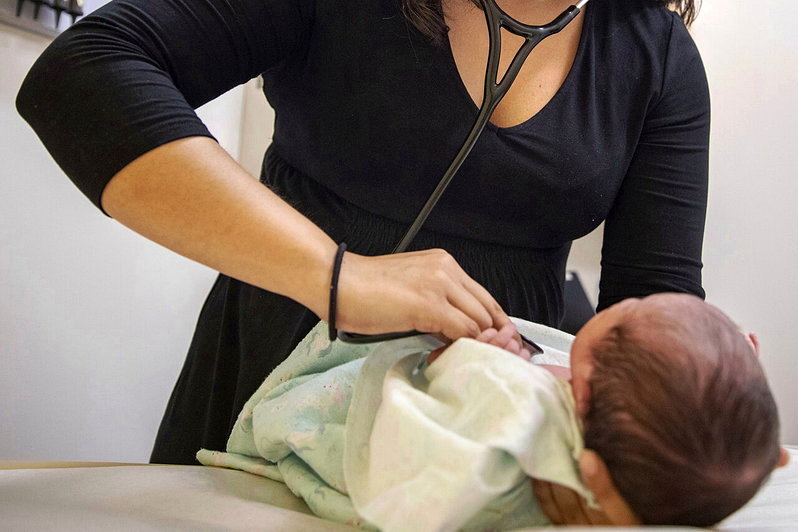
American newborns are increasingly refusing vitamin K injections, increasing the risk of life-threatening bleeding and brain hemorrhage, two studies suggest. VKDB cases have almost quadrupled in recent years.
Two studies released on the 5th showed for the first time that the rate of life-threatening bleeding in American infants has increased rapidly since 2017. This is because more and more parents refuse to give vitamin K injections to their newborn babies. This trend is consistent with recent research on vitamin K injections.vaccine A wave of distrust emerged simultaneously.
Reuters reports that babies are born with inadequate levels of vitamin K, which helps blood clot. since the new crownpandemic Since then, the number of parents refusing to give vitamin K injections to their newborn babies has continued to increase.health minister After Robert F. Kennedy Jr. took office, development accelerated further. After assuming office, Kennedy Jr. has canceled the recommendation to administer six types of vaccines to children. Many parents are also beginning to doubt whether routine medical treatments like vitamin K injections are necessary for newborn babies.
Dr. Kristen Scott of the Children’s Hospital of Philadelphia and colleagues published a study in the Journal of the American Medical Association (JAMA) showing that more than 5% of infants in the United States will not receive vitamin K injections in 2024, a 77% increase from 2017. In the medical records of more than 5.2 million American infants born during this period, infants who did not receive K injections had a 47% higher risk of bleeding within six months of birth. Compared to infants who received the injection; The risk of brain hemorrhage was also more than doubled, and the risk of death after a diagnosis of hemorrhage was also more than doubled.
Epidemiologist Steven Wolf, MD, and colleagues studied the medical records of 11 million children under six months of age between 2017 and 2025. The rate of newborns receiving vitamin K injections dropped from 97.7% to 95%, while the incidence of vitamin K deficiency bleeding (VKDB) increased nearly fourfold and was seen accelerating. Among these more than 11 million infants, a total of 5,217 bleeding events occurred, with the incidence in 2025 almost doubling compared to 2024. Wolf’s study was published in JAMA Pediatrics.
Truveta, a health data analysis company specifically commissioned by Reuters, analyzed more than 1 million newborns in the United States and found that the rate of refusal to receive vitamin K injections increased sharply in the first half of 2026, increasing by more than 57% between January and June.
Because this has been standard medical practice for more than 60 years, the Centers for Disease Control and Prevention (CDC) does not track the rate at which parents refuse to take vitamin K injections, nor the incidence of related bleeding events. A Department of Health spokesperson said the CDC still recommends vitamin K injections for newborns, but declined to say whether the CDC would begin tracking refusal rates or related bleeding events.
Summary FAQ
-
Research suggests that more than 5% of infants in the United States will not receive vitamin K injections in 2024, a 77% increase from 2017; In the first half of 2026, the denial rate increased by more than 57% compared to the previous period, indicating that the trend is still worsening.
-
Unvaccinated infants have a 47% higher risk of bleeding within 6 months of birth, more than double the risk of brain hemorrhage, and more than double the risk of death if diagnosed after bleeding, indicating that the consequences are quite severe.
-
Between 2017 and 2025, the proportion of vitamin K injections decreased from 97.7% to 95%, while the incidence of VKDB increased almost fourfold; A total of 5,217 bleeding events occurred among more than 11 million infants, and the number in 2025 was almost double that in 2024.