
AI summary
Summary of article:
US forces continue to escort merchant ships in the Strait of Hormuz. Although this temporarily stabilizes oil transportation and pressure on Iran, it overloads ships and personnel and could weaken the United States’ ability to respond to China and other wars around the world.
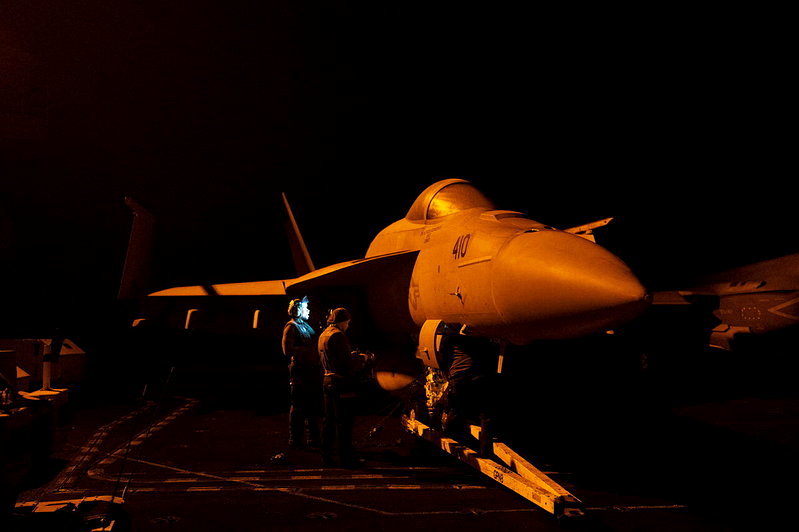
iran continue instrait of hormuz Launching intensive strikes, US military fighter jets conduct escort missions almost every day to help the United States and its allies in the Persian Gulf resume oil transportation, allowing the United States to maintain its line in the US-Iran conflict that has raged since February. However, US officials familiar with the matter reported that the intense flying missions not only put pressure on the aircraft and crew, but also placed a heavy burden on the mechanics and maintenance personnel responsible for maintaining the operation of the fighter aircraft.
▼Video source: YouTube@The Wall Street Journal (If there is any infringement of the author’s rights, please contact us to remove.) This image (video) is used for news reporting purposes, if there is any copyright issue please contact us to remove.
The Wall Street Journal reported that the US military has conducted escort missions from two aircraft carriers, an amphibious assault ship and air force bases in the Middle East. Over the past six months, it has helped more than 3,000 merchant ships pass through the Strait of Hormuz, causing Persian Gulf oil exports to exceed pre-war levels in recent weeks. However, aircraft carriers sent by the US Navy to the Middle East have been operating almost around the clock for several months with little rest, and have set new records in the modern Navy for deployment length and number of consecutive days without a port call. The deployment time of destroyers that accompany escort and carry out blockade missions has also been extended, placing a heavy burden on warships and officers and troops, officials familiar with the matter said.
The United States currently has 50,000 troops and 20 naval ships deployed in the Middle East. The Congressional Budget Office estimates that the conflict costs the United States $2 billion to $3 billion per month. The Pentagon is sending more troops and ships to the Middle East as President Trump considers launching a new attack on Iran to break the standoff and force Tehran to surrender. Military leaders said that as long as they receive orders, troops can continue to carry out maritime blockade and merchant ship escort missions. However, officials acknowledge that the resource-intensive operation is weakening the United States’ ability to counter China’s influence and respond to other potential crises around the world.
Some US officials said that without more international assistance, the current situation in the Strait of Hormuz would become increasingly unstable. Iran has repeatedly challenged the Trump administration’s claims to control the waterway in recent months, attacking ships, setting fires and even sinking some. US officials said Tehran mainly uses drones and large subsonic cruise missiles to attack ships. Some US officials call these missiles “flying school buses”.
The United States said this has significantly weakened Iran’s ability to detect and track ships, and currently 95% of shipping traffic can safely pass through the Strait of Hormuz. In October, a reporter from the Wall Street Journal boarded the USS Washington aircraft carrier to observe an escort mission conducted by US forces in the strait.
For pilots and crew, flying missions over the Strait of Hormuz every night is stressful. Pilots and crew members interviewed said that the narrowest point of this waterway is only about 32 kilometers, and the airspace above is filled with various flying objects. When missiles or other objects are fired off the coast of Iran, pilots often have only a few seconds to react.
One pilot said that as long as the fighters are on duty in the designated airspace and have enough ammunition to eliminate incoming threats, his squadron has a 100% success rate in protecting ships. However, Iran has sometimes attacked more ships than US forces. Rear Admiral Jeffrey Hames, commander of the USS Washington Strike Group, explained that once a ship is threatened by anti-ship cruise missiles or drones, US warplanes will immediately intercept and shoot it down. “We’ve always been able to do that reliably,” he said.
Himes said the ship receives regular supplies, and although it is still unclear when the deployment will end, morale among officers and soldiers on board remains high. Some analysts believe that now that oil can pass through the Strait of Hormuz, Trump should allow the blockade to continue working and gradually weaken the Iranian regime, rather than trying to quickly end the conflict through military strikes, which may not change Tehran’s calculations.
“Time is on their side,” said Michael O’Hanlon, research director of the foreign policy program at the Brookings Institution. “I think it has to be made clear that we are prepared to continue the lockdown indefinitely.”
Summary FAQ
-
The U.S. military uses aircraft carriers, fighter jets, amphibious assault ships, and troops based in the Middle East to escort merchant ships and enforce a naval blockade. This has allowed more than 3,000 merchant ships to pass through in the past six months, allowing oil exports from the Persian Gulf to gradually resume.
-
Because fighter aircraft are on duty almost every day and aircraft ships are not docked for long periods of time, pilots, aircrew and maintenance personnel are under great pressure. At the same time, the US military has deployed 50,000 people and 20 ships in the Middle East, and the conflicts cost US$2 billion to US$3 billion every month.
-
Officials believe that tying aircraft, destroyers and Air Force resources to the Middle East for a prolonged period of time would reduce U.S. military strength and deployment flexibility to counter China’s influence or respond to other global crises, therefore increasing the strategic burden.