
AI summary
Summary of article:
Hong Qichang pointed out that the Democratic Party’s control of Congress may block Trump’s diplomacy and strengthen support for Taiwan, but the resurgence of separatism in the United States may weaken the willingness to intervene in the Taiwan Strait and have a serious impact on Taiwan’s security.
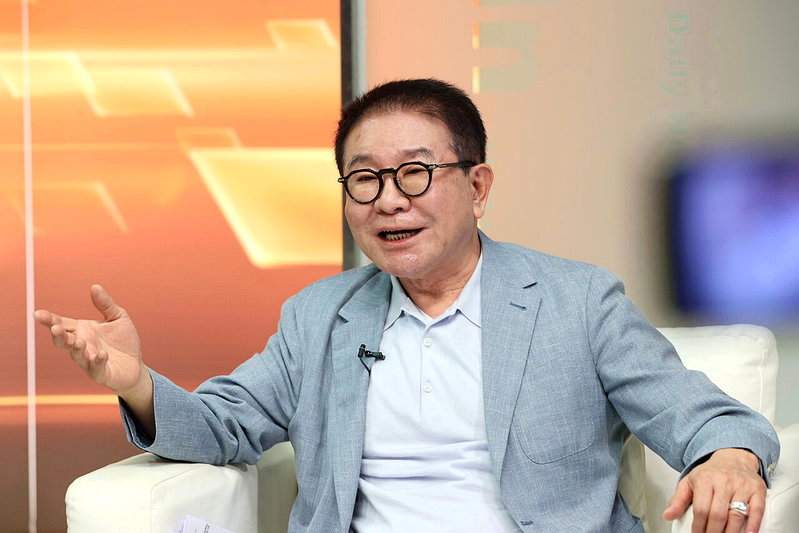
Americademocratic party Following the midterm elections, the President of the United States regained control of both houses of Congress.trump Facing the political situation of separation between the executive and the legislature, Hong Qichang, former chairman of the Straits Exchange Foundation, analyzed that the new Congress will strengthen checks and balances on Trump’s foreign policy and provide stronger institutional guarantees for the US policy towards Taiwan. The Democratic Party establishment has a large cross-party consensus on China policy. In the future, it is expected to use legislative, budgetary and congressional oversight powers to limit Trump’s political compromise with Beijing and prevent Trump from sacrificing Taiwan’s security interests with his unpredictable foreign policy decisions. However, Hong Qichang also pointed out that the economic pressure and political backlash caused by the Iran war may cause American isolationism to increase again and the United States may become less likely to engage in foreign wars again. He warned that a renewed rise in separatism would have serious strategic implications for Taiwan’s security issues.
Regarding the US midterm elections, Hong Qichang reported that after the election, Trump expressed acceptance of the Republican defeat and willingness to cooperate with the Democratic Party. However, Trump did not like to do the necessary political consultation with Congress. Even when Republicans controlled the majority in Congress, Trump failed to effectively use congressional support to establish solid legislative outcomes. Trump is more accustomed to bypassing Congress and promoting personal policies through a large number of executive orders. After Democrats take control of Congress, Trump will face greater resistance in legislation, budget, and investigation and oversight. If Trump is unable to demonstrate his ability and willingness to negotiate with Congress, his executive power will increasingly be in jeopardy.
He analyzed that Trump’s political dilemma will have a direct impact on US-China relations. The Supreme Court’s tariff decision has weakened his power to impose major economic sanctions unilaterally, and the Democratic Party’s control of Congress will also limit his autonomy in foreign policy. Beijing can clearly see that Trump is unable to build a solid domestic political consensus and lacks effective leverage to force China to make concessions on key strategic interests.
As for Beijing, Hong Qichang said China has not been pressured by the Trump administration because of its failure to meet its commitments in the trade agreement with the United States. Instead, it has gained leverage in negotiations with the United States on issues such as rare earth control and the war between Russia and Ukraine. In such a situation, the possibility of delay in the implementation of US $ 14 billion arms sale to Taiwan is increasing. China does not need to make substantial concessions to meet Trump’s diplomatic needs; Instead, it could take advantage of the contradictions between the executive and legislative departments of the United States to continue military, diplomatic, and economic pressure. The more eager Trump is for diplomatic outcomes, the more Beijing will be able to exploit Trump’s political weakness to raise its costs. Particularly on the Taiwan issue, instead of making concessions to the United States, the CCP may intensify military coercion against Taiwan to test the United States’ ability to respond to domestic political disputes. Since Trump lacks the ability and leverage to force China to make concessions, Beijing will take advantage of America’s political dilemma to continue pressure on Taiwan.
Hong Qichang noted that during the Iran War, a cross-party anti-war coalition was formed in Congress, and both houses of Congress pledged to stop military actions without congressional authorization. Once the Democratic Party takes control of Congress, it is obligated to launch a comprehensive review of the Iran war and hold the Trump administration accountable for its war decisions, legal authority, military losses, and financial burden. The economic pressures and political backlash caused by this war may also lead to a renewed rise in isolationism in the United States. Isolationist forces in the Republican Party and the faction opposing foreign military intervention in the Democratic Party could jointly seek restrictions on American foreign military operations and reduce the likelihood of the United States ever again getting involved in foreign wars. Separatism is on the rise again, which will have serious strategic implications for Taiwan’s security issues.
He cited a September poll by the US think tank “Chicago Council on Global Affairs” which showed that if China invaded Taiwan, 41% of Americans supported sending US troops to defend Taiwan, a significant decrease from 52% in 2021. The Democratic Party’s dominant congressional and political support for Taiwan may become stronger, but American society’s rejection of foreign military intervention may also weaken Washington’s willingness to intervene directly in the event of a war in the Taiwan Strait. He believes that in the future, the United States may have a paradoxical situation in which Congress is more favorable toward Taiwan, but the overall political environment is more resistant to foreign wars. If Beijing takes advantage of this contradiction to increase military pressure on Taiwan, Taiwan’s security situation will become more serious. Taiwan must seek more concrete support from the US Congress, but it must also face restrictions on the direct use of troops outside US borders.
Hong Qichang called on the government and opposition to establish a basic consensus on policies to maintain stability and peace in the strait; the defense budget necessary to maintain security in the Taiwan Strait; and establishment of civil defense and crisis response capabilities. We also maintain communication with the US executive branch and bipartisan Congress on these issues. Should Beijing intensify gray pressure campaigns and continue to strengthen naval and air force exercises around Taiwan to change the status quo, the risks in the Taiwan Strait remain key. Taiwan should approach the changes in US-China relations with caution, adopt prudent cross-Strait policies, and improve self-defense capabilities and social cohesion to reduce the possibility of military or gray conflict action and wrong decision-making against Taiwan by Beijing.
Summary FAQ
-
Hong Qichang believes that the new Congress will limit Trump’s political compromise with Beijing through legislation, budget and supervision powers and improve the institutional guarantees of Taiwan policy, making it more difficult for Trump to unilaterally promote personal diplomacy.
-
He pointed out that the economic pressure and political backlash caused by the Iran war could make American society more resistant to the use of foreign troops and reduce its willingness to intervene in another war; Once this happens, the United States will also be less likely to take direct action in the Taiwan Strait crisis.
-
Hong Qichang analyzed that Beijing could take advantage of US administrative and legislative conflicts and Trump’s lack of concrete consensus and bargaining chips to continue military, diplomatic and economic pressure, and even strengthen military exercises around the Taiwan Strait to test the US response.