
AI summary
Summary of article:
Reports indicate that China has continued to expand its espionage network in California since the 1950s, targeting Silicon Valley, prestigious universities and the military industry and using a variety of methods to steal technology. Although the United States has tightened its precautions, it must still avoid turning into ethnic witch-hunts.
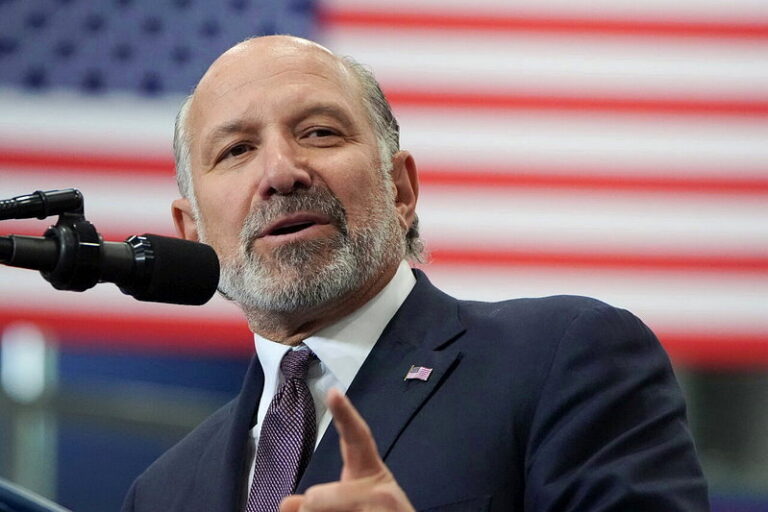
HUIDA CEOJen-Hsun Huang The turmoil related to the resignation did not stop. Discussions about China’s “traditional” and “unusual” ways of “overtaking the United States into a corner” are still ongoing.
The Los Angeles Times published a story on the 12th titled “How China built a spy network in California. ‘They’ll try anything'”. Over the past half century, China hasdetective ExistenceCalifornia Their reach is wide-ranging: They include aerospace engineers at Boeing Co., naval engineers at defense contractor Power Paragon, electrical engineering professors at the University of California, Los Angeles, software engineers at Google, and even the driver and assistant to the late U.S. Senator Dianne Feinstein, then chair of the Senate Intelligence Committee.
Intelligence experts say China continues to expand its network of spies and informants in California. Huida CEO Huang Renxun admitted to engaging in extramarital affairs and the man he dated was accused of being a Chinese spy, once again shedding light on the existence of this network.
Horace Frank, former assistant chief of the Los Angeles Police Department and former director of intelligence, said that for several years, the FBI has been warning that China is ambitiously pursuing technological, economic and geopolitical advantages, and that their activities pose a long-term strategic threat – not only to the United States, but to the world. Their counterintelligence strategy is not just about stealing today’s secrets, it is about ensuring tomorrow’s profits. They understand that human weaknesses—lust, money, pride, and ambition—are the keys to their quest for global domination.
William Hannas, chief analyst at the Center for Security and Emerging Technologies at Georgetown University, explained that the reason California has become a hotbed of Chinese espionage activities is because it has three attractive targets at the same time: advanced technology industries, first-class research universities, and a high concentration of scientists, engineers, and entrepreneurs. China’s main goals are to accelerate its own technological development, reduce dependence on foreign suppliers, and gain leadership in strategic areas, including artificial intelligence.
“Silicon Valley is particularly important, because there you can get access not only to existing technology, but also to the source stage of innovation,” the analyst explained.
China’s overseas networks have long attracted the attention of US intelligence agencies, especially in California, which has the largest number of native Chinese residents in the United States. “Spies and agents can more easily hide in plain sight because they can more easily integrate into the community than in places where the proportion of Asians and overseas Chinese is lower.”
Beijing is undoubtedly trying to catch up and eventually overtake the United States in leading areas such as defense, aerospace, and technology. Intelligence experts say China is increasingly deploying personnel to California to launch cyberhacking attacks, gain political influence and spread propaganda.
“They’re willing to try anything,” retired FBI director James Gaylord said of China’s Ministry of State Security. The Ministry of State Security is China’s primary civilian intelligence and security agency. Gaylord, who has led several counterintelligence operations in California, said Chinese spies and agents are spread throughout the state, infiltrating private businesses and even government offices. “Unlike Russia, China prefers the shotgun approach, which they call ‘a thousand grains of sand.'”
In addition to building relationships with senior executives in the California technology industry to gain direct access to US artificial intelligence policies, Chinese spies also took to social media to try to build relationships with students at top research institutions such as Stanford University. Some spies use the age-old “honey trap” to obtain sensitive information through sexual or romantic relationships. Gaylord has a stern warning to California tech bosses: “If you have access to technology, if you’re a billionaire and a 50-year-old bald man and a 25-year-old woman who thinks you’re funny and the funniest person in the world, it’s not because of you, it’s because of the things you have access to.”
Chinese spies have also developed romantic relationships with top California politicians. Former Congressman Eric Swalwell told investigators in 2015 that he had sex with suspected Chinese spy Christine Fang multiple times, according to declassified FBI interview records.
China has also infiltrated the American counter-intelligence system. In 2001, San Marino businesswoman Katrina Leung was a double agent, codenamed “Parlor Maid”. Chen Wenying was charged in 2003 with obtaining, copying, and retaining US national security documents.