
AI summary
Summary of article:
Analysts believe that if the Democratic Party captures Congress in the midterm elections, the main impact will be on the market environment rather than the short-term impact; An unexpected retention of Congress by the Republican Party would really shake up the stock and exchange markets.
There are midterm elections in the US on the 3rd, and prediction markets Polymarket and Kalshi both show that traders are bettingdemocratic party The probability of winning the Senate and House of Representatives (“blue wave” emerges) is 70%. But a week ago the prediction market betbolsonaro (Flavio Rolsonaro) has more than 80% chances of winning the Brazilian presidential election, but in fact it was the current President Lula who was re-elected. If the US election results are also disappointing, the impact on financial markets will be even greater.
Bloomberg News reported that even if the “blue wave” spreads across the United States and allows the Democratic Party to take control of the Senate and the House of Representatives, it will have little impact on financial markets in the short term.trump Massive tax cuts have already taken place in 2.0, and any bill that would raise taxes would be vetoed by them.
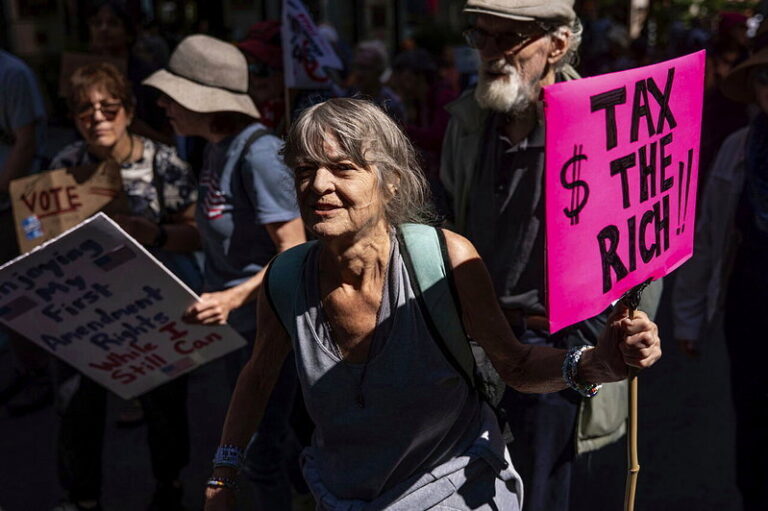
If the Democratic Party wins big in the midterm elections and the California billionaire tax referendum passes, it could indicate that the Democratic Party has an increased chance of winning the presidential election in 2028. Candidates wearing Democratic uniforms will promise to raise taxes. But whether this is really bad for the market, and whether the Democratic Party can choose a candidate with a good chance of winning and actually win the election, these are still two major questions. Therefore, in the short term, the impact of the “blue wave” on the financial market environment is much greater than its actual impact.
As far as the budget is concerned, Barclays analyst Keller predicts that two scenarios could occur: the first scenario is that bipartisan negotiations are blocked, causing Congress to pass a series of temporary spending bills to support the continued operation of the federal government; The second scenario is that bipartisan negotiations lead to an expansion of spending, as was the case with Trump 1.0, when Democrats won the House of Representatives and increased annual spending by about 8% in 2019.
As for the high-profile issue of artificial intelligence (AI) regulation, Cantrell, managing director and director of public policy at PIMCO, believes that the Democratic Party is indeed threatening on the issue of AI regulation, but Trump has shown strong support for AI and holds veto power on legislation at the federal level. The risk is at the state and local government level. He wrote: “The political fight over data centers has become so intense that policymakers must respond. There are a number of candidates in different states who are opposed to data centers and advocate a moratorium on construction; some even campaign for a complete suspension of construction.”
However, Congress is unlikely to change the market’s calculations before the 2028 presidential election. If a “blue wave” emerges this week, it will not change anything in the short term. What may change most is the probability of the President winning the election and long-term market prices.
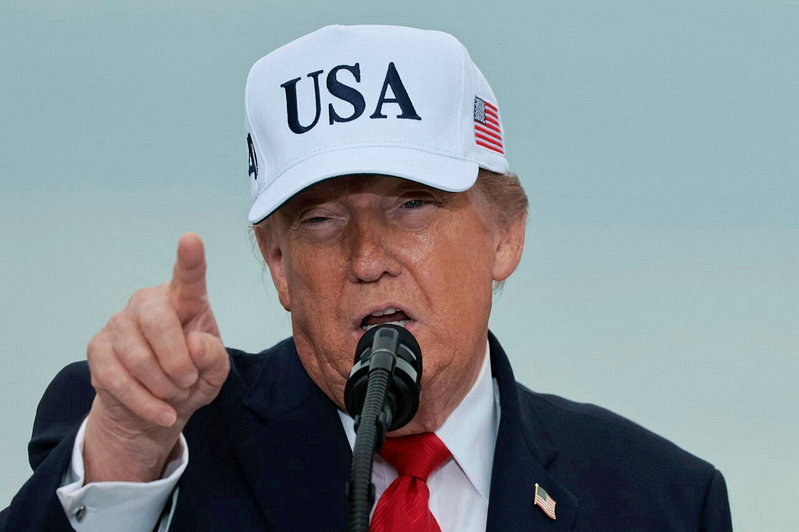
What’s even more interesting is that it’s a big surprise. Forecast markets currently estimate the Republican Party’s probability of victory in both the Senate and the House of Representatives to be less than 10% (less than last week’s estimate of Lula’s probability of victory). However, if the Republican election results disappoint everyone and retain the House of Representatives, it will show that “Trumpism” has won a huge vote of confidence, which will allow Trump 2.0, who was originally regarded as a “lame duck” by all walks of life, to take advantage of the latest public opinion empowerment to complete the remaining two years of the term.
If such a windfall occurs, Barclays expects the Trump administration to push through another wave of tax cuts, which would trigger a new wave of gains in growth stocks and put upward pressure on US inflation and interest rates. The US dollar is also expected to rise in the future. Mizuho data shows that over the past ten years, the DXY US dollar index has always risen after Trump won the election and fell after his defeat.
The bottom line is that if the Democratic Party achieves spectacular results in this midterm election, it may cause the market to go a little crazy in the short term for “something that may not happen within two years.” But if Trump can make a surprise comeback like Lula, the impact on the market will be even greater.
Summary FAQ
-
Because the big tax cut policy that Trump has promoted will not be reversed, and any tax increase bill can be vetoed by him; Even if Democrats control Congress, it will be difficult to change the market’s core pricing structure in the short term.
-
The market will pay more attention to tax increases and AI regulatory risks, especially pressure on data centers at the state and local level. However, most of these effects are biased toward the medium and long term, and short-term reactions still dominate emotional responses.
-
This will be interpreted as Trumpism gaining new public support, which may allow the Trump administration to push for tax cuts, boost growth stocks, raise the US dollar, inflation and interest rate expectations, and market volatility will also intensify significantly.