
Recently, a Tibetan separatist self-immolated in New York. In response, the Chinese Foreign Ministry stated that Tibet has been an inseparable part of China’s territory since ancient times.
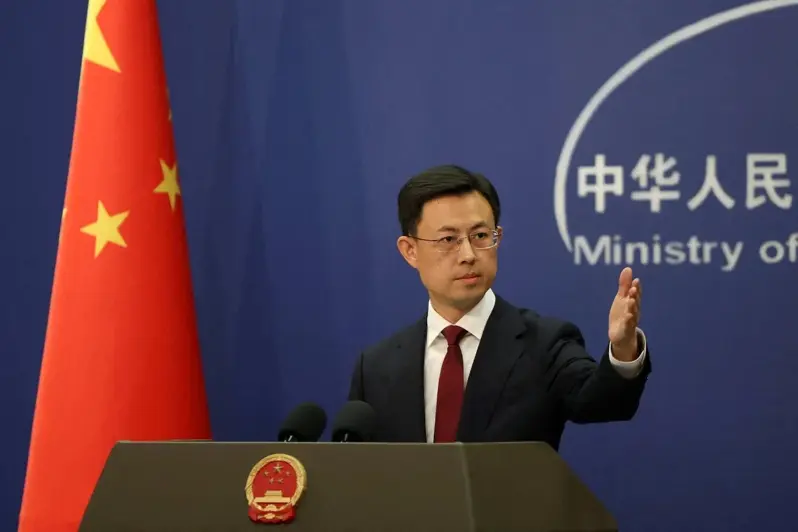
At a press conference on the afternoon of the 3rd, Reuters asked about the self-immolation death of a Tibetan independence activist in front of the United Nations headquarters in New York. Chinese Foreign Ministry spokesperson Guo Jiakun responded, “We have noted the relevant reports and believe that the countries concerned will handle the matter according to their own laws.” He emphasized that Tibet has been an inseparable part of China’s territory since ancient times.
The Tibetan-run media outlet Voice of Tibet reported on March 3 that Tibetan activist Loka Rangzan self-immolated in protest after broadcasting a statement supporting Tibetan independence outside the United Nations headquarters. Video footage shows a man engulfed in flames before collapsing, with the Tibetan independence flag, the “Snow Lion Flag,” beside him. Deutsche Welle, citing New York police, reported that around 6:30 p.m. local time, officers responded to an emergency call and found a 52-year-old man with severe burns near the UN headquarters. He was transported to Bellevue Hospital in New York City but was later pronounced dead.
According to statistics from the International Campaign for Tibet, between 2009 and 2022, approximately 150 Tibetans self-immolated, including 10 who self-immolated while in exile.
According to the website of the Tibetan Government-in-Exile, its Sikyong (the title of leader of the government-in-exile), Pema Tsering, attended the closing ceremony of the “International Symposium on Tibet-China Relations” on June 29 and delivered a speech, emphasizing the importance of adhering to the “Middle Way” policy and continuing to promote the resumption of Tibet-China dialogue.
In his speech at the seminar, Bianba Ciren comprehensively reviewed the current state of Tibet-China relations, reiterated that the “Middle Way” approach still has important practical significance under the current circumstances, and emphasized that continuing constructive dialogue is the only feasible way to promote a peaceful, just, and mutually beneficial solution to the “Tibetan issue”.
Furthermore, Pema Tsering expressed serious concern about China’s recently passed “Law on Promoting National Unity and Progress.” He pointed out that this law will further weaken Tibet’s unique language, culture, and religious traditions, pose a serious threat to Tibetan national identity and cultural heritage, and exacerbate the Chinese government’s assimilation policy.