
AI summary
Summary of article:
The New York Times reported that the conflict between the United States and Iran is heating up due to three major points: assassination planning, election manipulation, and intelligence misjudgment. Any gunshot or accidental explosion can cause the situation to go out of control.
new York Times According to reports, the United States andiran The threat of a new round of all-out war is rising, behind which lie three major flashpoints, including Iran’s plan to assassinate American officials, which is gradually approaching the execution stage, and the United States andisrael The election could prompt leaders to launch military attacks again, as well as lead both sides to misinterpret intelligence or take advantage of the opportunity to go to war. Many diplomats and experts have warned that the situation in the Middle East is entering a dangerous phase. One senior European official even said that as long as it appeared that shots were fired aimed at US officials, or even an accidental explosion occurred near the bunker where Iranian leaders are hiding, a large-scale war could break out.
U.S. and European officials said intelligence about Iran’s possible attack plans had been growing steadily in recent weeks. Intelligence suggests that Iran plans to retaliate with a series of assassinations if the United States or Israel launch another attack; In addition, Iran may also launch another attack in response to previous military attacks by the United States. The United States believes that some plots have gradually moved from the concept stage to actual implementation, and relevant warnings have been taken more seriously than at any time since the outbreak of the war.
Intelligence suggests Iran may target the US ambassador and United States officials in the Middle East. It has also been a long-term goal of Iran’s elite “840 Force”. US officials said there are indications that Iran has deployed operatives to the United States, but whether it could successfully carry out an attack remains uncertain. Iran has often in the past hired criminals or assassins to carry out assassinations, but this has also failed due to the executioners’ lack of capacity.
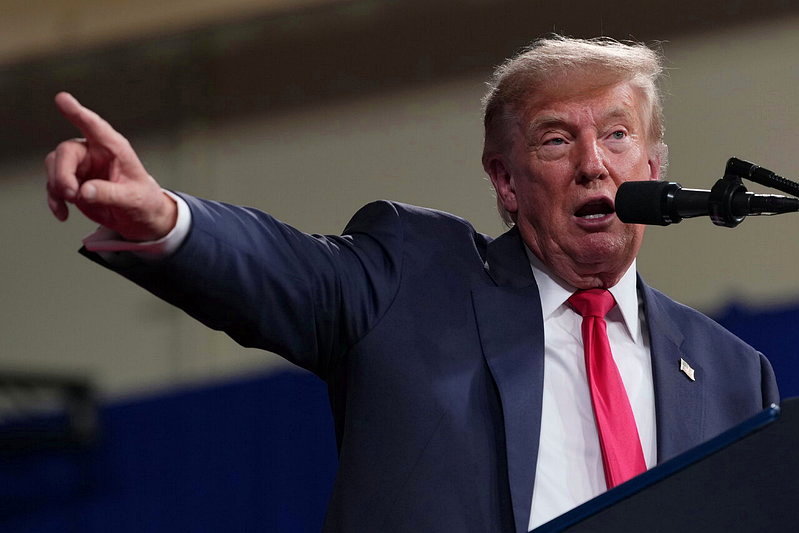
Although Trump said he would not launch any attacks before the US midterm elections on November 3, he hinted that anything was possible after the election. Senior US officials revealed that Trump is personally keen to launch another massive air strike against Iran. US Central Command has drawn up an operational plan to expand bombing targets to cover energy infrastructure and other key facilities related to Iran’s economy.
Other analysts pointed out that even if Israeli Prime Minister Netanyahu loses the election on October 27, he may still launch a final wave of attacks before leaving office, because he fears his successor will not dare to take similar actions. As for Trump, even if some prominent supporters of the Iran war are dissatisfied, he can still use military actions to show that the authority of the commander-in-chief has not been weakened.
Two Iranian officials confirmed in an interview with The New York Times on the 24th that Iran plans to expand its attack targets to include US diplomats and other US personnel. He said the United States and Israel have killed dozens of Iranian officials and some of their family members, so Americans have also become “fair targets.”
Senior Iranian officials also warned that if a third round of war broke out, they would expand their attacks on civilian infrastructure, energy facilities and submarine communications cables. Mohammadi, a senior advisor to Iranian Parliament Speaker Qalibaf, even declared that the next war is related to Iran’s survival. “We will not fight a conventional war,” but will launch a fierce and decisive asymmetric war, attacking the enemy’s strengths and weaknesses at the same time.
The current situation is reminiscent of the Cuban Missile Crisis and the eve of the Iraq War. Inaccurate intelligence, misjudging the opponent’s intentions, or even deliberately using one-sided intelligence as a pretext for war can push all sides into an uncontrollable war.
Summary FAQ
-
The report notes that the increased risk comes primarily from three factors: Iran’s ongoing assassination campaign, elections in the United States and Israel that could encourage a further use of force, and miscalculations of intelligence and intentions by both sides, any of which could lead to a major conflict.
-
US and European officials said Iran could retaliate by assassinating US diplomats, domestic officials or other personnel, and there were already signs of deployment of operatives; It could also expand its attacks on civilian and energy facilities and use asymmetric warfare to retaliate.
-
The report warned that any gunfire targeting US officials or an unexpected explosion near the bunker where Iranian leaders were hiding could be interpreted as a signal of an attack; With miscalculation or partial intelligence to start the war, it could soon escalate into a full-scale war.