
AI summary
Summary of article:
Inflation in the United States has widened the gap between the rich and the poor. The wealth of the rich has skyrocketed and the lives of the middle class have lagged behind, making class conflict a key issue in elections in many states.
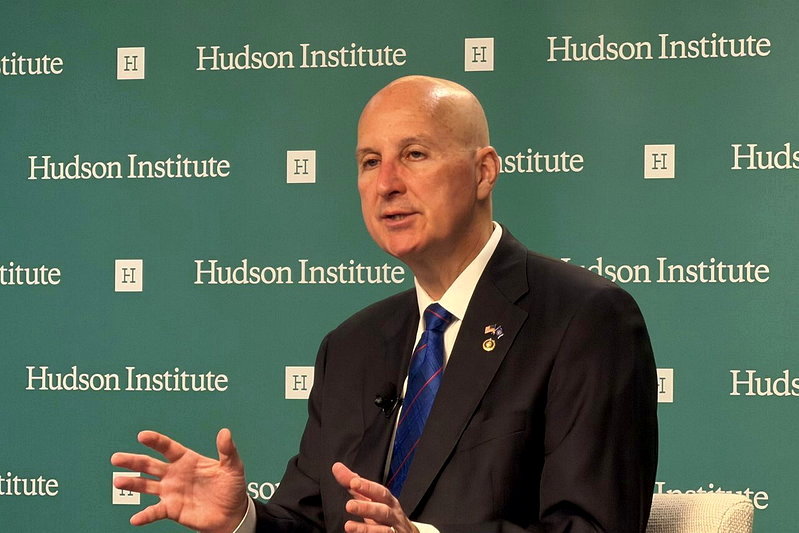
The New York Times reported on the 22nd that the wealth of the rich has exploded in the past two years, while middle-class working families have experiencedinflation The quality of life in the community has deteriorated, and the class issue highlighted by the wealth gap has become a political focus. It has become a main issue in federal senatorial, representative and gubernatorial elections across the country. in the federal state of nebraskasenator Election is a microcosm. demand for re-electionrepublican party U.S. Senator Pete Ricketts’s wealth is estimated at more than $200 million, making him one of the richest members of Congress; Independent challenger Dan Osborne works as a mechanic for an air conditioning and heating company, and made more than $108,000 last year.
Data compiled by economists at the University of California Berkeley and the Paris School of Economics shows that since President Trump returned to the White House, excluding inflation, the wealth of the richest 0.1% of Americans has grown by about 14%. The richest 0.1% of Americans are defined as those with an average net worth of more than $140,000, and about 250,000 people overall. The wealth of the top 0.01% of wealthy Americans saw an even greater increase during this period, numbering nearly 25,000. But the growth rate of household wealth of the middle class during the same period was less than 3%.
The report notes that the wealth gap between members of Congress and voters is not just a matter of gas and grocery prices, but a matter of people struggling to make ends meet while living carefree lives.
Jim Begley, director of the William Brennan Institute for Labor Studies at the University of Nebraska-Omaha, said the original opposition has shifted to left versus right. “Now it’s up versus down, and the people at the bottom are wondering what’s going on.”
From western Montana to eastern Pennsylvania, Democrats are attacking the “billionaire class” and accusing it of manipulating the political and economic system.
During the Ohio gubernatorial election, Democratic candidate Amy Acton played clips of Republican candidate Vivek Ramaswami in her election ads, emphasizing that he is out of touch with the lives of ordinary people. Ramaswami said, “I am very rich, but not as rich as the rest of the world.”
In a congressional district near Palm Beach, Florida, the personal property of Republican House candidate Casey Askar has become a subject of attack for Democrats.
But the class struggle that Ricketts faced is the most serious. Ricketts, 62, is the son of the founder of financial securities firm TD Ameritrade. Osborn is famous for leading labor strikes at the Kellogg factory in Omaha.
In campaign advertisements and social media posts, Osborn portrayed Ricketts as a spoiled rich kid who depended on his father, Joe Ricketts, to buy his Senate seat.
Osborn this month in Tecama, N.C. “The whole system is working exactly as it was designed to do, which is to serve them,” he said after a community meeting in Los Angeles.
Summary FAQ
-
Because the wealth of the rich has grown rapidly over the past two years, the quality of life of middle-class working families has declined due to inflation. The gap between rich and poor is directly felt by voters, and it has become a major offensive and defensive issue in elections for senators, representatives, and governors.
-
Ricketts, who is seeking re-election, is worth more than $200 million and is one of the richest members of Congress; His rival, Osborn, is an air conditioning technician with an annual salary of about 108,000 yuan. The backgrounds of both are completely opposite.
-
Data compiled by the University of California at Berkeley and the Paris School of Economics shows that since Trump returned to the White House, the wealth of the richest 0.1% of Americans has grown by about 14% after deducting inflation, while the wealth of middle-class families has grown by less than 3%.