
AI summary
Summary of article:
For the first time, the Ministry of National Defense confirmed that it had spent NT$82.4 million to invite retired senior US military generals to evaluate the Chinese military’s training results and observe the Han Kuang exercise to deepen Taiwan-US relations. security cooperation, which also raised external concerns about Beijing’s response.
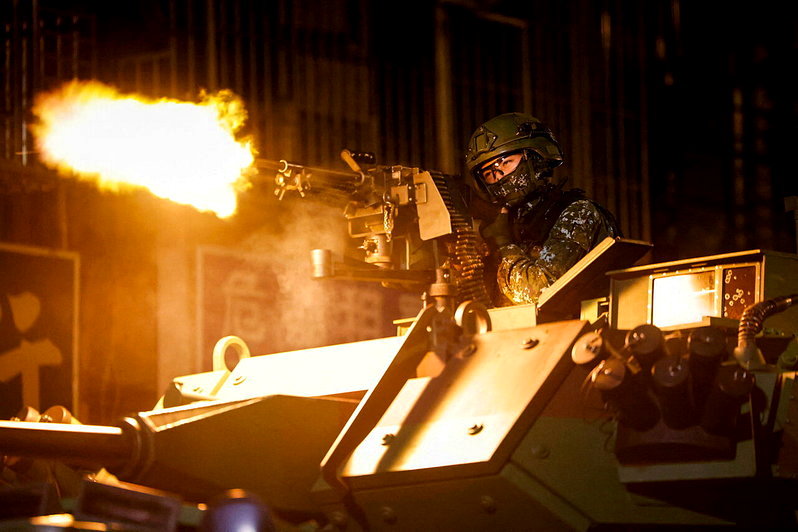
hong kong The South China Morning Post reported that Taiwan’s Ministry of National Defense has confirmed for the first time that it has set aside a budget of NT$82.4 million and invited the US Indo-Pacific Command to invite retired senior generals and military professionals to observe the Han Kuang exercises in 2026 and 2027, evaluate the effectiveness of the exercises and training, and make suggestions for improving the joint combat capabilities of the national military, which will focus on deepening Taiwan and the United States security cooperation. Throws light.
Analysts pointed out that Taiwan and the United States have always kept a low profile on sensitive military exchanges in the past, but now the Ministry of National Defense rarely confirms it publicly, showing signs of gradual openness. The move is not only intended to send a signal to Beijing that the United States strongly supports Taiwan, but can also be used to observe China’s reaction and test the bottom line of Beijing’s military cooperation with Taiwan and the United States.
According to a report submitted to the Legislative Yuan by the Ministry of National Defense last week, the plan, titled “Annual Assessment by Senior Observers and Exchanges”, covers the 2026 and 2027 Han Kuang exercises, with a total funding of NT$82.4 million (about US$2.5 million), of which NT$41.219 million is earmarked for this year.
The contents include payment for a retired US military general to serve as a senior observer, as well as funding for a delegation composed of military professionals and civilian personnel from the US Indo-Pacific Command.
The Ministry of National Defense reported that US observers will evaluate the results of the Chinese military exercises based on the training objectives of the Hanguang exercises and put forward specific suggestions to strengthen joint combat capabilities. The relevant evaluation results will be included in the Hanguang Exercise Summary Report as an important reference for the national army’s future military development and combat preparation.
This military cooperation plan, which has rarely been made public in the past, came to light as Kuomintang legislator Ma Wenjun questioned the implementation of the plan, the level of personnel sent by the United States, and the expected actual benefits. As a result, the Legislative Yuan froze 1 million yuan of the budget and required the Ministry of National Defense to provide a written explanation before unfreezing it.
In fact, this is not the first time that the US military has sent personnel to observe the Hanguang exercises. During the 2025 Han Kuang exercises, Taiwanese media revealed that retired four-star general in the US Army and former commander of US forces in Korea, Robert B. Abrams came to Taiwan to serve as a senior observer and advise Chief of Staff Mei Jiashu. However, the Defense Ministry declined to comment on individual cases at the time.
Luo Qingsheng, CEO of the Taiwan Institute for International Strategic Studies, pointed out that the most remarkable aspect of this revelation is not that Taiwan financed the invitation of US personnel, but that the Ministry of National Defense has officially confirmed for the first time that retired senior US generals participated in the Han Kuang exercises. He analyzed that as relations between Taiwan and the United States have become increasingly close and tensions across the Taiwan Strait have increased, the two sides have gradually ceased to publicly shy away from sensitive military exchanges, signaling to Beijing that the United States still strongly supports Taiwan.
Luo Qingsheng further pointed out that Beijing has reacted strongly to Taiwan-US military exchanges in the past, but the intensity of the protests has weakened recently. Therefore, Taiwan and the United States are gradually increasing the transparency of military exchanges, which may also be aimed at testing China’s reaction.
Luo Qingsheng also mentioned that US President Trump has repeatedly announced that as long as he is in office, Mainland China President Xi Jinping will not take military action against Taiwan. He speculated that this may mean there is some degree of consensus between Trump and Xi on the risk of conflict in the Taiwan Strait, and it may also be one of the factors why Trump has repeatedly delayed approving US$14 billion in arms sales to Taiwan.
Ji Zhong, a researcher at the Chinese Strategic Foresight Association, pointed out that it is also of great practical significance for the US military to send personnel to observe the Hanguang exercises. Since Taiwan has increasingly adopted US suggestions in areas such as military training, kill chain modernization, and special operations in recent years, it is necessary for the US military to observe on the spot the results of national military exercises and training to confirm whether the relevant suggestions have the expected effect, and adjust the direction of subsequent cooperation accordingly. One of the key points of the assessment is to test the effectiveness of US assistance in training Taiwan’s military instructors, particularly in terms of reserve mobilization and training.
Previous reports said the US Pentagon is preparing to send policy office representatives and experts from the non-profit Institute for Defense Analysis to Taiwan’s Ministry of National Defense through another cooperation project worth NT$470 million. Analysts believe the move will not only help the United States directly assess Taiwan’s war readiness, but will also let Beijing and US allies know about Washington’s commitment to Indo-Pacific security.
Summary FAQ
-
The plan, called “Senior Observer Annual Evaluation and Exchange”, covers the 2026 and 2027 Hankuang exercises, with a total funding of 82.4 million yuan. It is mainly used to invite retired US military generals and professionals to Taiwan to observe and advise.
-
US observers will evaluate the Chinese military’s training results based on the training objectives of the Hanguang exercise and make specific suggestions to strengthen joint combat capabilities. The relevant results will also be included in the Hanguang Summary Report for reference in the upcoming army construction and war preparations.
-
Because Taiwan and the United States have mostly kept a low profile on sensitive military exchanges in the past, the Ministry of National Defense has rarely confirmed it publicly, leading the outside world to believe that it represents a gradual opening up of cooperation, and may also be a sign of Beijing courting support and testing its bottom line.