
There is no shortage of talents in this world, and there are many children who have shown outstanding talents in various fields since childhood and are considered future stars; However, what really determines whether these people can climb to the top and reach the extraordinary is often not talent, but an old cliché that everyone is tired of hearing but is extremely important – hard work.
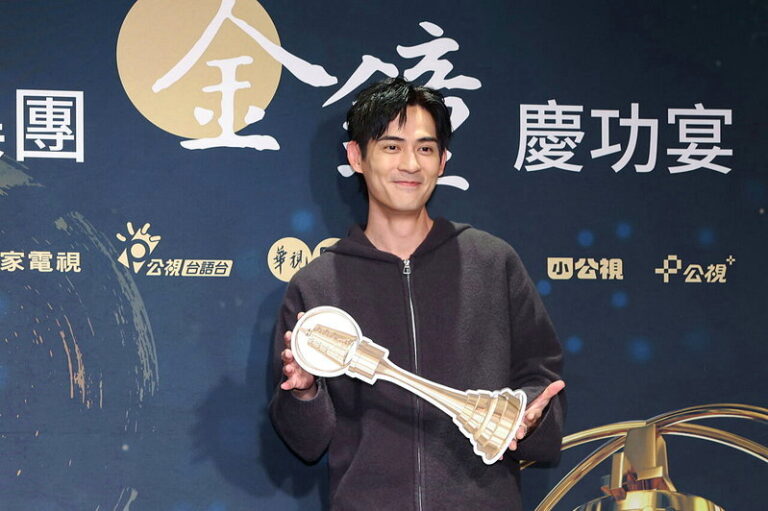
Hard work will give you a chance to recognize your talent and talent will take the hardworking person to higher heights. In fact, talent and hard work are indispensable and complement each other. “Performing artists must have talent, but without enough hard work they are destined to be short-lived.” Jiang Jingbo, a famous Taiwanese conductor, who has been recognized as a genius since childhood and has already blossomed, is a conductor who believes that “talent and hard work” are equally important.
Jiang Jingbo continued: “As far as I’m concerned, whether it’s the violin or conducting a work, the basic skills that have been really worked hard on are like riding a bicycle. They have become a physical tendency and cannot be abandoned. However, it takes a long time for such basic skills to work hard to become a physical tendency. Otherwise, the talent will quickly be used up; and when a person has talent and is mentally mature, Then he will realize that his efforts are not enough.”
And when we look at Jiang Jingbo’s “talent and hard work”, we will find that many decision-making processes are intertwined with life experience. Jiang Jingbo said this: “I’m not sure whether my path toward music was a coincidence or an emergent necessity.”
Jiang Jingbo has been considered a genius since childhood. When he was three or four years old, he would hold a violin in his hand, hear a tune and could immediately repeat it. His talent was obvious. In the beginning, before he realized his talent, Jiang Jingbo’s mother was very supportive. Jiang Jingbo said, “It seems a bit arbitrary for me to say this, but I think traditional Eastern parents have more plans for their children than their own values. My parents don’t. They are very open and let me play freely.”
Later, five-year-old Jiang Jingbo spent a year in Chicago, USA and saw the wider world for the first time. After returning to Taiwan, he attended Guangren Elementary School. Even the music class was mixed with the so-called normal class. Half the children in the class learned music, and the other half did not. Therefore, at an early age, Jiang Jingbo’s life was not limited to music, but he continued to explore his interests in various subjects.
Jiang Jingbo has always been a person who loves science and physics. After enrolling in Guangren Middle School, he also considered studying science in high school. However, during the summer vacation between the second and third year of junior high school, Jiang Jingbo made a significant change.
“At that time, I went to Germany with a European summer camp organized by a teacher who had returned from the United States. I lived, studied, practiced and finally performed with the Alban Berg String Quartet, which was the leading group at the time. It opened my horizons in music, changed my views about the future and decided to continue studying music.”
Then, Jiang Jingbo took music classes in high school, and then enrolled in Beijing University of the Arts, which was still called the National Academy of Arts at that time. After studying for a year and a half, he unexpectedly received an overseas call from a German violin teacher at the University of Southern California, cordially inviting Jiang Jingbo to participate.
Looking back at Jiang Jingbo’s school years, the concept of “movement” is important. He lived in Chicago in the United States as a child, returned to Taiwan during his elementary and middle school years, stayed in Europe and Germany to expand his musical horizons, and then moved to Los Angeles, United States.
Whether it is the intersection of “West” and “East”, or the clash of “rationality” in physics and “sensitivity” in music and art, the back and forth movement of these aspects gradually adds up to Jiang Jingbo’s complex and deep personality traits; However, such a wide range of interests – such as when Jiang Jingbo was studying music at the University of Southern California, his interest in physics did not stop, and he also tried to pursue a degree in neuroscience. Here, of course, there would be an extended question, and it would have to give a real answer to the question “Can music be the only thing?”
Jiang Jingbo rigorously investigated this issue and asked himself to make a decision under the most objective circumstances. One day at midnight, Jiang Jingbo knew that this moment had come.
“Is there anything in this world that if I can’t have it with me I would feel that life is boring?” Jiang Jingbo asked himself this question. He also believed that everyone should ask themselves these questions. Jiang Jingbo replies that there is only music. “Although I have interest in other fields too and may have some understanding, but it’s just an interest. Music is the only thing I can’t give up in life. I know that very well.”