
AI summary
Summary of article:
As of the afternoon of the 23rd, 16 people died and 76 were injured after a magnitude 7 earthquake struck Nagchu Baking County, Tibet. Authorities completed three rounds of investigation and found no missing persons, and reminded the earthquake zone to still pay attention to aftershocks.
On the evening of the 22nd, a magnitude 7 earthquake struck Bakking County, Nagqu City, Tibet.Earthquake Strongest earthquake of this year in China. Local officials said that till 1 pm. 16 people died and 76 were injured in the earthquake that occurred on the 23rd. After three rounds of extensive investigation, no missing person has been found so far.
CCTV News reported that the Information Office of the People’s Government of Nagchu City in Tibet held a press conference on the afternoon of the 23rd. Everyone stood up to express condolences to the earthquake victims.
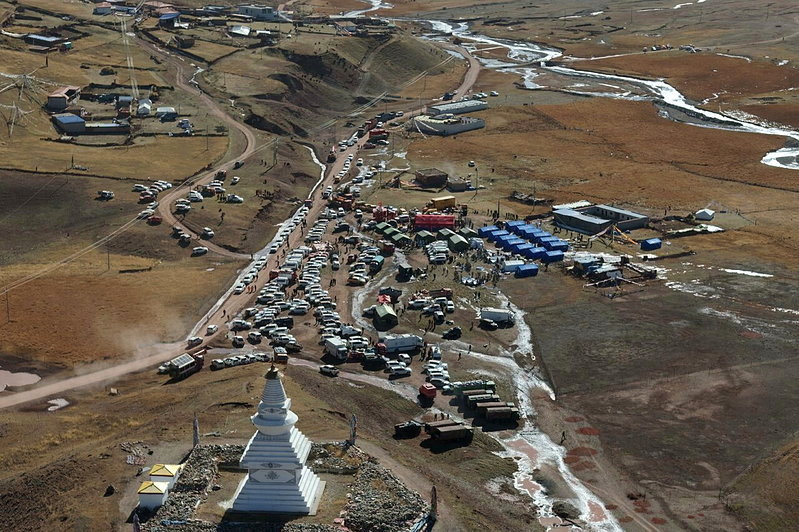
The meeting was informed that preliminary verification showed that the earthquake was of high intensity and its epicenter was shallow. The earthquake was felt strongly in the main areas of the epicenter such as Maru Township and Gangqi Township in Bakking County. Some houses collapsed and power and communication facilities were damaged. By 1 pm on the 23rd, 16 people were killed, 76 were injured, 339 houses collapsed or were damaged, and 20 animal sheds were damaged.
The report quoted the Frontline Emergency Command Headquarters as saying that after three rounds of house-to-house inspections, no missing persons had been found.
The paper reported on the 23rd that according to expert analysis conducted by the China Seismological Network Center, the magnitude 7 earthquake in Bakking County, Tibet occurred in the Qiangtang Massif on the Qinghai-Tibet Plateau. This was an “extended rupture”. Due to the collision between the Indian Plate and the Eurasian Plate, the plateau rose and the crust became thicker. The interior simultaneously contracted from north to south and expanded from east to west, causing the fault to move and release energy.
Experts said it was a release of energy from the Qiangtang Massif, which has experienced six earthquakes of magnitude 7 or greater since 1900. Although no earthquakes of magnitude 7 or greater have occurred within 200 kilometers near the epicenter, nine earthquakes of magnitude 6 or greater have occurred, indicating that the fault has been active for a long time.
Experts said there could still be aftershocks over the next few days that could be felt by people in and around the epicenter and that locals should continue to pay attention to safety.
As of 12:00 noon on the 23rd, the China Seismic Network recorded a total of 501 aftershocks, including 474 aftershocks of magnitude 3 or less and 5 aftershocks of magnitude 4 to 4.9.
Summary FAQ
-
By 1 pm, 16 people had died and 76 were injured in the earthquake that occurred on the 23rd. Another 339 houses collapsed or were damaged, 20 animal sheds were damaged, and some electricity and communication facilities were also damaged.
-
The Frontline Emergency Command Headquarters said that three rounds of door-to-door full-coverage inspection have been conducted at the local level, and no missing persons have been found after repeated verification, indicating that most of the main affected people have understood the situation.
-
Experts believe it is a tensional rupture within the Qiangtang Massif, reflecting stress release caused by the collision of the Indian Plate and the Eurasian Plate; There may still be aftershocks that the public may feel near the epicenter over the next few days.