
AI summary
Summary of article:
Hong Yaonan believes that after Xi Jinping’s anti-corruption and purge, the next step will be to target “two-faced people” who show loyalty but have other problems. High-pressure politics are also pushing Chinese officials to avoid risks and do nothing.
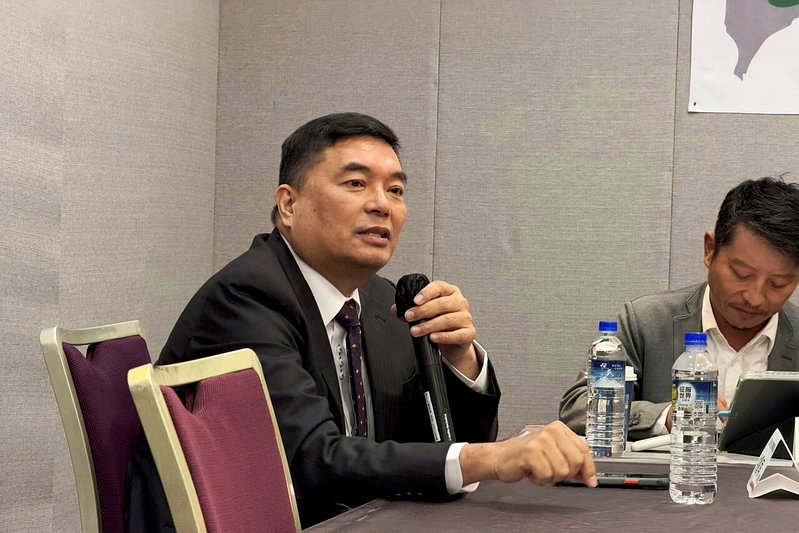
Communist Party of China The fifth plenary session of the 20th Central Committee of the Communist Party of China concluded in Beijing last week. Hong Yaonanjin, director of the Cross-Strait Relations Research Center at Tamkang University, said that many CCP officials removed in the past used to shout “two establishments” and “two security measures” every day, emphasizing security.Xi Jinping It turned out to be corruption at its core. He believes that “what Xi Jinping wants to clean up in the next phase is called two-faced people.”
The Asia Political Economics and Peace Exchange Association held a symposium on “After the Fifth Plenary Session of the Central Committee of the Communist Party of China, where will China go? Internal political situation, cross-strait relations and international situation” on the afternoon of the second day. It invited Shen Yuzhong, vice chairman of the Mainland Affairs Council, and a number of experts and scholars to discuss power structure, military purification, social governance and Taiwan policy trends following the fifth plenum of the 20th Central Committee of the Communist Party of China.
Hong Yaonan pointed out that in the past, the political loyalty of CCP officials mainly depended on their statements, but many of the officials who were removed had also repeatedly insisted on maintaining Xi Jinping’s core in the past, but in the end they were involved in corruption. He believes this means that the people Xi Jinping wants to clean up in the next stage are “two-faced people.”
Hong Yaonan said that anti-corruption has now included corruption as a very important observation indicator for promotion, including new forms of corruption such as stock holdings, which will be further investigated. He also mentioned that recently some officials who had been retired more than ten years were re-investigated to investigate so-called “two-faced people”.
Hong Yaonan also mentioned that the Fifth Plenary Session of the Central Committee of the Communist Party of China focused on local “top leaders”. In the past, after Xi Jinping established his central position at the Sixth Plenary Session of the 18th Central Committee of the Communist Party of China, the provincial Party Committee secretaries also became the centers of local power, and even acted arbitrarily.
He believes the emphasis on democratic centralism this time is “to strengthen the big core, but what needs to be eliminated is the small core that protects the top leaders.” He also pointed out that recently there have been personnel transfers of “top leaders” in more than a dozen provinces, some of whom are not yet Central Committee members or alternate members, and may enter the Central Committee at the 21st Congress of the Communist Party of China in the future.
Hong Yaonan believes that if this trend continues, the first thing every executive will consider in the future is not performance, but risk. When risks become a priority, executives will not act proactively. In the future, the frequency of CCP official inaction or neglect will become increasingly high.
He said the CCP has always emphasized that it can make long-term plans and prepare for long-term governance, but now the average tenure of office of local chiefs in mainland China has dropped from 46 months to 25 months in the past. The rotation rate of officials is very high, along with political risks, causing officials to “consider only immediate short-term actions rather than long-term actions.”
Hong Yaonan said that for example, in some construction projects that require long-term investment, officials may be reluctant to invest because the results cannot be seen during their tenure. “They can’t harvest it, and they can’t look at it anymore.” They believe this will lead to a change in China’s official culture, increase officials’ passivity, and reduce inward investment. “China’s economy will continue to perform poorly overall. The reason for the failure is not its economy, but politics.”
Summary FAQ
-
He pointed out that in the past, officials often shouted “two establishments” and “two security measures”, but were still investigated for corruption, which shows that Xi Jinping’s next focus is on the “two-faced people” who look loyal but actually have problems.
-
The symposium following the Fifth Plenary Session of the 20th Central Committee of the Communist Party of China focused on power structure, military purification, social governance and Taiwan policy trends, and was jointly analyzed by Shen Yuzhong, vice chairman of the Mainland Affairs Council, and several scholars.
-
He believes the high-pressure purge will cause officials to prioritize risks over performance, leading to maladministration and inaction. Also, construction projects that are unlikely to yield results in the short term will be scaled back, leading to less inward investment and a drag on the economy.