
AI summary
Summary of article:
The French riots are not just a security issue, but a crisis of political focus, loosening of social contracts and financial pressures. The 2027 general elections will be the key to rebuilding order and trust.
The riots in France last weekend shocked the world and led to enforcement action in major citiescurfew The Yellow Vest movement has announced that it will take to the streets again and the shadow of the 2027 presidential election looms over the crisis. The European media’s diagnoses have different focuses, but they point to the same origin: this is not a simple security incident, but a general outbreak of the collapse of the French political centre, the failure of the social contract and financial difficulties.
Austria’s “Messenger” pointed out that France’s biggest crisis is that “the political center has disappeared.” When ruling centrists are unable to respond to structural problems, the far-right and far-left camps see chaos in the streets as an opportunity to lead the way to the Elysee Palace. The closer the election gets, the stronger the extremist messages will become. This diagnosis explains why a student and cost-of-living exhibit was quickly dragged into the quagmire of the presidential election: the streets are no longer an outlet for public opinion, but a battlefield for different camps to compete for narrative power.
Belgium’s “Liberi” took aim at the far left “France Unyielding” and Mélenchon believed that his attitude of “first fanning the flames and then surprising the fire” provided an excellent campaign springboard for Ray-Ban’s national alliance. The criticism highlights a dilemma for the left: It is legitimate to criticize excessive police enforcement, but not explicitly condemning looting and arson would be tantamount to handing out an “order” card to the far right.
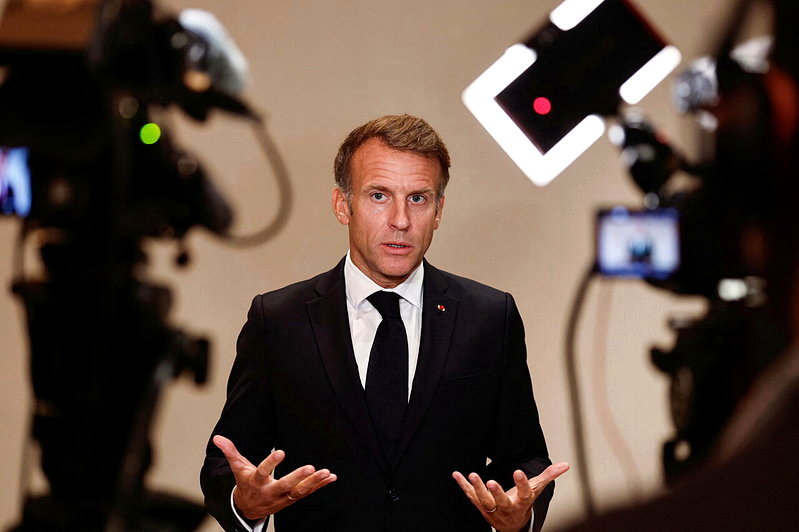
However, linking the entire movement to a far-left insurgency is also a dangerous simplification. The Irish newspaper “Irish Examiner” reminded that most of the protesters were peaceful, and that those who actually vandalized shops and set fire were “caisers” (vandals) who came in the evening and ran around in small groups; Blaming the far left for riots is often a convenient excuse for “not wanting to listen.” President Macron himself acknowledged that peaceful protesters should not be confused with rioters and that people have the right to think that gas prices are too expensive. It reminds us that condemning violence and addressing public grievances must proceed at the same time, otherwise it will only push more moderate voices towards extremes.
French newspaper Les Echos’ diagnosis is the most fundamental: From the Yellow Vests in 2018 to the pension reform protests in 2023, the script is always the same – surprise, make high-profile announcements, throw some money around and then forget. Public spending is ineffective, state authority is challenged, education no longer guarantees class mobility, and the middle class feels ostracized. These root causes were never addressed.
Switzerland’s Neue Zurich Zeitung further reported that increased subsidies for distressed communities since the 1980s have had limited impact. France can no longer rely on “more money, more plans, more commitments” as a panacea, but must renegotiate the social contract so that individual effort and contribution once again become the basis of opportunities and rewards.
The most cruel thing was added to Lithuania’s “IQ”: debt is destroying the future of France. To satisfy the financial market, the government will inevitably have to raise taxes, cut public spending, freeze salaries or delay retirement, and these measures will further stoke public discontent: the more debt there is, the fewer resources can be invested in education, infrastructure and innovation.
A consensus has emerged among the European media: France’s crisis is not a fire in the streets, but a question behind that fire that has long been avoided: In a republic that has lost its political center, its social contract is loosening, and its fiscal space is shrinking, how can it still be trusted to maintain trust? The 2027 general election will be a real game-changer: either France will finally take the difficult decision to restructure its finances, rebuild state authority and end the culture of impunity; Or France will take a course that no one can predict.
Summary FAQ
-
Because many European media reported that behind the riots was a failure of the political center, the hijacking of narratives by left and right poles, the accumulation of social discontent and financial difficulties, which were beyond the scope of normal street riots.
-
Because most people are peacefully expressing their dissatisfaction over oil prices, cost of living, and policies, it is a small group of rioters who actually set fire to stores and vandalized stores; If they are merged together, it will only push liberal public opinion into a more radical camp.
-
The basic objective is not to suppress a single riot, but to rebuild the political center, repair the social contract, and control debt pressures. Otherwise, the government can only cope by raising taxes, cutting spending, and delaying retirement, and public dissatisfaction will continue to grow.