
AI summary
Summary of article:
VIVANT, a popular Japanese spy drama, depicts Chinese personnel mistreating Japanese spies, causing CCTV to be criticized for defaming China and beautifying Japan’s overseas operations, and sparked discussion in the Chinese community.
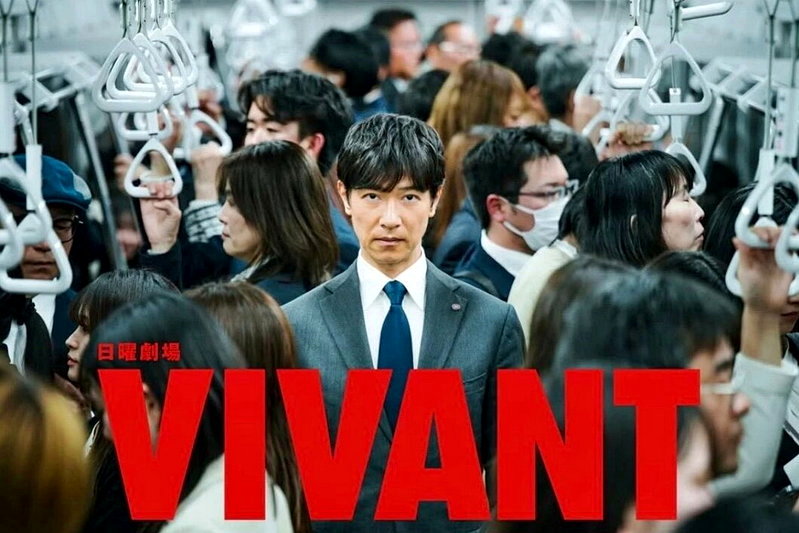
Japan The second season of the TV series VIVANT has recently aired. In response to scenes in the show where Chinese agents cut off Japanese agents’ fingers and stab them in the stomach, China’s state media CCTV today criticized the plot as confusing right and wrong and deliberately defaming China. It also accused the show of glorifying Japan’s overseas operations.
VIVANT stars renowned Japanese actor Sakai Masato and co-stars Abe Hiroshi, Ninomiya Kazuya, Nikaido Fumi, Matsuzaka Torii and others. The plot tells the story of the espionage war of the “Special Class”, a secret organization of the Japanese Self-Defense Forces.
However, CCTV News WeChat’s official account published a comment on this drama today, initially criticizing that “the plot is extremely outrageous” and pointing out that the drama designed Chinese intelligence personnel to cut off the fingers and stab Japanese intelligence personnel in the stomach. It believed that “these methods are highly consistent with the torture used by the Japanese invaders against Chinese anti-Japanese comrades.”
CCTV criticized the plot as “altering right and wrong, imposing these methods on the image of the modern Chinese people, deliberately creating confrontation and inciting hostility.”
CCTV also criticized the drama for glorifying Japan’s overseas operations, blurring the functional boundaries of the Self-Defense Forces, and exporting an expansionist narrative in disguise. Comments reported that in the drama, a Self-Defense Force intelligence officer said to Chinese personnel while escaping from a plane, “If this plane is attacked, just wait for the West’s power to come and crush you…”
In addition, the review also criticized that the Japanese Foreign Ministry has invested funds in recent years “to discredit Chinese public opinion and distort history”, and allocated special funds for AI in the fiscal year 2027 budget to “respond to cognitive warfare.” As with film and television works like VIVANT, “the historical perspective behind it is the same as visiting the “War Criminals Shrine” and fiddling with textbooks.” He also said that “hostility packaged in entertainment is more dangerous than naked propaganda.”
Related topics have also attracted attention on the Chinese social platform Weibo, and it topped the trending list today, with many netizens criticizing CCTV.
Japan-China relations remain increasingly tense, with Japanese Prime Minister Sanae Takachi declaring in November last year that “there is a problem in Taiwan.” China often uses the historical narratives of World War II and the Anti-Japan War to criticize Japan, and accuses Japan of moving towards a “new type of militarism” and accelerating “remilitarization”.
Summary FAQ
-
CCTV reported that in the drama, Chinese intelligence officers were arranged to cut off the fingers of Japanese spies and make holes in their stomachs. He believed that the methods were highly consistent with the torture of the Japanese invaders and were deliberately distorting and tarnishing the image of China.
-
CCTV believes that the drama not only confuses right and wrong, but also embellishes Japan’s overseas operations and blurs the functional boundaries of the Self-Defense Forces, which is tantamount to presenting an expansionist narrative and delivering entertainment content with obvious political intentions.
-
Because the relevant comments topped the trending list on Weibo and were linked to recent tensions between Japan and China, many netizens echoed CCTV’s statement and considered the series to be part of Japan’s public opinion on China and its historical narrative.