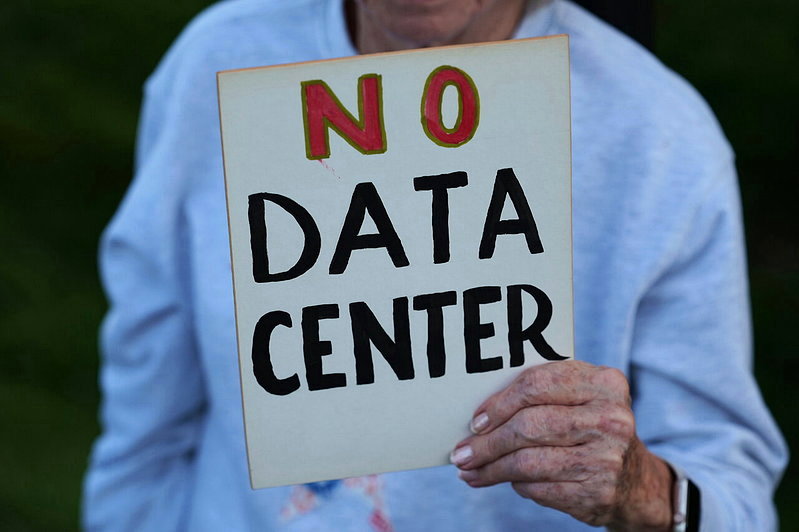

In the US midterm elections on November 3, the Democratic Party won both houses of Congress, and also won the governorship in key data centers such as Texas, Ohio and Georgia. Many winners advocated suspending or strictly controlling AI data centers during the campaign, and almost all local referendums on banning data centers passed. Just a few days after the election, Wall Street AI stocks first rose and then collapsed, and technology giants were also eager to adjust their expansion strategies.
The data center is a “factory” for AI computing, but controversies over power consumption, water consumption and rising electricity bills have turned it from a bright spot for investment into a burden for votes. The election outcome will not only impact trillions of dollars in AI investments, but also affect the US-China technology competition. The following will show you why residents are disappointed, how the election results have changed the area, how the market and industry respond, and what to look forward to.
Driven by AI and the cloud economy, there has been a wave of data center construction across the United States. However, data centers that were originally considered digital infrastructure have become “bad neighbors” that communities avoid in just a few years. Residents’ dissatisfaction mainly includes the following points:
1. It consumes both electricity and water: Large data centers operate 24 hours a day, consume a lot of electricity, and also require large amounts of water to cool the servers. The New York State government is concerned that the lack of regulations could increase the burden on the power grid, increase residents’ electricity bills and impact water supplies and surrounding communities. In July this year, it became the first state in the United States to suspend approval of new large-scale data centers.
2. Electricity bills rising: Residents are generally worried that construction projects will increase electricity bills and increase water pressure. “Who will pay the electricity bill” has become a part of the cost of living issue ahead of the elections.
3. Limited employment benefits: Data centers do not generate many employment opportunities, making it difficult to offset the impact on the environment and resources. Even in San Francisco, which is actively adopting AI, city councilors have proposed considering suspending approval of new data centers on the grounds that employment is limited but power consumption is too high.
4. The shadow of AI taking away jobs: Many voters are also concerned that AI technology powered by data centers could leave large numbers of Americans unemployed, making it more difficult for such investments to gain social recognition.
5. Opaque decision-making: Residents of Festus, a small town in Missouri, alleged that the city government and developers held several secret meetings to minimize the data center’s impact on electricity bills and water usage. Voters defeated four City Council members seeking re-election in April, after the City Council approved a $6 billion AI data center.
Some commentators noted that “protests will be held wherever projects are built” as the new normal. Last year alone, at least 40 data center construction projects in the United States were blocked or delayed.
👉Data centers are being built like crazy and people refuse to pay the bills
👉Governor Huo Chu signed an executive order, New York State became the first state in the United States to suspend the development of large data centers
👉The AI capital San Francisco has put on the brakes and plans to suspend the construction of new data centers for 45 days.
👉Politicians who pushed for data centers have “changed their face” and been criticized due to voter opposition