
AI summary
Summary of article:
Cerebras announced better-than-expected quarterly results and a strong outlook and announced that Microsoft had joined its client list, sending the stock price up 16% after market close. However, the density of orders and sustainability of growth are still a matter of concern.
Cerebras, a new AI chip entrepreneur, reported better-than-expected third quarter revenue and fourth quarter outlook and announced thatMicrosoft Collaboration can be seen as an effortOpenAI Progress has been made with other customers. Buoyed by related bullish news, Cerebrus rose 16% after market close on Thursday.
Cerebra’s adjusted revenue in the third quarter was US$230.9 million, up 70% from the same period last year, exceeding the average analyst estimate of US$214.7 million compiled by LSEG, but the growth rate was slower than the second quarter’s 103%.
This adjusted revenue does not include collection and payment revenues and does not include the accounting impact of warrants issued to customers. Under accounting rules, these warrants are amortized and deducted from revenues, but do not involve a cash outlay and are therefore added back when calculating adjusted revenues.
Cerebrus estimates fourth-quarter adjusted revenue of US$310 million to US$330 million, higher than analysts’ original estimate of US$271 million; Core gross profit margin is estimated at 47% to 49%, higher than the market expectation of 42.1%.
In terms of profitability, adjusted operating profit margin in the third quarter was negative 14%, better than the negative 24% expected three months ago. Barron’s Weekly analyzed that from the perspective of fourth-quarter revenue and profit prospects, Cerebra could still make a profit after adjustments.
Cerebras CEO Andrew Feldman told CNBC that Microsoft signed on in October and is expected to start contributing revenue in the first quarter of 2027. Cerebras has also signed cooperation agreements with Amazon and Oracle.
Feldman said the long wait times and high costs for GPU deliveries create opportunities for Cerebra, especially for hardware sales.
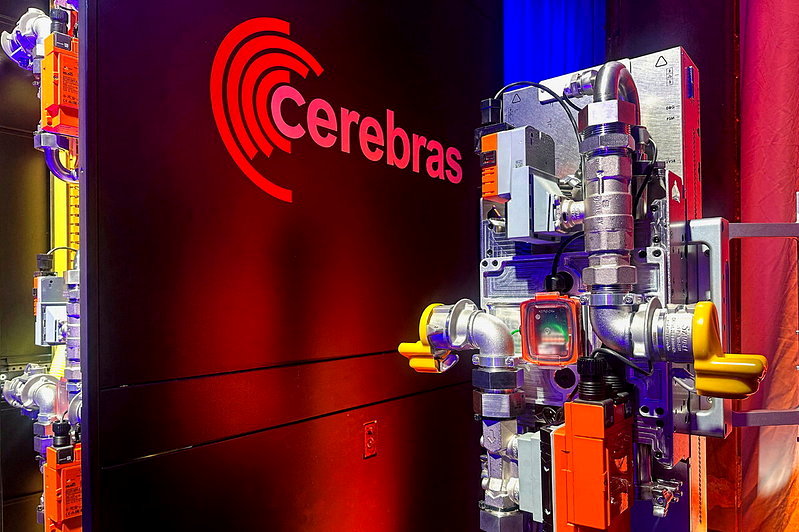
Cerebras is based in Sunnyvale, California. Its business is divided into two parts. One is selling computers equipped with its own chips, and the other is providing cloud computing services using its own technology. Cerebras hopes to conquer the huge construction expense of data centers with a different chip design from Huida.
The announcement of this financial report coincided with Nvidia’s announcement of Huang Renxun’s resignation. Huang Renxun’s frequent extramarital affairs and rumors that he was targeted by mainland China’s anti-government campaign brought Huida into trouble and drew more attention to his rivals’ developments.
Cerebra’s order backlog grew to US$26 billion in the third quarter from US$25 billion in the previous quarter. According to previous filings, a large portion of the orders in hand in the second quarter came from the OpenAI cloud services contract signed in late 2025.
Barron’s Weekly reported that the latest revenue performance shows that Cerebras has the potential to fulfill the OpenAI contract; However, the increase in orders at hand is limited, and there are not many details on the cooperation between Microsoft, Amazon and Oracle, which is not enough to allay concerns about excessive customer concentration.
However, the Oracle contract was signed only after the end of the third quarter and has not yet been included in the quarter’s order backlog. Chief Financial Officer Bob Comyn described the deal as “huge” at a press conference.
Cerebras expects revenue to triple to about $2.85 billion in 2027, slightly below analysts’ average estimate of $2.92 billion.