
AI summary
Summary of article:
After fishing began in the East China Sea, mako sharks often became a low-priced and unmarketable commodity due to accidental entry into fishing nets. Many fishermen were reluctant to bring them ashore due to their strong fishy odor, troublesome handling, and the impact of conservation and trade controls.
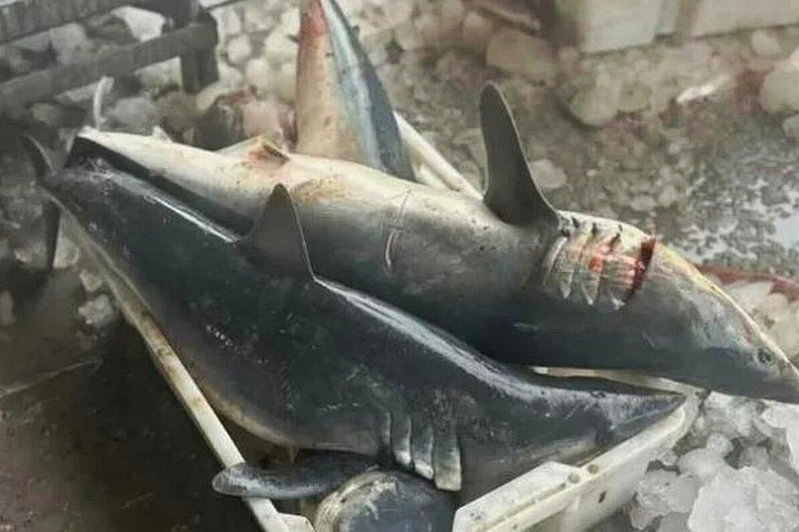
“20 yuan (RMB, the same below, about 2.9 US dollars) a pair, 4 pairs to carry 70 yuan.” This is not a clearance sale of long johns in the market.auction But the fishermen on the dock are selling their wares, and what they are selling is the overlord of the sea – the shark.
China News Weekly reports that these little-noticed sharks are actually mako sharks, which were accidentally caught in fishing nets by fishermen while fishing for pomfret and yellow croaker. Because sharks emit a pungent odor after dying, coupled with factors such as difficulty in handling, risks of consumption, and conservation regulations, they have become a slow-selling commodity in the eyes of fishermen, priced at just over 1 yuan per kilogram.
He Xin, a researcher at the Shanghai Museum of Natural History, said the sharpnose mako shark, also known as the mako shark, is widely distributed in the Pacific, Atlantic and Pacific Ocean.India Sea sharks are also a common shark in the waters of Zhoushan. It has been recorded that the longest length can reach 4 meters and the sprint speed is up to 70 kilometers per hour. It is one of the fastest swimming sharks.
With the start of full-scale fishing in the East China Sea in mid-September, a large number of fishing boats have gone out to sea to catch fish. Mako sharks are also at risk of becoming entangled in fishing nets when chasing schools of fish, making them “bycatch” in fishery production. A staff member of an offshore fishing company said that the company’s fishing vessels mainly catch squid, and sometimes even accidentally catch sharks. Typically, the fins and belly of the fish are first examined to confirm that there are no serious injuries before releasing them.
Even if sharks are caught, fishermen will be unwilling to bring them back to shore. Ocean-going fishing boats will inevitably consume diesel, labor, ice and other costs. Space in the cabin is limited and priority should be given to economically valuable catches such as hairtail and pomfret. Sharks not only take up space, but they also cannot be sold when taken back to shore.
Years ago, sharks were the treasure of fishermen. At the time, sharks were still very valuable, and shark fin, also called shark fin, was considered a great supplement by many wealthy people. However, with the improvement of environmental awareness in various countries, whale sharks, basking sharks and man-eating sharks (great white sharks) have long been included in the “List of National Key Protected Wild Animals”. They are second level protected animals and their sale and acquisition is prohibited.
In addition, sharks contain large amounts of urea, which will produce a strong odor after they die. Shark skin is covered with scales and is as rough as sandpaper when processed. It must be peeled, deveined and soaked repeatedly before cooking to reduce the fishy odor. As a result, no one is willing to buy it.
However, the sharpnose mako shark is classified as “Endangered” on the IUCN Red List and is also an Appendix II species of the Convention on International Trade in Endangered Species of Wild Fauna and Flora, and international trade is strictly controlled. Compared to the low price and no sale situation on the dock, the best destination for these sharks should not be plastic boxes on the dock, but the free sea.
Summary FAQ
-
The main reason is that mako sharks often accidentally enter fishing nets while fishing and become captured. Additionally, they have a strong fishy odor after death, are labor intensive to handle, and are subject to conservation and trade restrictions, resulting in very few people willing to buy them in the market.
-
The article states that these sharks are primarily sharpnose mako sharks, also known as mako sharks. They are commonly found in the waters of Zhoushan. Their body length can reach up to 4 meters and their top speed can reach up to 70 kilometers per hour. They are one of the fastest swimming sharks.
-
Because ocean-going fishing boats cost more and cabin space is limited, higher-priced boats like the Hairtail and Pomfret must be reserved early. Sharks not only take up space, they are also difficult to handle, stink easily and cannot be sold after returning to port.