
AI summary
Summary of article:
Due to an aging population, declining immigration, and high housing costs in New York State, labor supply remains tight, resulting in a decline in business expansion and employment growth.
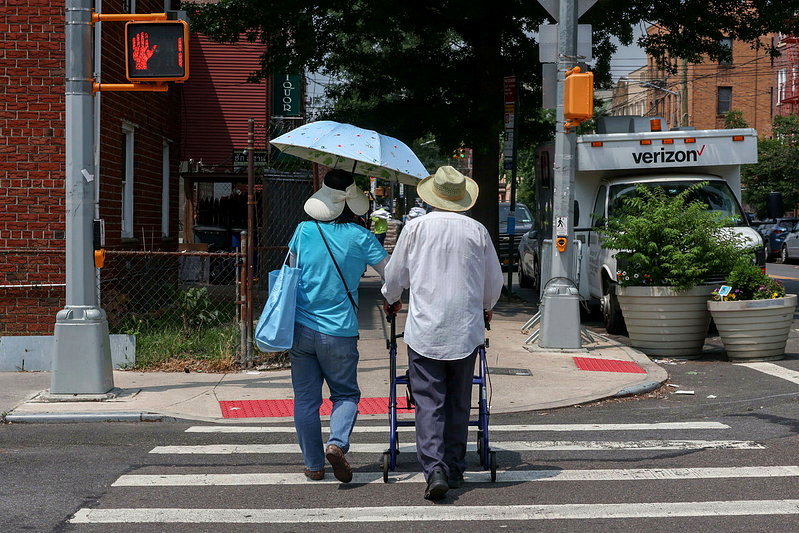
According to the New York Post,new York State The problems of stagnant population growth and aging are becoming increasingly serious, which is gradually hindering the expansion of enterprises and the development of the labor market. according to the governorHuo Chu According to a latest report released by Gov. Kathy Hochul’s office, the proportion of the state’s population age 65 and older has reached 19.3%, up by nearly a fifth, a significant increase from 15% ten years ago.
The “Labor Market” chapter in Hochu’s mid-year budget plan points out that as baby boomers retire one after another, the young population is not enough to fill the vacancies left by those leaving the workforce. New York faces the problem of inadequate labor supply due to limited population growth and an aging workforce.
“New York State’s labor market faces the same restrictions as those across the United States. Businesses are cautious about expansion, coupled with limited labor force growth, further hampering hiring activities,” the report said.
The report also warns that limited population growth and an aging workforce will limit the state’s labor supply, leading to a decline in employment growth. However, the unemployment rate is expected to remain stable. The State Budget Office projects that the unemployment rate in New York State will average 4.4% annually from 2026 to 2028, slightly higher than the national average.
Analysts said there are several reasons behind the lack of vibrancy in the New York job market. First, foreign countriesmigrant The number of people decreased. In the past, immigrants have been an important source of replenishing New York’s population loss. Nowadays, the decrease in immigration has further tightened the labor supply. Furthermore, the high cost of living, especially the lack of adequate affordable housing in New York City and surrounding areas, also makes it difficult for young families to settle there.
Steve Fulop, CEO of the Partnership for the City of New York, which represents large employers in New York City, said it is difficult to reverse New York’s population aging trend, but the government can still find ways to improve livability for young families and make New York more attractive to businesses.
“We can’t change the fact that New York’s population is aging, but we can change whether young families have the ability to put down roots here, and whether companies are willing to choose New York to create the next 100 jobs here,” Fulop said.
He pointed out that domestic affordability and corporate competitiveness are inseparable, and both should be discussed as a single policy issue.
Ken Girardin, a researcher at the Manhattan Institute, believes the decline in foreign immigration will coincide with a housing shortage, creating a double blow to New York’s economy.
He said, “Hosting and immigration are two important factors that drive the economy, but in recent years, both aspects have been disrupted. New York City is the first stop for new immigrants coming to the United States. The decline in the number of immigrants has made the labor market tighter and has also brought challenges to New York’s economy.”
The Trump administration has tightened immigration policies in recent years, including ending Temporary Protected Status (TPS) for some immigrants, which has affected thousands of Haitians and Venezuelans, forcing some out of the workforce.
Girardin also blamed state and city policies for New York’s high housing costs. He noted that after strict rent control rules were passed in 2019, thousands of residential units remained vacant and unable to be put on the rental market because landlords were unable to afford repairs.
He said, “This reflects the depth of the problems in New York’s housing market. The supply of new housing is not growing fast enough, and rent control policies are creating additional disruptions.”
Another sign that young families are no longer choosing to live in New York City is the steady decline in public school enrollment.
Kindergarten enrollment in New York City public schools has declined 23% over the past eight years. Data released by New York City Comptroller Mark Levin shows that since the 2013–2014 school year, the total number of public school students has decreased by 19%, resulting in a decrease of approximately 187,000 students; In the last year alone, there has been a decrease of approximately 22,000 students.