
AI summary
Summary of article:
Market concerns about an escalation in the Middle East calmed down after Trump indicated he would not attack Iran for now, sending oil prices back down. The average price of gasoline in the United States fell below $4 per gallon for the first time, but diesel and inflation pressures still remain high.
According to the New York Post, the U.S. vehicle manufactureroil price Prices fell below $4 a gallon on Tuesday for the first time since mid-July. First,trump The President has indicated that he has no intention of doing anything about this in the near future.iran The attack was launched to ease market concerns about the escalating situation in the Middle East and drive down international oil prices.
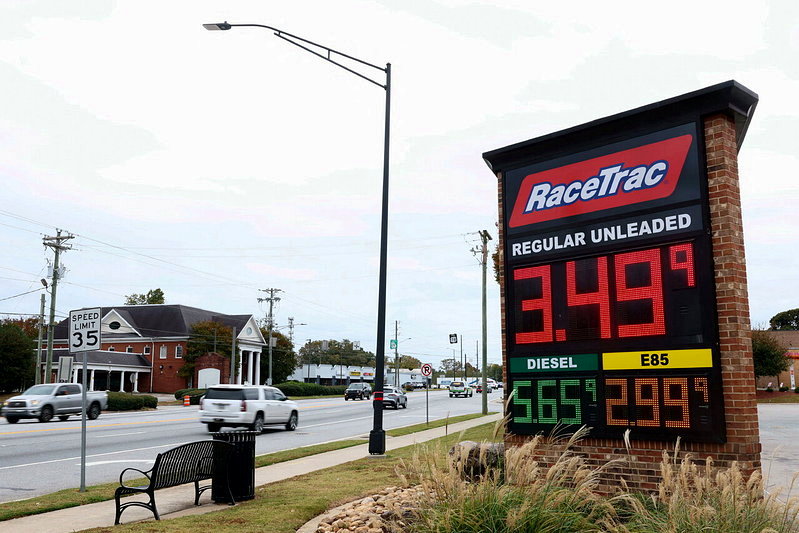
The national average price of gasoline fell to $3.98 a gallon, falling below $4 for the first time since July 20, according to American Automobile Association (AAA) data. However, the price of diesel fuel used by large trucks and farm equipment remains high, averaging $6.16 per gallon.
The decline in gasoline prices was mainly due to the sharp decline in international oil prices. Brent crude oil futures fell below $90 a barrel on Tuesday morning for the first time since August. Brent crude oil fell 13% last week, its biggest weekly loss since April 2020 during the COVID-19 lockdown.
Joe Adamski, managing director of supply chain consultancy ProcureAbility, said gasoline prices could remain below $4 a gallon until next spring as long as the market continues to expect the parties to the Middle East conflict to seek a negotiated solution.
Adamski said current forecasts show gasoline prices could fall to $3.60 to $3.65 per gallon, and there is still room for more downside. He said the current price increase at gas stations is higher than normal, leaving room for further reductions in oil prices.
However, he also warned that if peace talks break down or Persian Gulf oil supplies are attacked again, gasoline prices could rise again within days, offsetting existing price cuts.
Trump said on Monday that from a military perspective, the war with Iran is “effectively over.” At the same time, the Trump administration is meeting with mediators to negotiate on Iran’s nuclear program. Trump also said last weekend that as long as negotiations continue, it is “extremely unlikely” that the United States will resume attacks on Iran.
The Democratic Party won a big victory in last week’s US midterm elections, which also sent crude oil futures prices falling. Traders expect Democratic politicians to continue to pressure the Trump administration to reach a Middle East deal as soon as possible.
Despite the recent decline in oil prices, gasoline prices are still about 30% higher than before the United States and Israel launched attacks on Iran on February 28, and about 40% higher than earlier this year.
Rising energy costs remained one of the main drivers of inflation in October, according to data released Tuesday morning by the US Bureau of Labor Statistics. The price of gasoline increased by 1% that month, and the cumulative increase over the past 12 months reached 37.4%; The price of fuel used for residential heating also topped the monthly increase. As the weather gets colder, rising heating costs are particularly worrying.
Economists have warned that higher diesel prices could also push up the prices of other commodities. Large trucks that transport almost all consumer goods from food to clothing use high-priced diesel fuel, a cost that may ultimately be passed on to consumers.
In addition, food prices increased by 0.5% in October, and air ticket prices increased by 0.4% monthly, an annual increase of about 27.8%. The aviation industry is one of the industries most affected by rising energy prices, as the majority of airline operating costs come from fuel.
Summary FAQ
-
The main reason is that Trump has said he has no intention of attacking Iran in the near future, which has eased market concerns about an expansion of the conflict in the Middle East. As a result, international oil prices fell, resulting in lower gasoline prices at American gas stations.
-
AAA data shows that the average price of gasoline in the United States fell to US$3.98 per gallon, falling below US$4 for the first time since July 20; Diesel is still at US$6.16, putting more pressure on transportation and agricultural costs.
-
Because diesel prices remain high, the costs of trucking, food, clothing and jet fuel are likely to rise. Companies often pass on the burden of increased spending to consumers, making it difficult to reduce inflationary pressures quickly.