
AI summary
Summary of article:
To commemorate the 820th anniversary of the founding of the Great Mongol Empire, Mongolia is considering restricting the commercial use of Genghis Khan’s image, and setting up funds to promote the retrieval of foreign documents and strengthen historical heritage and national identity.
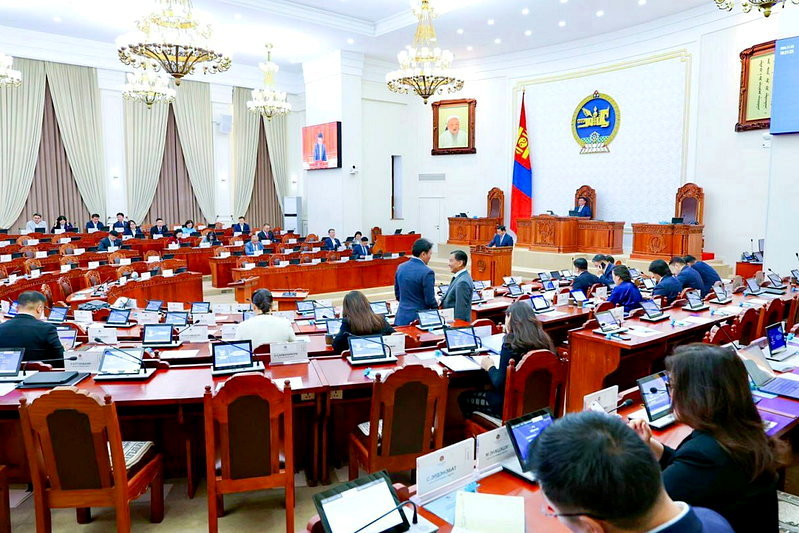
Genghis Khan is still a highly respected spiritual leader in Mongolia. The Great Hural Conference of Mongolia recently discussed a draft resolution commemorating the 820th anniversary of the founding of the Great Mongol Empire. Some members proposed a ban on the use of Genghis Khan’s portrait in alcohol and tobacco products and this received the support of the majority of members.
According to the Mongolian News Agency, the State Great Hural Standing Committee of State Institutions held a meeting on November 4 and reviewed a draft resolution on the State Great Hural to commemorate the 820th anniversary of the founding of the Great Mongolian State and to honor and inherit the great tradition of Genghis Khan’s national governance.
The draft proposal proposes to conduct in-depth research on historical issues related to the great Genghis Khan on the basis of science and to transmit his historical legacy to future generations; Promote the return to Mongolia of original documents and images related to Genghis Khan stored abroad; Also, establish relevant legal mechanisms to transfer part of the consumption tax revenue paid on taxable goods named after Genghis Khan to the Genghis Khan Foundation to promote Mongolian history and culture.
The report reported that during the meeting, members also discussed a principled amendment to “prohibit the use of images of Genghis Khan the Great in alcohol and tobacco products” and received the support of the majority of members.
Genghis Khan established the Great Mongol Empire in 1206 AD. This year it is celebrating its 820th anniversary. In the past, Outer Mongolia held an event to mark the 800th anniversary of Mongolia’s founding in 2006.
Byam Batsoget, Chairman of the Great Hural of Mongolia, also specifically mentioned that there are currently more than 300 cultural relics and historical documents related to the Great Mongol Empire and Genghis Khan scattered in 17 countries and regions. The specific distribution is as follows: 80 items in Taiwan, 62 items in mainland China, 53 items in Japan, 5 items in the United States, and 5 items in Germany. He said that collection of these materials should be started as soon as possible and as many original copies as possible should be obtained. If conditions do not permit, copies should be obtained and displayed and disseminated to the public. He further said that the Government will be directed to study the feasibility of setting up the above mentioned fund (funded by a specific proportion of consumption tax revenue) to cover the cost of the related work and prepare specific plans accordingly.
Chinese self-media Colorful Mongolia pointed out that the direct occasion of releasing this draft resolution is that 2026 will be the 864th anniversary of the birth of Genghis Khan and the 820th anniversary of the founding of Great Mongolia. The draft begins by affirming Genghis Khan’s historical contribution in unifying all Mongolian ministries, establishing the national system, and creating laws. He believes that his ruling tradition not only deeply influenced Mongolia, but also left its mark on the history of world civilization. The drafters proposed that this anniversary node should be used to scientifically organize, preserve and disseminate relevant historical heritage, incorporate the historical value of Genghis Khan into national culture and social construction, provide patriotic education for youth, build social consensus, and strengthen national pride.
The draft also proposes to sort out and confirm the places where the historical events recorded in the “Secret History of Mongolia” took place, explore the national history, language and customs value contained in this document and spread it widely in the country. In terms of cultural relics and historical materials, Mongolia plans to recover relevant documents and paintings scattered abroad. Within this month, it will take back legal documents from the Yuan Shun Emperor period preserved in South Korea and put them in the Genghis Khan Museum for public display.
In addition, a proposal to ban the use of images of Genghis Khan in tobacco and alcohol products was proposed by Congressman Luo. Steele Muir formally proposed. He cited a previous order issued by the President of Mongolia calling on the public to respect Genghis Khan’s portrait, and pointed to the embarrassment in reality: many low-end liquor products have Genghis Khan’s portrait printed on them. After consumers drink, the bottles are often thrown away, and the stills are later treated as trash, which is disrespectful. Congressman Ba. Bayarbaatar also had the same idea. He noted that “Genghis Khan” products with different names have appeared on the market, and it is inappropriate to print the image of the Great Khan on the packaging of wine and cigarettes. After the vote, 70.6% of the 12 members attending the Standing Committee meeting supported adding a ban on the use of the image in alcohol and tobacco products to the draft section. Subsequently, when the draft resolution was presented to the Plenary Session for review as a whole, 12 of the 17 participants voted in favor.
Additionally, according to the Mongolian Embassy in South Korea, Mongolian Ambassador to South Korea Sa. Sukhboled visited the Library of the Central Academy of Korean Studies on November 3 and talked with Jang Eun-ju, director of the academy. During the meeting, the two sides visited “Zhizheng Tiaoge”, the only remaining legal anthology of the late Yuan Dynasty in the world, and exchanged views on the possibility of bringing this extremely precious historical document back to Mongolia and displaying it to scholars, researchers and the public. “Zhi Zheng Tiao Ge” is a legal document that was compiled in November 1345, the fifth year of Emperor Yuan Shun’s reign, and came into force in 1346. This legal document was adopted from the late Goryeo Dynasty and was widely used as a legal reference manual during the Joseon Dynasty.
Summary FAQ
-
The main objective is to celebrate the 820th anniversary of the founding of the Great Mongol Empire, while respecting and inheriting the national rule tradition of Genghis Khan, and systematically protecting the relevant historical heritage and promoting it to future generations through legal and cultural measures.
-
The proponent believes that many low-priced wines have images of Genghis Khan printed on them. After consumers drink the bottles, the bottles are often thrown away, and the stills are also disposed of as trash. This is inconsistent with the original intention of honoring the image of the great Khan. Therefore, they advocate legislative ban.
-
In addition to restricting the use of trademarks, the draft also advocates locating and welcoming original documents and images of Genghis Khan preserved abroad, establishing a Genghis Khan Foundation, and using part of the taxable commodity consumption tax revenue to support historical and cultural promotion.