
AI summary
Summary of article:
Although a Chinese homeowner’s new home project in San Gabriel was approved by the city government, it was appealed because neighbors thought it was not in keeping with the historical style. Ultimately the City Council overturned it 3 to 2, requiring a new design and incorporating more community input.
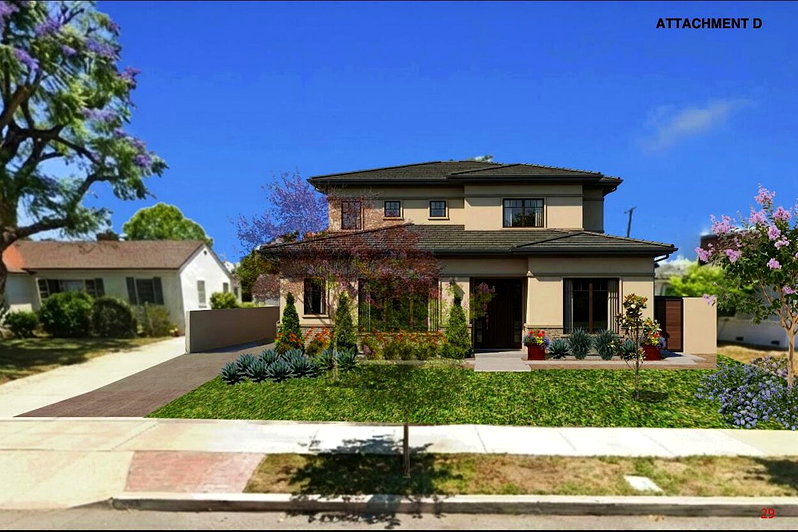
san gabriel Kho, a Chinese girl, wanted to build a new house on the original land. After two years of review and approval by the city government, as well as several amendments to the drawings of the new house, the house was finally approved in September this year. However, before construction began, some nearby neighbors objected because it was inconsistent with the historic style of San Gabriel. At a recent city council meeting, city councilors finally approved the neighborhood’s appeal against the construction project by a vote of 3 to 2, which meant the architectural sketch of the home was redrawn and needed to incorporate more neighbors’ opinions.
At the San Gabriel City Council meeting on October 20, representatives of the homeowners and their designers argued with protesting neighbors. Five city council members also had their own opinions. The meeting lasted for more than four hours. According to public information from the city, the detached home located at 508 Gerona Avenue was originally built in 1938 and spans an area of 8,247 square feet. This is a one storey house. According to the construction plan, the owner wants to demolish the old house and build a new two-storey independent house while retaining the original garage.
According to city government information, the construction project was reviewed three times by the city’s Development Review Committee (DRC) on June 22, August 24, and September 28, and the design plan was finally approved 4-0. During this period, the planning applicant made amendments to address privacy and design concerns raised by neighbours, including reducing the second floor terrace area from 155 square feet to 63 square feet, and proposed green plant shade, improved air conditioning and sound insulation, and reducing the number of windows on the second floor.
However, after the plan passed the development review committee, several neighbors complained to the city. According to Donn, the appeal sponsor, the plan changes addressed only some neighborhood opinions during Development Review Committee discussions, but the main problem with the project was that it violated the historic style of San Gabriel’s residential buildings. He said homes that fit that style can only be up to 1.5 stories, not two. He also proposed that the city government issue specific and objective guidance on residential styles to guide future new residential buildings in the city. When asked why he did not raise objections to the project at the Development Review Committee level, he said that the committee lacked adequate public communication work and that public opinion was not fully reflected in the meeting discussions. That night, about 70 people signed a petition to oppose the project.
At the city council meeting on the 20th, city councilors approved the appeal by 3 to 2, with Wu Chengyuan and Ding Yanyu voting in the negative. Denise Menchaca, who supports bringing the project back up for discussion, said she hopes the Historic Preservation Commission can get involved in the design of the home to make sure it is consistent with San Gabriel’s historic style. Jorge Herrera Ávila, who seconded, said that we understand that people own their land and realize the American dream of building big homes, but we must also listen to the community and harmoniously integrate San Gabriel’s historic style into the residential design.
Wu Chengyuan said, we are not here to decide who loses and who wins. There is no conflict between respecting the legitimate concerns of neighbors and protecting the rights of homeowners to build homes in compliance with regulations. However, he also questioned how future homeowners can have confidence if they still cannot achieve stable review results in compliance with existing regulations. This could affect how future residents view the city’s building review system. He also said that homeowners often invest a lot of money and time in the process of purchasing land, hiring architects, applying for building permits, and modifying designs. If the review process is prolonged, it will increase loan interest, insurance, holding costs and construction costs, and may also affect future residents’ willingness to improve their homes.
Ding Yanubao also has a similar opinion. He said if the homeowner follows all city rules and has approved the construction project, but is still rejected, it will damage the credibility of the city government.
In addition to discussing the construction design, the city government also voted on a reduction in the appeal application fee proposed by the complainants that night, and it was finally passed 4 to 1. Wu Chengyuan objected to deductions and exemptions, believing that the city government should establish consistent principles for dealing with fees and avoid different treatment depending on individual cases.
Summary FAQ
-
Although the owner’s case for the new home was reviewed for two years and passed city design approval in September, some neighbors believed the new two-story home was inconsistent with the style of San Gabriel’s historic residences, so they appealed to the city. In the end, the city council supported overturning the decision 3 to 2.
-
The appealing neighbors claimed that this new two-storey house destroyed the coherent historic style of the community, and believed that the highest residential style that could be consistent with local style could only be 1.5 storeys; He also hopes that the city government will establish more specific and objective guidelines for residential style.
-
The city council approved the neighbor’s appeal 3-2, with Wu Chengyuan and Ding Yanyu voting against. Both believe that if a homeowner has completed the application according to the rules but is still rejected, it will damage the credibility of the city government and may also increase the cost and uncertainty of housing construction for future residents.