
AI summary
Summary of article:
Wall Street tycoon Jones warned that the US stock market could face an extremely painful year in 2027 due to increased IPO supply, an out-of-control fiscal deficit and rising oil prices. The market cap environment may be worse than 2002.
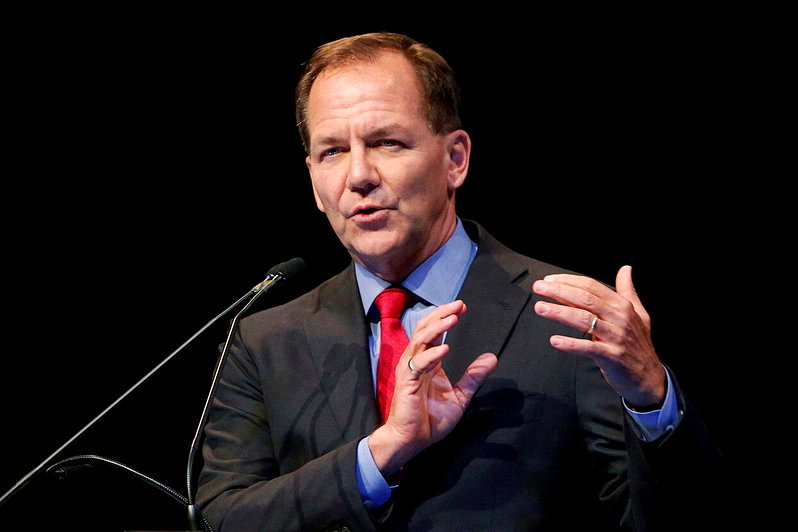
The famous Wall Street hedge fund boss Paul Tudor Jones issued a heavy warning in an exclusive interview with CNBC’s “Squawk Box” on the 13th. He bluntly said that with the huge stock supply caused by the IPO wave of technology giants, the US fiscal deficit out of control, and a possible surge in oil prices, the US stock market will usher in a “very challenging and very painful year” in 2027, and the flow of funds will fall into the most unfavorable situation since the burst of the Internet bubble in 2002.
Jones, founder and chief investment officer of Tudor Investment Company, pointed out that in the past four years of the bull market, corporate treasury stock buybacks and mergers and acquisitions (M&A) have significantly reduced the supply of stocks in the market, which has become a strong tailwind supporting the rise of US stocks. However, this tailwind is reversing across the board.
Generic AI giants like OpenAI and Anthropic are preparing for large-scale IPOs, with the recent issuance of SpaceX and secondary capital raising by major technology companies to raise money for AI construction, the market will be flooded with a huge supply of stocks. “2027 will be very, very difficult for the stock market.” Jones stressed: “In terms of capital flows into the US stock market, this may be the most adverse period since 2002.”
Jones compared the current market environment to that of 1999, a year before the dot-com bubble burst in 2000. He pointed out that the current market has experienced extreme K-shaped differentiation. Only a few companies that are set to benefit from the AI boom are supporting the market, while the rest of the stocks pale in comparison.
A more pressing concern is the United States’ ever-widening fiscal deficit. Jones bluntly stated that no politician would voluntarily raise taxes or cut spending unless the market forced them to do so. “It would be like the financial tsunami of 2008 and the Troubled Asset Relief Program (TARP),” he assessed. Currently there is a 60% chance that the market has reached a tipping point that forces the government to face losses.
In addition to the stock oversupply and deficit crisis, rising oil prices are the third major threat to Jones’ bearish market. He revealed that he currently has a long order in oil and expects that after the midterm elections, oil prices could rise to US$20 to 25, which would be the worst nightmare scenario for the stock market.
Faced with the threats of higher inflation, rising US bond yields and possible drastic changes at the Federal Reserve (Fed), the billionaire hedge fund man made no complaints about it: “I will be short all year long. There is almost no value in the market now.” He reminded that between 1998 and 2002, massive IPOs and the lifting of sanctions had released a huge amount of supply. At the time, it was the easiest and most profitable period for short selling in history, and history is repeating itself.
Investors beware! The “most painful year” for the US stock market is coming. Great Boss reveals three deadly pitfalls
TVBS News Network
Summary FAQ
-
He believes that IPOs and secondary capital raising of technology giants will significantly increase the supply of shares. Coupled with the decline in the US fiscal deficit and a potential surge in oil prices, they will jointly depress stock market valuations and capital flows, creating an extremely unfavorable environment.
-
The first is the increase in stock supply by OpenAI, Anthropic, etc.; The second is that the US fiscal deficit is out of control, which may force the government to face costs; The third is a rise in oil prices, which could further increase inflation and affect the stock market.
-
He believes that the market will be supported by some AI concept stocks like in 1999, or it may be forced to undergo drastic adjustment and reconciliation as losses and policy pressures accumulate to a critical point like in 2008.