
AI summary
Summary of article:
Demonstrations took place in several places in Europe this autumn, highlighting the lack of patience among young people regarding education, housing, prices and public services. He also highlighted the government’s difficulties in finance, governance and social stability.
There have been back-to-back demonstrations in Europe this autumn. From French campuses to southern European cities, issues of education, prices, housing and public services are intertwined like a collective sleepwalk. Most participants expressed their demands peacefully, but in some areas there was arson, looting, and clashes between police and civilians. What this wave of turmoil actually shows is that people are losing patience with improvements in their lives and the government’s ability to respond is being questioned.
France is an important center of hurricanes. Since September, students have begun protests over teacher shortages, dilapidation of school buildings and problems with educational resources, and have subsequently joined with labor unions and groups in protest against rising living costs. On 17 October, some mass demonstrations escalated into serious violent clashes; Despite the government tightening security, demonstrations took place in many places on the 24th and clashes broke out again in Paris. Educational demands thus extended into dissatisfaction with government administration and social distribution.
But the tipping point is different in other neighboring countries. spain andportugal What comes to the fore is the burden of living.Italy This includes prices, wages and public services, while in Albania it includes corruption, employment and education. They are not necessarily a direct extension of the French protests, but they reflect a similar dilemma: income from work cannot support life, and existing political channels appear unable to solve the problem in a timely manner.
The underlying reason, first of all, is the gap between the cost of living and people’s expectations. Even if inflation slows down, it does not mean that prices that have risen in the past will fall. When rent, energy and daily expenses continue to dominate income, it will be difficult to translate the economic results announced by the government into people’s lived experience. Young people are particularly vulnerable to frustration: education cannot guarantee a stable job, and employment cannot provide independent living space.
The second is the dilemma of public finance. The government not only needs to maintain education, medical care and social security, but also faces energy security, national defense and debt pressures. Increasing subsidies requires financial resources, and spending cuts could accelerate the rebound. Energy prices, competitiveness, Ukraine and the long-term budget were discussed at the same time at the EU summit in October, showing that internal and external pressures influenced each other.
Furthermore, party competition and social communication can easily escalate opposition. Different political forces respectively emphasize unfair distribution, government failure or deteriorating public safety; Violent images can obscure core policy demands. If the government only talks about the system, it is easy to ignore the root causes of discontent; If it could not stop the destruction, it would lose credibility and become a vicious circle in governance.
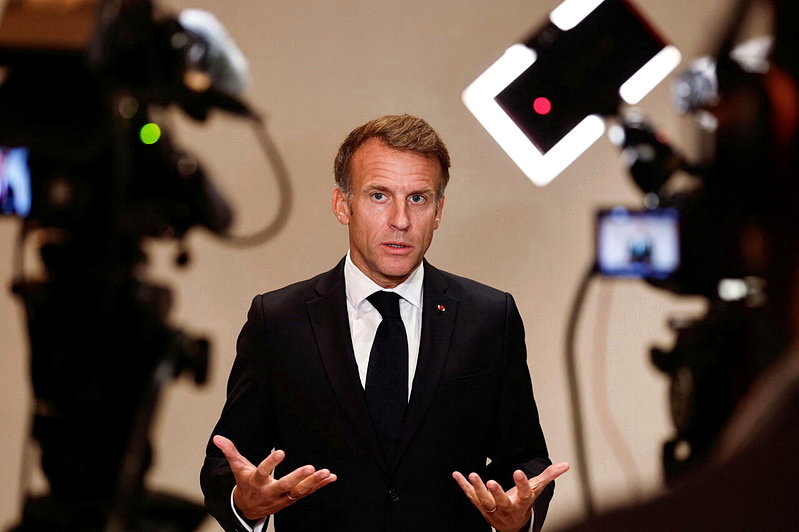
Immigration and cultural identity are certainly important issues in European politics, but this wave of protests cannot be blamed entirely on immigrants. The main demands this time include education, housing and cost of living; Reducing complex crises to ethnic issues can deepen social cleavages. However, across the ocean, President Trump blamed Europe’s immigration policy for the unrest, while French President Macron vehemently objected without naming names, criticizing foreign leaders for using unrest in France to build momentum for the election. It is indeed rare for the heads of state of the United States and France to face each other at such a distance.
Future effects may first be visible in the elections. If mainstream political parties in various countries are unable to offer credible solutions, both the radical left and right could absorb dissident votes. However, the positions of the protesters are not unanimous, and it cannot be directly predicted who will definitely win. France is the best example of this. Currently, far-right Marine Le Pen is topping the polls and general elections will be held in six months. Second, continued conflict could affect trade, tourism and investment confidence, increase government spending and further reduce the scope for recovery.
Externally, domestic political pressures may make it more difficult for Europe to reach consensus on aid, defence, immigration and trade policies to Ukraine, and may also increase the appeal of protectionism. However, the unrest will not necessarily lead to the collapse of the EU; Collective pressure could also boost energy cooperation and public investment.
The test facing Europe is whether the democratic process can once again produce results that people can appreciate. The government must address violence according to the law and take concrete and testable measures to improve housing, education, and affordability. Only when people believe that the system can still solve problems can anger on the streets be transformed into a force for reform.
Summary FAQ
-
The main demands focus on inadequate educational resources, overburdened housing, rising prices and cost of living and the falling quality of public services. The interconnectedness of these issues has led to dissatisfaction among young people and workers with the status quo and they have gradually taken to the streets to express their demands.
-
In France, students originally protested because of the shortage of teachers and the dilapidation of school buildings. However, they later merged into labor unions and groups protesting the rising cost of living, leading to the issue of education turning into distrust of government administration, social distribution and accountability, and leading to large-scale conflict.
-
The article posits that if mainstream political parties cannot come up with credible plans, radical left and right parties may absorb dissident votes; At the same time, continued unrest will also hit tourism, investment and government finances and make it more difficult for Europe to reach consensus on aid to Ukraine, national defence, immigration and trade.