
AI summary
Summary of article:
Domestic demand remained weak in China’s passenger car market in October and fuel vehicles declined sharply. However, the penetration rate of new energy vehicles reached a new high and exports increased significantly, becoming a major force supporting the sales of car companies.
China’s auto market is under constant pressure. Data released today (9th) by the China Automobile Dealers Association Passenger Car Market Information Joint Branch (Passenger Car Alliance Branch) shows that China’s passenger car market sold 1.643 million units in October this year, a year-on-year decrease of 27.1%. Among these, retail sales of fuel vehicles have declined by 45% year-on-year. The retail penetration rate of new energy vehicles reached 67.5%, a record high. On the other hand, exports of passenger cars reached 928,000 units in October, an annual increase of 68.5%, reflecting the decline in domestic demand and the increase in exports.
According to the “Daily Economic News” report, the China Passenger Car Association branch released the “National Passenger Car Market Analysis for October 2026” on the 9th. In October, national passenger car retail sales were 1.643 million units, a year-on-year decrease of 27.1% and a month-on-month increase of 1.5%. In the first 10 months of this year, cumulative retail sales were 14.978 million units, a decrease of 22.3% year-on-year.
Looking at different power models, retail sales of fuel vehicles in October declined by 45% year-on-year, of which pure fuel vehicles declined by 51% year-on-year, while ordinary gasoline-electric hybrid vehicles increased by 28% year-on-year. The annual sales of self-owned brand fuel vehicles have decreased by 46%, the annual sales of mainstream joint venture brands have decreased by 46%, and the annual sales of luxury brands have decreased by 37%. The Passenger Transport Association branch pointed out that all types of fuel vehicles are subject to higheroil price Violent impact.
In terms of new energy vehicles, retail sales in October decreased by 13.7% year-on-year, of which independent brands decreased by 15% year-on-year, mainstream joint venture brands increased by 69% year-on-year, and luxury brands decreased by 45% year-on-year. However, the retail penetration rate of new energy vehicles in the domestic passenger car market reached 67.5%, an increase of 10.5 percentage points from the same period last year, a monthly increase of 0.5 percentage points, and a record high.
If divided by brand category, the domestic retail market share of independent brands in October was 73.8%, an annual increase of 4.8 percentage points. Among them, the penetration rate of independent brand new energy vehicles reached 84.8%, the penetration rate of luxury brands was 19.4%, and the penetration rate of mainstream joint venture brands was 19.7%.
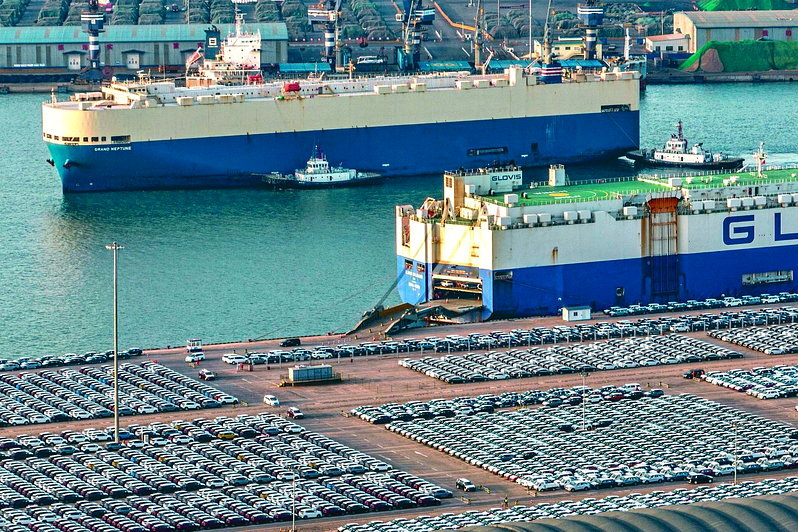
It is worth noting that in October, China’s passenger car exports (including complete vehicles and components) reached 928,000 units, an annual increase of 68.5% and a monthly increase of 1%, accounting for 35% of the sales of passenger car manufacturers. Among them, the share of new energy vehicles in total exports was 62.8%, an increase of 20 percentage points from the same period last year; Independent brand exports were 810,000 vehicles, an annual increase of 77%, and joint venture and luxury brands exported 118,000 vehicles, an annual increase of 28%.
In addition, passenger car manufacturers across the country sold 2.633 million units in October, a year-on-year decrease of 10.2% and a month-on-month increase of 3.3%. निर्यात में वृद्धि से प्रेरित, थोक बिक्री में वार्षिक गिरावट खुदरा बिक्री की तुलना में काफी कम थी। Among the top 10 models in terms of wholesale sales that month, there were no fuel vehicles, with new energy vehicles absolutely occupying the dominant position.
According to the analysis of Chenglian branch, oil prices have been at a high level recently, the prices of non-ferrous metals and mineral raw materials have risen, and consumers’ purchasing power and willingness to buy have been low. The total passenger car market remained under pressure in October, the contraction of fuel vehicles accelerated, the penetration rate of new energy vehicles remained at a high level, and exports became the main driving force for the development of car companies.
Summary FAQ
-
In October, national retail sales of passenger cars were 1.643 million units, a decrease of 27.1% year-on-year. यह मुख्य रूप से उच्च तेल की कीमतों, अलौह धातुओं और खनिज कच्चे माल की बढ़ती कीमतों से प्रभावित था, और उपभोक्ता की क्रय शक्ति और कार खरीदने की इच्छा एक साथ कमजोर थी।
-
Although the retail sales of new energy vehicles in October declined by 13.7% year-on-year, the overall market penetration rate increased to 67.5%, an increase of 10.5 percentage points from the same period last year and a record high, becoming the main force in the market.
-
Exports of passenger cars in October reached 928,000 units, an annual increase of 68.5%, accounting for 35% of manufacturers’ sales; Of which the export of new energy vehicles accounted for 62.8%, and the export of self-owned brands increased by 77% year-on-year, which largely offset the decline in domestic demand.